
Weak Seals in Non Woven Bag Making Machines: Ultrasonic Welding vs Heat Sealing
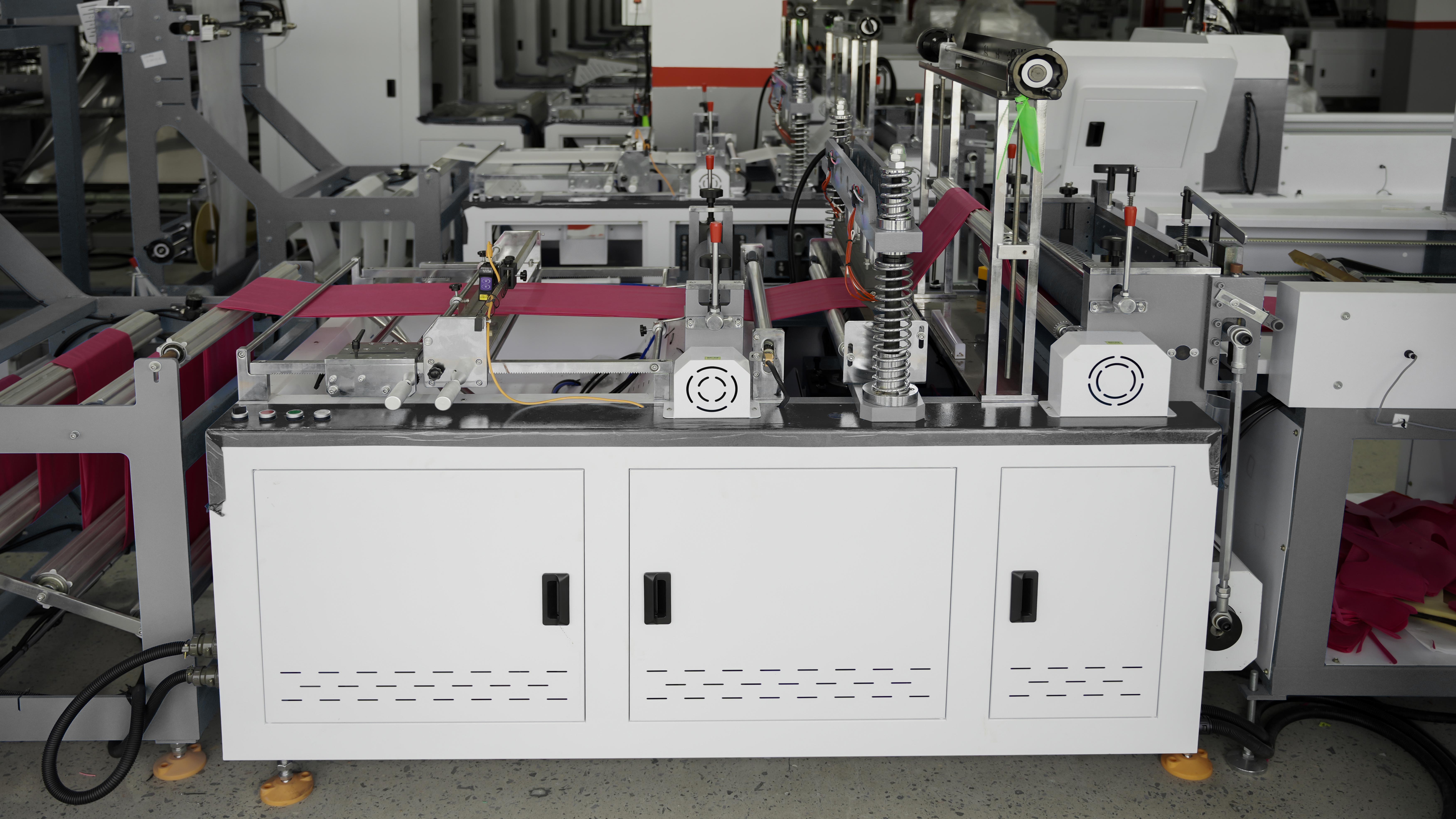
Bags rarely fail because the fabric was too thin. They fail at the seal — a handle that peels away from the bag body, a side seam that opens under load. For a buyer comparing machines, the useful question is not which sealing technology sounds more advanced, but which one holds a consistent bond across thousands of bags in the bag type and fabric thickness you actually run.
The short answer: on standard PP spunbond non woven fabric, ultrasonic welding is the more seal-stable method for handle attachment and edge sealing, because it creates the bond at the interface between fabric layers instead of conducting heat through the material, and it requires no hot-melt glues or chemical adhesives. Heat sealing still has a defined place — Zhengxin's ZXL-G700 attaches handles with automatic heat-sealing and punching — and it remains the practical route for certain gusseted bag constructions. Most weak seals, however, are a setup problem rather than a technology choice, and that distinction is what this article works through.
What a Weak Seal Actually Is (and How to Test for It)
A weak seal is a bond line that separates under load while the surrounding fabric stays intact. The industry's standard field test is simple and does not require a lab: take a finished bag and pull the sealed area apart by hand. On a correct seal, the fabric tears — the bond line itself holds and the fibers around it fail first. On a weak seal, the layers peel apart cleanly along the weld line.
This is why visual inspection alone is unreliable. A bag can look perfect on the packing table and still fail in a customer's hand, because a partially bonded seam looks identical to a correctly bonded one until it is loaded. The more common defect pattern in practice is not a uniformly weak seal but an inconsistent one: strong at one end of the weld line, weak at the other, on bags produced from the same roll in the same run.
On ultrasonic handle and edge sealing, Zhengxin's field troubleshooting records show three root causes account for roughly 90% of weak-seal complaints:
- Contaminated horn surface. Melted fabric residue builds up on the ultrasonic horn and reduces the energy transferred to the fabric interface. Cleaning with isopropyl alcohol and a lint-free cloth restores it.
- Incorrect or uneven horn-to-anvil gap. A gap of 0.3 mm on one side of the horn and 0.5 mm on the other produces seals that are strong on one side of the bag and weak on the other — the classic inconsistent-seal symptom.
- Amplitude or speed mismatch. If fabric GSM was changed or line speed was increased without adjusting ultrasonic parameters, welding energy no longer matches the material.
Heat-sealed handle units fail for a different reason set. The bond depends on element temperature being held steady and on dwell and pressure staying consistent; if temperature drifts, the risk shifts from a weak seal to a scorched, discolored or odorous one, and heated elements are a wear part that is replaced periodically rather than a permanent component.
Industry Background: Why Seal Consistency Became a Buying Filter
Demand for non woven bag machinery is being pushed by regulation rather than by fashion. According to Dataintelo, more than 140 countries had enacted legislation restricting or banning single-use plastic bags as of 2026. LP Information projects the specialised global non woven bag making machine market growing from US$ 179 million in 2025 to US$ 733 million by 2032, with a CAGR of 22.5% from 2026 to 2032 attributed to plastic ban policies. Dataintelo also reports that automatic bag making machines held a 52.4% share of the total product type market in 2025, and that Asia Pacific accounted for a 43.6% revenue share of the bag making machine market in 2025.
In practical terms, capacity is being added quickly — and the average price of a non woven bag making machine in 2025 was approximately US$ 29,000 per unit according to LP Information. When several producers in the same market buy similar machines at similar prices, seal consistency becomes the differentiator that decides who keeps a supermarket account.
Retail supply contracts make that explicit. In Zhengxin's documented supermarket and grocery chain production scenario, the stated operating requirement is a production speed of at least 100 pcs/min combined with consistent ultrasonic or heat-sealing weld quality and a defect rate below 0.5%. That requirement cannot be met by choosing a sealing technology alone — it depends on how the sealing station is set up, guided and monitored. Suppliers are assessed accordingly, and sealed-sample verification now sits alongside price and lead time in most serious evaluations.
Ultrasonic Welding vs Heat Sealing: How Each Bond Is Formed
Ultrasonic welding: the bond forms inside the material
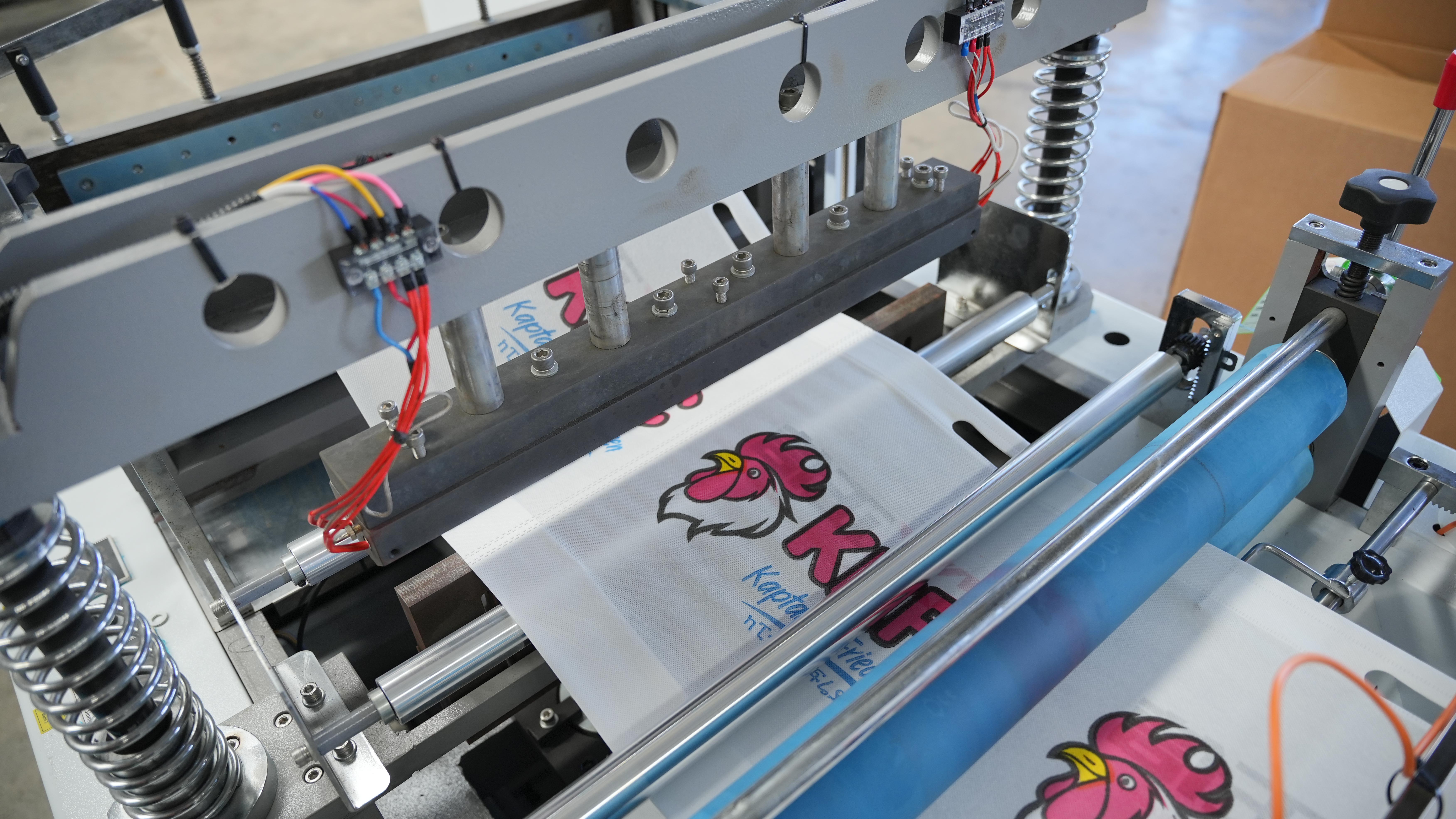
Ultrasonic welding converts electrical energy into high-frequency mechanical vibration. When the vibrating horn presses the non woven fabric against a fixed anvil, friction at the interface between the two layers generates enough heat to melt the polypropylene fibers at that contact point within a fraction of a second. When vibration stops, the melt cools and solidifies into a permanent molecular bond. The melt zone is confined to a thin interface layer, so the rest of the fabric — and the visible surface of the bag — stays cool and undamaged.
The ZXL-D700 applies this directly to the two places where non woven bags usually fail. It uses 15 kHz ultrasonic sealing for joining bags and handles, and its handle attachment section uses ultrasonic welding technology, so the handle-to-bag connection is a fused bond rather than a glued or stitched one. The same platform provides automatic feeding, web guiding and tension control, a gusseting mechanism using a rotary disc and metal plate to control bottom gusset dimensions, lead-screw adjustment of fold-over width, an optical sensor positioning system for precise cutting on printed bags, and an independent computer control console that gives the operator an overview of production speed and batch information. One machine produces four bag styles, at 40–120 pcs/min across 30–100 g/m² material.
The ZXL-A700Ultra uses ultrasonic welding for edge sealing on its zero-waste-edge platform. Because the ultrasonic bonding process requires no hot-melt glues or chemical adhesives, there is no adhesive residue, no fiber degradation and no added porosity at the seam — a detail that matters for food takeaway bags and for any application where odour or contamination is a rejection criterion. The published specification for this model states approximately 5% savings on raw material procurement cost from the edge-waste-free design, together with secure, waterproof seams and finished edges free from fraying or curling. It runs 30–120 g/m² fabric at 40–120 pcs/min.
Two secondary advantages follow from the physics: the weld is stronger in pull tests, and the process is cleaner to run. Zhengxin's technical documentation reports that ultrasonic-welded seams measure 15–20% higher in peel strength than heat-sealed seams on comparable non woven fabric, and that ultrasonic consumes 25–30% less energy because power is drawn only during the welding pulse rather than continuously to hold an element at temperature. There is no warm-up period, and the main wear part — the horn — is typically replaced on a 12–18 month interval.
Heat sealing: the bond forms at the surface
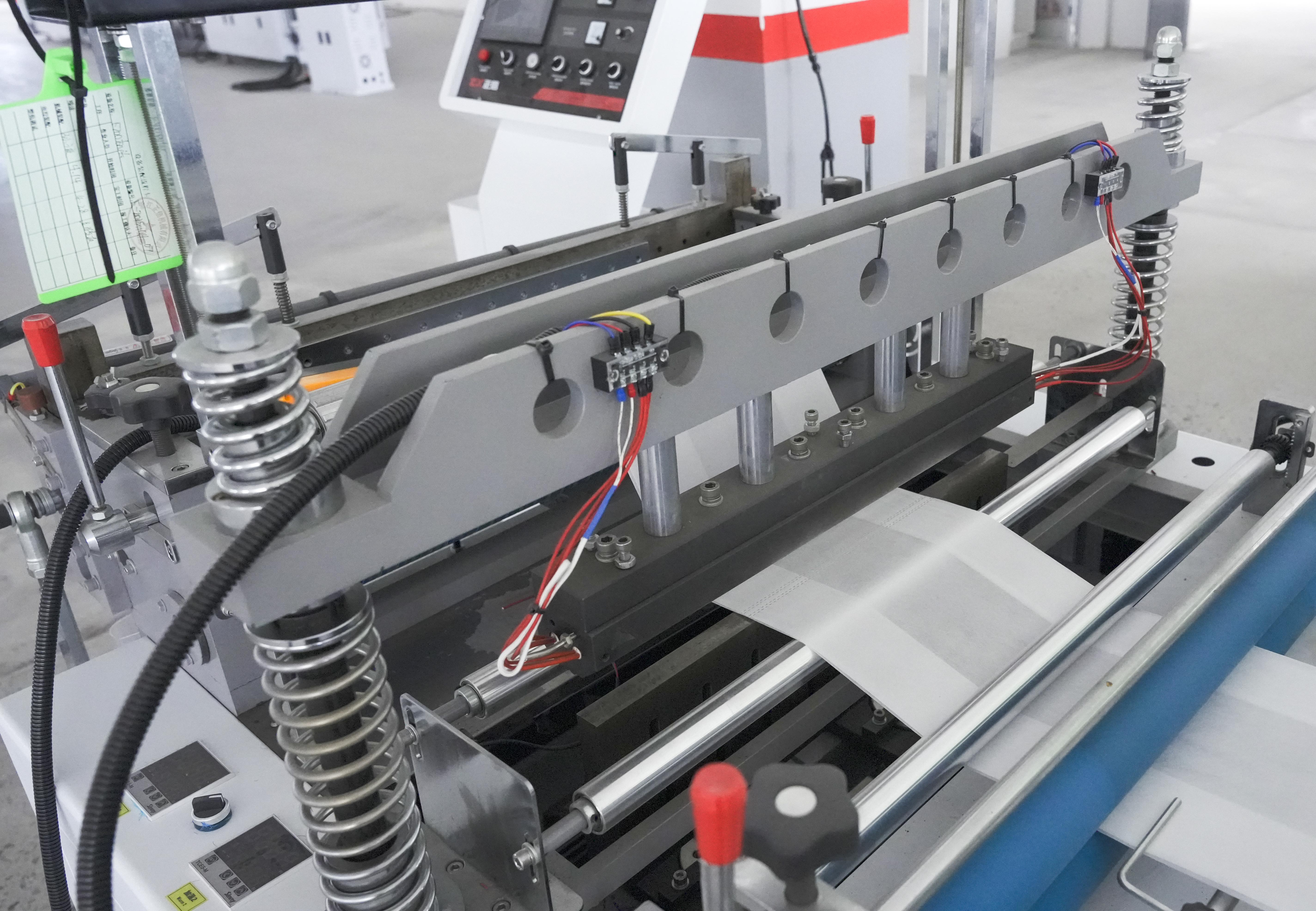
Heat sealing works from the outside in. A heated metal bar, typically operating in the 180–220°C range for polypropylene non woven, conducts thermal energy through the fabric thickness. The result is primarily a surface adhesion bond — the layers stick together — rather than the molecular interdiffusion that ultrasonic produces. Because heat has to travel through the material, the outer surface absorbs more thermal energy than the interface where bonding is actually wanted, which is why heat-sealed production carries a scorching and odour risk when element temperature drifts.
Where heat sealing is the right choice, machine design compensates through control and guidance rather than through the bonding mechanism. The ZXL-G700 is a fully automatic non woven gusset bag making machine that attaches handles with automatic handle heat-sealing and punching. Its control architecture is an LCD touchscreen HMI with automatic computer-controlled edge-guiding, and it includes photoelectric tracking, stepper-motor length control, automatic positioning, self-diagnostics and automatic counting. Photoelectric tracking and automatic edge-guiding are what keep seals and cutting lines consistent when the fabric wanders — the machine holds the material in the right place so the heat-sealed handle lands where it should. It produces side gusset bags with adjustable gusset widths of 60–200 mm at 60–100 pcs/min, in 50–100 g/m² material.
Which Technology Fits Which Bag and Material Thickness
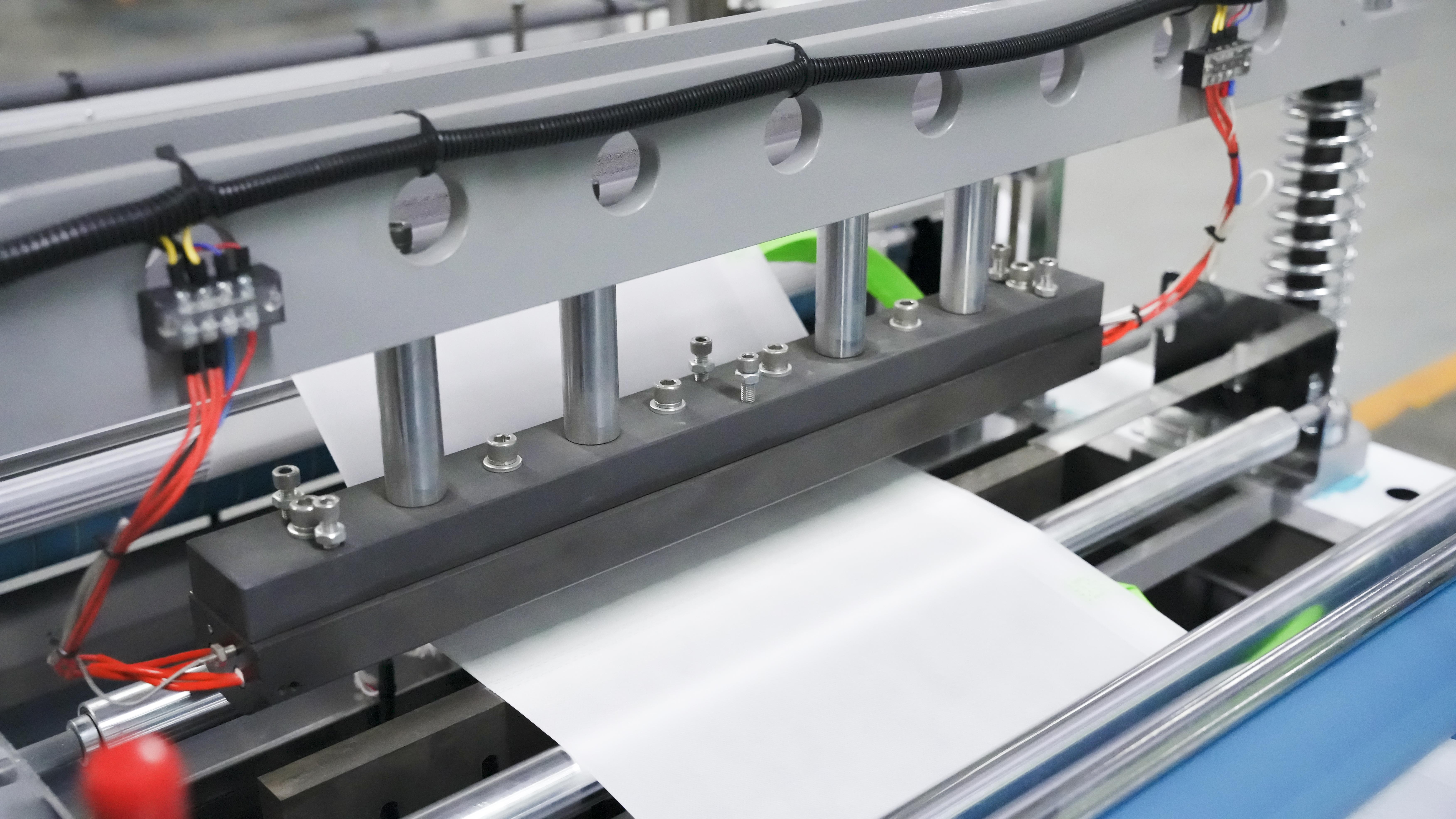
The selection logic follows the load path. If the bag will be carried by its handle, the handle seal is the critical joint; if the bag will be loaded with weight against a side seam, the edge seal is critical. Ultrasonic welding addresses both because it fuses the fibers at the joint. Heat sealing is workable where the construction already supports a controlled, guided process and where the bag format is built around it.
- Flat bags and bag types with online handle attachment, 30–100 g/m²: ZXL-D700, four bag styles per machine, 15 kHz ultrasonic sealing for bags and handles, 40–120 pcs/min, handle material 50–100 g/m².
- T-shirt, W-cut and vest bags, 30–120 g/m²: ZXL-A700Ultra, ultrasonic edge sealing with an edge-waste-free design and roughly 5% raw material saving, 40–120 pcs/min.
- Side-gusset and 3D-shaped shopping or organ bags, 50–100 g/m²: ZXL-G700, gusset widths 60–200 mm, automatic handle heat-sealing and punching, 60–100 pcs/min, 18 kW.
Fabric weight itself changes how the sealing station behaves, whichever method is used. In the widely used reference ranges, 30–50 g/m² is ultra-light material for items such as garment dust covers, 60–70 g/m² is lightweight retail grade, 80–90 g/m² is the standard supermarket shopping bag grade, and 100–120 g/m² is heavy-duty stock. Thicker fabric needs a wider horn-to-anvil gap and higher amplitude on ultrasonic units, and runs roughly 10–15% slower than 70 g/m² material. A machine that is only ever proven on 70 g/m² has not yet been proven on your bag.
Indicative ultrasonic amplitude baselines that Zhengxin provides for its own units illustrate why the settings matter: 60–70% amplitude for 50–60 g/m², 75–85% for standard 70–90 g/m², and 90–100% for 100–150 g/m² or laminated fabric. Run a 60 g/m² job on a 70 g/m² recipe and the seal will be incomplete; run a 120 g/m² job on the same recipe and the fabric may melt through.
Step-by-Step: Setting Up and Verifying Seal Quality
A. Ultrasonic handle and edge sealing
- Clean the horn and anvil. Stop the machine, disable the ultrasonic generator, and wipe the horn tip and anvil face with isopropyl alcohol and a lint-free cloth until both are clean.
- Verify the horn-to-anvil gap with a feeler gauge at both ends and at the centre. For 70 g/m² fabric the working range is roughly 0.3–0.5 mm and it should be even to within about 0.05 mm across the full horn width. Re-tighten after adjustment.
- Set amplitude for the actual fabric weight using the baselines above, then increase in 5% steps if the fibers are not fully fused, or decrease in 5% steps if you see brown scorch marks.
- Check the speed–amplitude relationship. If line speed was recently raised without touching amplitude, reduce speed by about 10% and re-test; if the seal recovers, the faster speed needs amplitude compensation.
- Confirm air pressure holds steady at 0.6–0.8 MPa through the welding cycle. A compressor or tank that is undersized for the machine shows up as pressure drop and inconsistent seal strength.
- Inspect the horn for wear. A new horn has a mirror-flat face. Pitting or a wavy wear pattern means energy distribution is no longer uniform — replace the horn rather than adjusting around it.
- Test the fabric batch. If all machine parameters are correct and seals are still weak, try a roll from a different batch. Contaminated or inconsistent PP fabric will not weld correctly regardless of settings.
- Run the acceptance test: produce 20 bags and pull-test 5. The seal should tear the fabric, not peel apart.
B. Heat-sealed handle units
- Confirm the element is at operating temperature before the run starts — a heat-sealing station needs a warm-up period, so the first bags of a cold shift are not representative.
- Verify that edge-guiding and photoelectric tracking are holding the fabric square to the sealing station; misalignment changes both the seal and the cut position.
- Check dwell and pressure consistency across a full production batch, not just the first ten bags.
- Track element condition as a scheduled consumable item, and treat any change in bag surface appearance or odour as a temperature-control signal.
- Apply the same pull test: fabric should tear, not peel.
C. What to verify before the machine ships
Seal quality has to be demonstrated on the actual machine, with the actual fabric, before it leaves the factory. Zhengxin runs a continuous full-load production test on every machine before shipment, and buyers can request third-party inspection by SGS, Bureau Veritas or CCIC at the factory prior to final payment. The relevant certificates are also checkable in advance: CE certificate M.2021.206.C70875, issued by UDEM, applies to the EU market and is valid to 23 January 2027, covering standards including EN ISO 12100:2010, EN 60204-1:2018 and the EN IEC 61000 series; the factory holds ISO 9001:2015 certification under certificate 20225Q21503R2M, issued by QPC and valid to 12 January 2029, covering production and sales of bag making machines, slitting machines and non woven printing machines.
Use Cases: Where Each Sealing Approach Is Running Today
The clearest way to judge which sealing method fits a project is to look at what comparable producers actually run.
- Egypt — food takeaway and promotional retail bags (9 years, since 2017). A food packaging and retail bag manufacturer runs five Zhengxin units: one ZXL-E700, two ZXH-C21200 printing machines and two ZXL-D700 machines, covering food takeaway bags for restaurant chains and delivery platforms plus multi-colour printed promotional shopping bags for retail malls. The value of a D700 line here is the ultrasonic handle bond and the absence of adhesive at the seam, combined with optical positioning for printed bag cutting.
- Kenya — supermarket shopping bags (3 years, since 2023). Two ZXL-A700 machines plus one ZXH-C41200 printing machine supply branded shopping bags to more than 200 retail stores nationwide, on a fully automatic line from printing to finished bag that a single operator manages. The reported result is consistent daily output with minimal maintenance — which is the practical definition of a stable seal process.
- Tanzania — promotional and campaign bags (since 2024). A promotional bag producer runs one ZXL-A700Ultra with one ZXH-C21200 and handles 10+ custom orders per week, with quick job changeover between designs, expanding from one production line to two within 18 months.
- Brazil — diversified bag production (since 2018). Six units, including an ZX-LT500, two ZXL-B700/D700-class machines and additional models, cover supermarket shopping bags and breathable produce packaging for fruit and coffee exporters, with interchangeable spare parts and a single training session across four machine types.
- Indonesia — multi-line integrated production (since 2018). A 42-unit fleet including 13 ZXL-E700, 8 ZX-LT500, 7 ZXL-A700, 12 ZXH-A1200 and 2 ZXL-G700 machines produces shopping bags, printed promotional bags, food-grade takeaway packaging and garment dust covers, supplying more than one million bags monthly. The G700 units in that fleet are the heat-sealed gusset-bag lines — a reminder that on the right bag format, heat sealing with automatic guided handle attachment still carries heavy-duty production.
Comparison Table: Ultrasonic Welding vs Heat Sealing on Zhengxin Models
| Decision factor | Ultrasonic welding (ZXL-D700 / ZXL-A700Ultra) | Heat sealing (ZXL-G700 handle unit) |
|---|---|---|
| How the bond forms | High-frequency vibration generates friction heat at the fabric interface; polypropylene melts and re-solidifies into a molecular bond | A heated element (typically 180–220°C for PP) conducts heat through the fabric thickness; the bond is predominantly surface adhesion |
| Adhesives and consumables | No hot-melt glues or chemical adhesives; main wear part is the horn, replaced on roughly a 12–18 month interval | No hot-melt glue required; the heated element is a periodic wear part subject to scheduled replacement |
| Start-up | Instant — power is drawn only during the welding pulse | Requires a warm-up period to reach stable element temperature |
| Seal strength evidence | Zhengxin technical documentation reports 15–20% higher peel strength vs heat-sealed seams; waterproof seams free from fraying or curling; clear embossing with 3D relief | Strength depends on holding element temperature, dwell and pressure steady; scorching or odour indicates temperature drift |
| Energy use | 25–30% lower energy consumption than heat sealing, per Zhengxin technical documentation | Continuous power draw to maintain element temperature |
| Material thickness | 30–100 g/m² (ZXL-D700); 30–120 g/m² (ZXL-A700Ultra); handle material 50–100 g/m² (D700) | 50–100 g/m² material and handle material (ZXL-G700) |
| Production speed | 40–120 pcs/min | 60–100 pcs/min |
| Primary seal tasks | Handle attachment and bag sealing (D700); edge sealing on waste-free bag edges (A700Ultra) | Automatic handle heat-sealing and punching, kept consistent by automatic computer-controlled edge-guiding and photoelectric tracking |
| Bag formats | Four bag styles on D700, including flat bags with online handles; T-shirt, W-cut and vest bags on A700Ultra | Side-gusset and 3D-shaped bags, gusset width 60–200 mm |
| Certification coverage | CE certificate M.2021.206.C70875 (UDEM, EU, valid to 23 Jan 2027) covers the ZXL-A, ZXL-D and ZXL-G series; factory ISO 9001:2015 certificate 20225Q21503R2M (QPC, valid to 12 Jan 2029) | Covered by the same CE certificate and ISO 9001:2015 factory certification |
FAQ
Is there a CE compliant fully automatic non woven bag making machine, and does the CE certificate cover the sealing system?
Yes. CE certificate M.2021.206.C70875, issued by UDEM, covers the ZXL-A, ZXL-B, ZXL-C, ZXL-D, ZXL-E, ZXL-G and ZXL-H series in the 600–1200 range, applies to the EU market, and is valid to 23 January 2027. Among the listed standards are EN ISO 12100:2010 for machinery safety, EN 60204-1:2018 for electrical equipment and the EN IEC 61000 series for electromagnetic compatibility. The manufacturing facility is also ISO 9001:2015 certified under certificate 20225Q21503R2M issued by QPC, valid to 12 January 2029, covering production and sales of bag making machines, slitting machines and non woven printing machines. Note that CE covers machine safety, electrical and EMC compliance — it is not a seal-strength certificate, so the seal itself should be validated by a pull test on sample bags before you commit.
Which sealing method should a fully automatic non woven bag making machine use for handle attachment?
For PP spunbond bags where the handle carries the load, ultrasonic welding is the stronger default. The ZXL-D700 uses 15 kHz ultrasonic sealing for joining bags and handles, and its handle attachment section uses ultrasonic welding technology — a fused bond with no hot-melt glue or chemical adhesive in the joint. The ZXL-A700Ultra applies ultrasonic welding for edge sealing on a zero-waste-edge platform. Heat sealing is applied where the bag construction calls for it: the ZXL-G700 attaches handles with automatic handle heat-sealing and punching, supported by automatic computer-controlled edge-guiding and photoelectric tracking. Material range is also a deciding factor — the D700 handles 30–100 g/m², the A700Ultra 30–120 g/m², and the G700 50–100 g/m² with side gussets of 60–200 mm.
How much more does an ultrasonic bag making machine cost than a heat-sealing one?
Ultrasonic units carry roughly a 10–15% higher machine cost than comparable heat-seal units, but the running cost gap moves the other way: ultrasonic consumes 25–30% less energy because power is drawn only during the welding pulse, and it eliminates the periodic heating-element replacement that heat-seal stations require. The horn, the main ultrasonic wear part, is typically replaced on a 12–18 month interval. For reference, LP Information puts the average price of a non woven bag making machine in 2025 at approximately US$ 29,000 per unit. Within the ultrasonic range, the zero-waste-edge Ultra configuration — used on the ZXL-A700Ultra and ZXL-E700Ultra — adds a premium that is normally justified for operations consuming one ton or more of fabric per day, since the design saves approximately 5% on raw material procurement cost.
Can I test seal strength on sample bags before I place an order?
Yes, and it should be a condition of the order rather than a courtesy. Three practical steps: request a live video factory tour showing the sealing station running your bag type, ask for reference customers in your region whom you can call directly, and commission a third-party pre-shipment inspection by SGS, Bureau Veritas or CCIC at the factory before the balance payment. Zhengxin runs a continuous full-load production test on every machine before shipment, and the acceptance criterion to insist on is a pull test on finished bags: the seal should tear the surrounding fabric rather than peel apart along the weld line. Run the test at your target production speed and on your fabric GSM, not on whatever roll happens to be loaded.
What is the lead time for a machine configured with a specific sealing method?
Standard production lead time for Zhengxin non woven bag making machines is 25–35 working days, and the supplier's published capability figure is 30–45 days with a minimum order quantity of one unit and a monthly capacity of 40 units. Customisation — including sealing method, voltage, bag size and style, and control system brand — adds roughly 5–10 working days. Sea freight then adds 15–45 days depending on destination; as a reference, Indonesia is around 15 days, Kenya around 25, Nigeria around 35 and Brazil around 40. Total order-to-arrival is therefore typically 45–80 days. Standard payment terms are 30% deposit and 70% before shipment after pre-shipment inspection, and production capacity is tightest in peak seasons, so a written production schedule with milestone dates is worth requesting.
Conclusion: Choose by Seal Function, Not by Spec Sheet
On the question the title asks — which technology prevents weak seals — the honest answer has two parts. For the joints that decide whether a non woven bag survives real use, ultrasonic welding is the more seal-stable method: the bond forms at the interface between layers, pull-tested seams measure 15–20% stronger than heat-sealed equivalents, and no hot-melt glue or chemical adhesive enters the joint. That is why the ZXL-D700 uses 15 kHz ultrasonic sealing for bags and handles and the ZXL-A700Ultra relies on ultrasonic welding for edge sealing.
But the same evidence shows that most weak seals are not a technology verdict at all. Three setup conditions — a contaminated horn, an uneven horn-to-anvil gap, and an amplitude or speed mismatch — account for roughly 90% of the problem on ultrasonic lines, and heat-sealed handle units fail when temperature, dwell and guidance are not held steady. Heat sealing with automatic guided handle attachment remains a sound choice for side-gusset and 3D-shaped bags, which is exactly what the ZXL-G700 is built for.
So the evaluation checklist that actually protects your investment is this: match the sealing method to the load path (handle or edge), confirm the machine's rated material range covers your fabric GSM, ask for the parameter recipe for that GSM, and hold the supplier to a pull test — fabric tears, seal does not peel — on your own bag before the balance payment leaves your account.
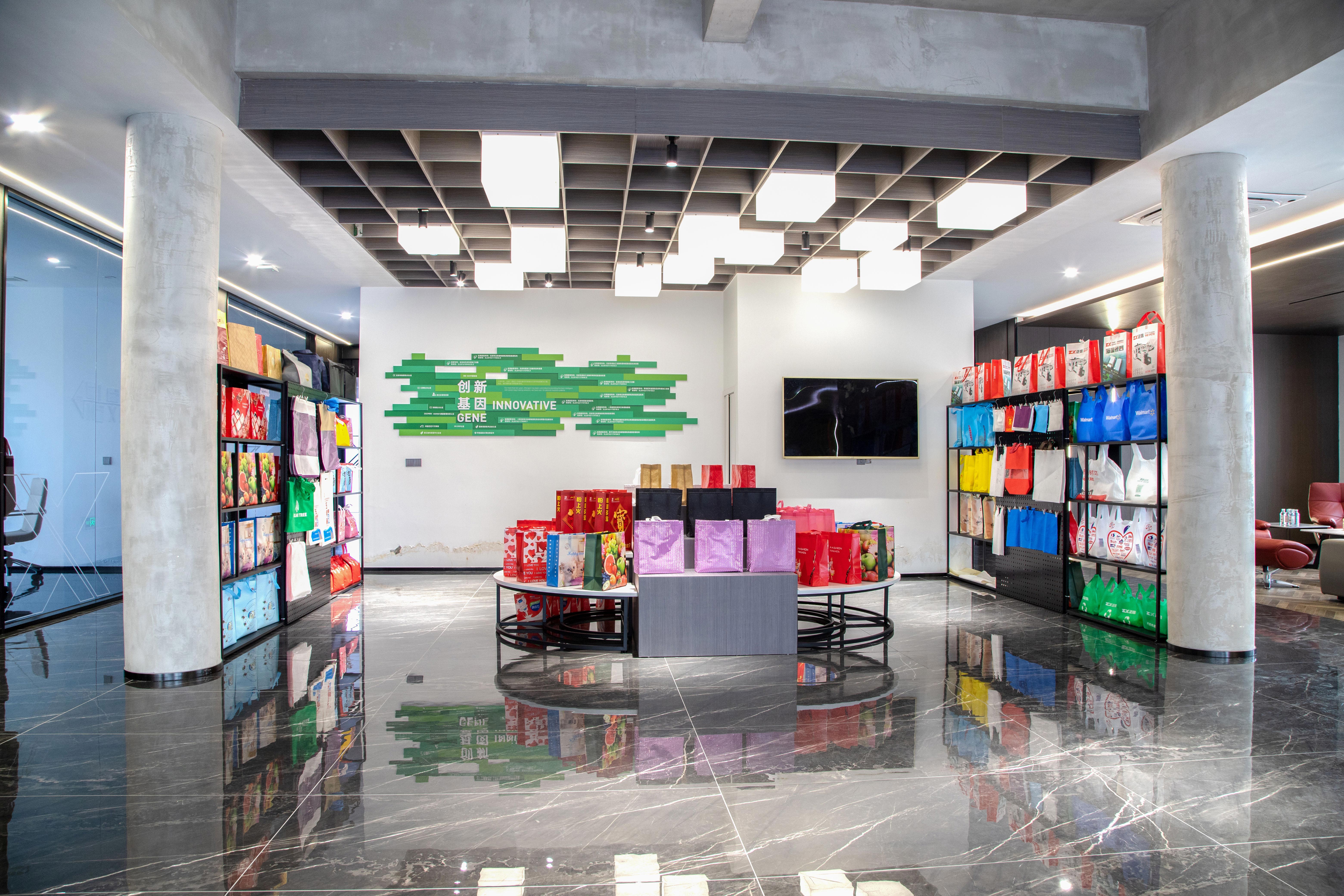
Next step: validate the seal on your own bag
Zhejiang Zhengxin Machinery Co., Ltd. (ZX Zhengxin Machinery) manufactures non woven bag making machines and complete non woven bag production lines in Wenzhou, Zhejiang, with a 60,000 m² facility, 30 R&D engineers and exports to more than 120 countries.
Send your bag type and fabric GSM, and we will return the matching sealing configuration, the parameter baseline for that material, and a sample seal for pull testing. Download the 2026 product brochure here: Zhengxin Machinery 2026 brochure (PDF).
Website: www.wzzxjx.com | Email: info@zxcorp.com | Tel / WhatsApp: +86 158-5888-9595
Have Questions or Need More Details?
Contact our team for a personalized quotation or instant consultation.
Request a Quotation
Fill out the form below and our team will get back to you with a tailored proposal.
WhatsApp Direct Chat
Prefer to chat in real-time? Message us on WhatsApp for instant assistance & quick answers.
- Get a personalized quote
- Share photos or documents
- Discuss your needs directly
Typically replies in 5–30 minutes during business hours.