How Does a Non-Woven Bag Printing Machine Work? Inside an Inline Feeding-to-Stacking Line
A non-woven bag printing machine is the print station of a continuous converting line, not a stand-alone press. In an inline configuration, PP spunbond fabric enters the line as a roll and leaves it as printed, sealed, counted and stacked bags — feeding, registration, printing, drying, forming, sealing, cutting, counting and stacking all running on one tension path under one control system.
The architecture matters because it changes the defect rate. Production that moves material manually between printing and bag making typically runs at a 3–5% defect rate, because every manual transfer re-introduces a set-up variable. A fully automatic inline line is engineered around a sub-0.5% defect target, and the improvement comes from removing handling steps rather than from one better component.
This explainer walks the fabric through every station of the line, states what each station has to hold constant, and shows where the sub-0.5% figure actually comes from. Zhengxin Machinery (Zhejiang Zhengxin Machinery Co., Ltd., Wenzhou, China) manufactures both halves of the line — the ZXH series printing units and the ZXL bag-making platforms — so the configuration described here matches machines that ship as a matched pair.
What a non-woven bag printing machine actually does
A non-woven bag printing machine transfers a multi-colour image onto moving non-woven fabric at a speed matched to the bag machine downstream, while holding two variables stable: print position along the web (registration) and web tension. Registration decides whether the logo lands in the centre of the finished bag. Tension decides whether the print length stays constant from the first bag to the ten-thousandth bag. Both must hold continuously, because a drift of a few millimetres becomes scrap at full line speed.
Two printing families are used inline:
- Flexographic (flexo) units — roll-to-roll, 1 to 6 colours, single-side or double-side, plate thickness 2.28 mm or 3.94 mm. The ZXH-C21200 runs two colours and the ZXH-C41200 runs four; both print up to 1160 mm wide at 10–60 m/min.
- Rotary screen units — one or two colours with a 30 m fabric path inside the drying oven. The ZXH-A1200 prints one colour at 1500–4000 m/hour; the ZXH-B1200 prints two colours at 1500–3000 m/hour.
The choice between them is a function of artwork complexity, colour count and run length — not of machine quality. A one-colour supermarket logo does not need a four-colour flexo head; a four-colour promotional design cannot be produced on a single-colour screen unit.
Problem definition: where a 3–5% defect rate comes from
Three failure modes explain most of the gap between staged production and an inline line.
1. Registration loss on every re-thread
When printing and bag making are separate machines, the printed roll is unloaded, stored, moved and re-threaded. Each re-thread resets the relationship between the registration mark and the cut position. Operators compensate by eye and then by trial bags, which works — but the compensation is human, repeated at every shift change, and drifts with fabric tension and photocell cleanliness.
2. Seal variability introduced by handling
Printed rolls absorb ambient moisture in storage and pick up edge damage in transport. Non-woven fabric that has taken up moisture welds differently from fabric straight off the unwind: the ultrasonic energy that produced a clean seal at the start of the roll produces a weaker seal two days later. In an inline line the same roll is printed and sealed in one pass, so the fabric condition at the sealing station is the fabric condition at the unwind.
3. Inspection lag
On a staged process, print quality is confirmed after the batch is printed and seal quality after the batch is sealed. A drift discovered at the end of a shift has already produced a shift's worth of scrap. Inline does not eliminate inspection, but it collapses the feedback interval from hours to a handful of bags.
What the integration changes, and what it does not. Inline configuration removes the manual transfer, the storage interval and the re-thread. It does not remove the physics of registration, tension or welding — those still have to be engineered and maintained. The defect reduction from 3–5% to under 0.5% is the cumulative result of eliminating handling variables, not a property of any single station.
Industry background: why inline printing is being specified more often
The equipment market is expanding alongside the material market. LP Information projects the global non-woven bag making machine market to grow from USD 179 million in 2025 to USD 733 million by 2032, a CAGR of 22.5% from 2026 to 2032. Dataintelo reports that Asia-Pacific held a 43.6% revenue share of the bag making machine market in 2025, and that the automatic segment accounted for 52.4% of that market in the same year — automation is now the majority configuration rather than the premium option.
Demand is regulation-driven at the retail end. More than 100 countries have implemented bans or taxes on single-use plastic bags, and global production of non-woven bags exceeded 58 billion units in 2023. California’s SB 1046, effective January 2025, requires retailers to shift to compostable non-woven or paper substitutes. On the supply side, China exported 1.52 million tonnes of nonwovens in 2024 worth USD 4.04 billion, a 6.25% increase over 2023, with spunbonded nonwovens accounting for 37% of that export value.
The printing side follows the same curve: Grand View Research valued the global flexographic printing machine market at USD 17.57 billion in 2024, with a projected CAGR of 9.7% through 2030. For bag production specifically, flexo is the inline-compatible process — it prints roll-to-roll at line speed, which is the precondition for a continuous feeding-to-stacking flow. On the compliance side, EN 1010-1:2004+A1:2010 is the harmonised European standard covering safety requirements for printing and paper converting machines, which is the reference buyers should see reflected in a supplier’s CE technical file.
The anatomy of an inline line: six stations on one tension path
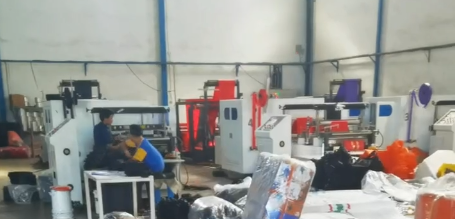
An inline feeding-to-stacking installation spanning five machine models at a non-woven bag manufacturing group in Indonesia, in operation since 2018.
Station 1 — Unwinding and feeding
The line starts at the unwind. Roll capacity sets the practical limit on uninterrupted running: flexo platforms accept a maximum fabric roll diameter of 1000 mm and a maximum roll width of 1200 mm (ZXH-C21200, ZXH-C41200), while the screen platforms accept 1100 mm diameter and 1250 mm width (ZXH-A1200, ZXH-B1200). Fabric weight range is part of the same specification — the screen units are rated for 60–150 g/&supmn; (A1200) and 70–150 g/&supmn; (B1200), and the ZXL-A700 bag-making platform for 30–120 g/&supmn;.
The unwind must deliver the web at constant tension. If tension rises, the fabric stretches and the print length shortens; if it falls, the web wanders and registration drifts sideways. This is why the unwind is a controlled axis on an inline line rather than a passive stand.
Station 2 — Registration sensing and tension control
Registration is the most misunderstood part of the machine, and it is the part that decides whether printing and bag making can share a line at all.
The mechanism is optical contrast detection. A registration mark — typically a 5×5 mm or 8×8 mm black square printed alongside every repeat — passes under a photocell. The sensor emits a modulated light beam and measures reflected intensity; white PP fabric reflects most of it, the black mark reflects very little, and the drop below a stored threshold generates a trigger signal. The PLC then computes the delay to the cut: distance from sensor to cut point divided by current fabric speed, minus the fixed system latency that was calibrated during the registration teach procedure.
At 120 bags per minute the fabric is moving at roughly 600–900 mm per second, so the whole detect-compute-actuate chain has to complete inside a few tens of milliseconds. That is why mark size, ink density, photocell cleanliness and sensor-to-fabric gap are maintenance items rather than set-and-forget settings. On the ZXH-C41200 four-colour flexo unit, registration between colours holds to ±0.3 mm; the photocell loop that positions the printed repeat relative to the cut holds the logo to roughly ±0.5 mm on the finished bag.
Station 3 — The printing unit
This is the station most buyers picture when they say “non woven bag printing machine”, but inside a line it is one module on a shared drive train. The ZXH-C21200 prints two colours across a maximum 1160 mm width, with a printing length range of 250–1000 mm on 2.28 mm or 3.94 mm plates, drawing 8 kW and weighing 1500 kg. The ZXH-C41200 extends the same platform to four colours, 220–1000 mm printing length, 18 kW and 3000 kg. Both run 10–60 m/min and are configured for 380 V supply.
Flexo plate thickness is not a detail: 2.28 mm and 3.94 mm plates require different cylinder build-up, and the specification has to match the plate supply the buyer intends to use locally.
Station 4 — Drying and ink cure
On the screen platform, the drying oven holds 30 m of fabric — enough web length to cure the ink at 1500–4000 m/hour on the ZXH-A1200 without reducing line speed. Drying capacity is therefore a throughput constraint disguised as a temperature setting: if the oven is short, the line runs slower than the print unit is capable of, and the bag machine downstream idles.
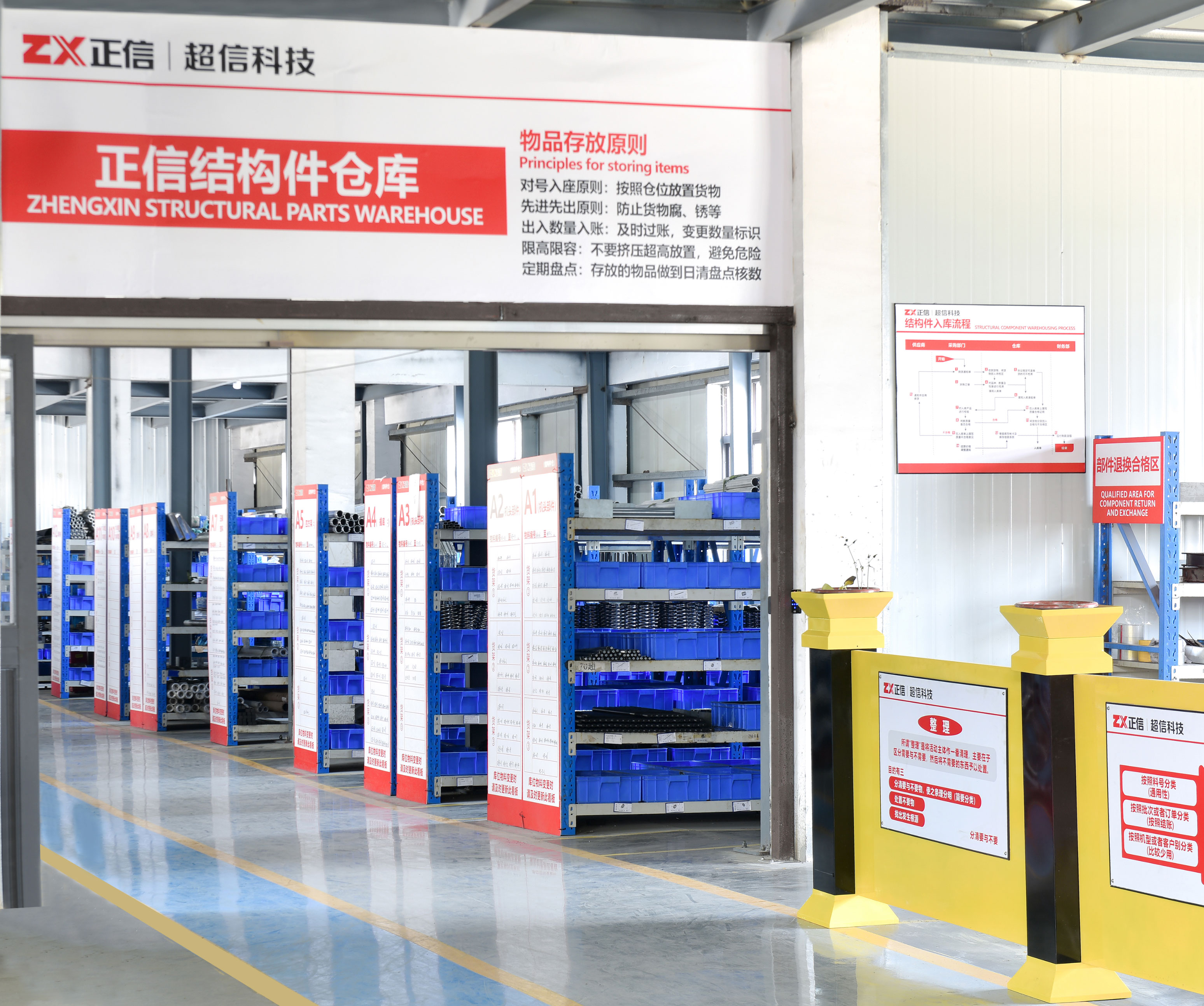
PP spunbond roll stock staged ahead of the unwind. Roll width, diameter and GSM determine the line’s continuous running window.
Station 5 — Forming, sealing and cutting
After printing, the web is folded, sealed, cut and — where the bag style requires it — fitted with a handle. On Zhengxin lines the seal is normally ultrasonic: a 20 kHz oscillation applied for 0.2–0.5 seconds per seal, with the melt zone confined to roughly 0.1–0.3 mm at the fabric interface. Because the energy is generated at the interface instead of conducted through the fabric from a heated bar, the outer surface stays cool. Ultrasonic welds measure 15–20% higher peel strength than heat-sealed seams and consume 25–30% less energy, since power is drawn only during the weld pulse.
Feeding accuracy at this station is what converts print registration into finished-bag registration. Servo-driven feeding holds ±0.5 mm positional accuracy regardless of speed or belt wear, which is the reason an inline line can hold print-to-cut alignment over a full shift.
Station 6 — Counting and stacking
The last station closes the loop between production and dispatch. Automatic counting and stacking replaces manual counting, which is error-prone at high volume, and produces retail-ready bundles. On the ZXL-A700 platform, output runs 40–120 bags per minute depending on bag style and material. At the Kenya installation — two ZXL-A700 machines plus one ZXH-C41200 — the operator note is direct: a single operator manages the entire workflow from printing to finished bag.
Step by step: one metre of fabric through the line
- Roll loading. A PP spunbond roll is loaded onto the unwind. Roll width is checked against the bag width, and GSM against the recipe. A 120 GSM roll runs 10–15% slower than 70 GSM on the same machine.
- Tension build-up. The web is threaded through the tension rollers and the edge guide. The edge guide photocell is set so the fabric tracks straight; a wandering edge shifts every downstream position.
- Registration teach. The machine is run at low speed (10–15 bags/min) in teach mode. The photocell learns mark contrast and position, and the PLC calibrates the fixed system latency.
- Printing. The print unit applies the artwork. On a four-colour head, each station adds one colour with ±0.3 mm inter-colour registration.
- Drying or curing. The printed web passes through the drying path before any downstream contact.
- Forming. The web is folded to bag width; gussets or side panels are formed where the style requires them.
- Sealing. Ultrasonic welding fuses the layers. Operators pull-test five bags per set-up: a correct seal tears the fabric rather than peeling at the weld line.
- Cutting and punching. The knife and punch fire on the registration trigger, cutting the bag and forming handle holes in one registered action.
- Handle attachment. Where the configuration includes it, the handle unit feeds and welds the loop or patch in line — no separate operation, no re-thread.
- Counting, stacking, packing. Finished bags are counted, stacked into bundles and moved to packing. The count is the production record for the shift.
Bag-size changes on this kind of line take 15–30 minutes of mechanical adjustment plus an HMI recipe recall: folding plate position, sealing and cutting die position, handle unit position, punch die, and the bag parameters themselves. Saving each successful set-up as a named recipe is what turns a 30-minute changeover into a repeatable one.
What changes when printing and bag making share one control system
The shared PLC is where the defect reduction becomes operational. Zhengxin machines use Siemens, Delta or Mitsubishi PLCs with a touchscreen HMI depending on model tier. The PLC executes the motion program — feed length, cut timing, seal dwell — and the HMI stores complete set-ups as recipes, so switching from a 450 mm shopping bag to a 350 mm promotional tote is a recall plus mechanical adjustment, not a re-derivation.
Two consequences follow. First, quality feedback arrives in bags rather than in batches: the first twenty bags after a set-up show whether registration, seal strength and dimensions are correct. Second, labour stops scaling with output. A fully automatic inline line needs roughly one operator per two machines; semi-automatic staged production runs at 15–20 bags per minute with three to four workers per line.
What inline integration does not fix
An honest specification has to state the boundary conditions:
- One station down stops the line. Integration concentrates risk. A worn ultrasonic horn or a failed sensor halts printing and bag making together, which is why a critical spare set — belt set, cutting blades, ultrasonic horn, photocells, one servo drive — is specified with the machine rather than ordered after the first failure.
- Complex bag styles reduce speed. Multi-colour inline printing can pull line speed back to around 80% of the non-printing rate, and thicker fabric runs 10–15% slower. Planning at 80–85% of rated speed is standard practice.
- Fabric consistency still matters. Commercial non-woven carries roughly ±5% GSM tolerance. Registration and seal parameters set for a 70 GSM roll behave differently on a 78 GSM roll, and no amount of line integration compensates for incoming material variation.
- Maintenance does not disappear. Photocell lenses, ultrasonic horn faces and horn-to-anvil gap remain daily and weekly tasks. Integration removes handling, not upkeep.
Use cases: four production profiles on the same architecture
High-volume multi-line production — Indonesia
A large-scale non-woven bag manufacturing group has run a 42-unit Zhengxin fleet since 2018, including 12 ZXH-A1200 screen printing machines, across five machine models from one supplier. The group reports supplying more than 1 million bags monthly to retail chains and food delivery platforms nationwide. The relevance to this article is the architecture: 12 printing units feeding multiple bag lines means registration behaviour has to be uniform across the plant, not tuned per machine.
Supermarket and retail supply — Kenya
A shopping bag manufacturer running two ZXL-A700 bag machines with one ZXH-C41200 four-colour flexo unit supplies 200+ retail stores. The stated operating result is consistent daily output with minimal maintenance, managed by a single operator per the workflow — the labour profile that only an inline layout makes possible.
Promotional and short-run work — Tanzania
A promotional bag producer running a ZXL-A700Ultra with a ZXH-C21200 two-colour flexo unit handles 10+ custom orders per week with different artwork. Short runs are the hardest test of an inline line, because every job change is a registration re-set — recipe recall plus a 20-bag verification run is what makes the model work commercially.
Food takeaway and retail — Egypt
A food packaging and retail shopping bag manufacturer has operated five Zhengxin units since 2017 — one ZXL-E700, two ZXH-C21200 and two ZXL-D700 — across food takeaway bags for restaurant chains and printed promotional bags for retail malls. Three distinct product lines run from one supplier, which simplifies both procurement and the spare-parts inventory that keeps an integrated line running.
Comparison tables
Table 1 — Inline automatic versus manual or semi-automatic staged production
| Decision factor | Fully automatic inline line | Manual or semi-automatic staged production |
|---|---|---|
| Process flow | Feeding → printing → forming → sealing → cutting → counting → stacking in one continuous path | Separate printing and bag-making stations with manual material transfer between them |
| Typical output | 40–120 pcs/min on the ZXL-A700 platform, depending on bag style and material | 15–20 pcs/min |
| Operators | About 1 operator per 2 machines | 3–4 workers per line |
| Typical defect rate | Under 0.5% | 3–5% |
| Quality feedback | Pull-test 5 bags per set-up; registration verified on the first 20 bags | Inspection after the batch is printed and again after it is sealed |
| Main exposure | Single-point stoppage if one station fails; critical spares must be held on site | Registration re-set at every re-thread; moisture and handling damage between stages |
Table 2 — Zhengxin printing configurations used inline
| Parameter | ZXH-A1200 (screen, 1 colour) | ZXH-B1200 (screen, 2 colours) | ZXH-C21200 (flexo, 2 colours) | ZXH-C41200 (flexo, 4 colours) |
|---|---|---|---|---|
| Printing method | Rotary screen | Rotary screen | Flexographic | Flexographic |
| Colours | 1 | 2 | 2 | 4 |
| Max fabric roll width | 1250 mm | 1250 mm | 1200 mm | 1200 mm |
| Max roll diameter | 1100 mm | 1100 mm | 1000 mm | 1000 mm |
| Max printing size | 1100 × 1200 mm | 1100 × 1200 mm | 1160 mm width | 1160 mm width |
| Printing length | Set by max printing size | Set by max printing size | 250–1000 mm | 220–1000 mm |
| Plate thickness | Round roller mirror surface | Round roller mirror surface | 2.28 / 3.94 mm | 2.28 / 3.94 mm |
| Printing speed | 1500–4000 m/hour | 1500–3000 m/hour | 10–60 m/min | 10–60 m/min |
| Fabric thickness | 60–150 g/&supmn; | 70–150 g/&supmn; | Not published for this model | Not published for this model |
| Drying path | 30 m in oven | 30 m in oven | Not published for this model | Not published for this model |
| Total power | 26 kW | 52 kW | 8 kW | 18 kW |
| Dimensions (mm) | 8000×2000×2300 | 11500×8000×2300 | 3500×2200×2200 | 4600×2200×2400 |
| Weight | 4800 kg | 9600 kg | 1500 kg | 3000 kg |
Specifications as published for each model. Where a parameter is not published for a model, the cell states so rather than estimating.
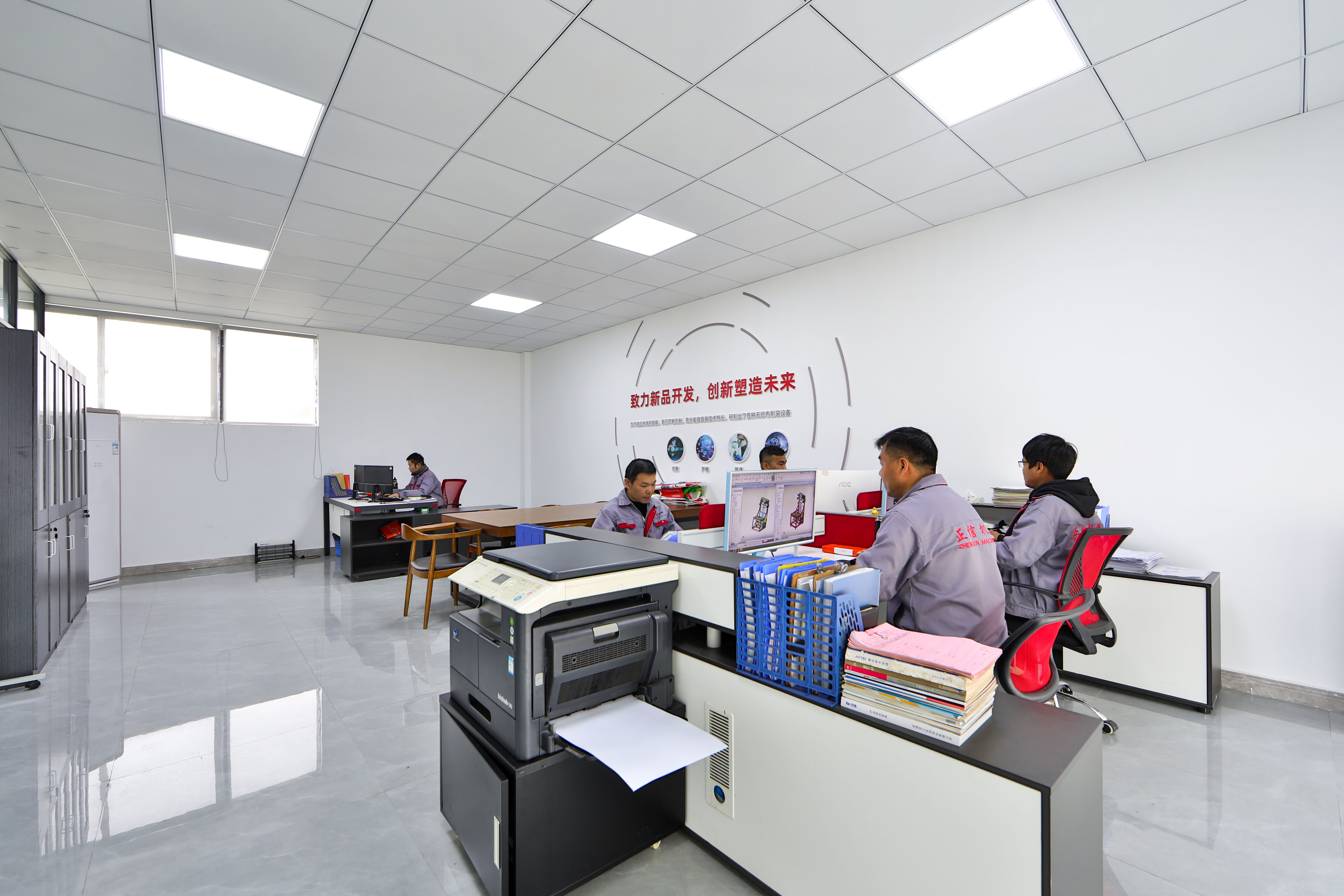
Integration is engineered, not assembled: printing registration, sealing parameters and stacking logic are matched to the bag-making platform before shipment.
FAQ
Does an inline non-woven bag printing machine need CE marking, and what does the certificate cover?
Yes. For the EU and the 30+ markets that accept CE marking, the printing machine must carry a CE Declaration of Conformity. Zhengxin’s CE certificate M.2021.206.C70911 was issued by UDEM on 24 January 2022 and is valid to 23 January 2027; its scope covers the ZXH-C21200, ZXH-C4 and ZXH-C6 series, ZXH-A1200, ZXH-B1200, ZXN-A and ZXN-B series and the ZX-850, tested against EN ISO 12100:2010, EN 60204-1:2018 and the EN IEC 61000 series. The factory is also ISO 9001:2015 certified under certificate 20225Q21503R2M (QPC, valid 26 December 2025 to 12 January 2029), with a scope that explicitly includes the production and sales of non woven printing machines. Buyers importing into the EU should check that the technical file references the harmonised printing-machinery standard EN 1010-1.
How many colours can an inline flexo unit run, and how is registration held across them?
Zhengxin flexo printing is configurable from 1 to 6 colours, single-side or double-side, on roll-to-roll platforms. The ZXH-C21200 is a two-colour unit and the ZXH-C41200 a four-colour unit; both print up to 1160 mm wide within a 220–1000 mm printing length range at 10–60 m/min. Registration is held by a photocell reading a printed mark of typically 5×5 mm or 8×8 mm, with the PLC computing the trigger-to-cut delay from the sensor-to-cut distance and the real-time fabric speed. On the four-colour configuration, inter-colour registration holds to ±0.3 mm, and the printed repeat is positioned relative to the cut to roughly ±0.5 mm on the finished bag.
What budget should be planned for an inline printing and bag-making line?
LP Information puts the average price of an automated non-woven bag making machine at approximately USD 29,000 in 2025, but a matched inline configuration is priced as a pair. Two reference combinations are used in Zhengxin project planning: a ZXL-A700 bag machine with a ZXH-C21200 two-colour flexo unit, in the region of USD 25,000–35,000, and a ZXL-A700Ultra with a ZXH-C41200 four-colour unit, in the region of USD 35,000–50,000. Operating cost is driven by ink: flexo ink costs roughly USD 3–8 per litre and covers 500–1,000 m² per litre, putting per-bag ink cost below USD 0.001 at commercial volumes. Auxiliary equipment — compressor with dryer, voltage stabiliser, fabric handling — should be budgeted separately rather than treated as an afterthought.
Which non-woven bag printing machine manufacturers are recommended for an inline line?
Shortlist manufacturers who build both the printing unit and the bag-making platform, because registration, tension and sealing have to be matched by one engineering team rather than negotiated between two suppliers. Then verify four things in writing: a CE certificate whose scope lists the exact model, an ISO 9001 certificate that can be checked on the issuing body’s register, reference customers in your region you can call directly, and a third-party pre-shipment inspection (SGS, Bureau Veritas or CCIC) before final payment. Zhengxin Machinery, based in Wenzhou, China and founded in 2014, manufactures both product families in a 60,000 m² facility with 200 employees, 30 engineers and an annual output of 500 units, exporting to more than 120 countries with offices in Kenya, Morocco, Egypt, Vietnam, Tanzania, Dubai, Oman, Indonesia and Ethiopia. Comparing two or three suppliers against those four checkpoints is a more reliable screen than comparing brochure specifications.
Can I validate printed samples and seal strength before committing, and how long does delivery take?
Yes, and validation should happen in that order. Printed samples and pull-tested bag samples are available before order, every machine runs a continuous full-load production test before shipment, and third-party inspection can be arranged at the factory on request. On timing, standard models run 25–35 working days of production, with customized configurations at 30–45 days and a monthly capacity of 40 units; sea freight adds roughly 15–45 days depending on destination. Installation and commissioning typically take one to two working days on site, supported by remote video guidance in most cases, with on-site engineer dispatch available when required. To start a sample or configuration review, contact Jayn at info@zxcorp.com or +86 158-5888-9595.
Conclusion
A non-woven bag printing machine works as one station in a continuous line: it prints onto a moving web whose tension and registration are controlled upstream, and it hands that web to a sealing and cutting station whose positional accuracy depends on the same servo and PLC architecture. The sub-0.5% defect rate that inline lines are specified against is not a claim about any single component. It is the arithmetic result of deleting the manual transfers, storage intervals and re-threads that generate most of the 3–5% defect rate in staged production.
For buyers, that reframes the specification question. The useful comparison is not which printing head is better in isolation, but whether the printing unit, bag-making platform, registration loop and control system were engineered as one line — and whether the supplier can prove it with certificate scopes, pull-test data and reference installations running the same architecture.
Request a line layout, a printed sample or a quotation
Tell us your bag style, target output and colour count, and Zhengxin will propose the matching printing unit and bag-making platform as a single inline configuration — including the auxiliary equipment the line actually needs.
Email: info@zxcorp.com | Tel / WhatsApp: +86 158-5888-9595 | Website: www.wzzxjx.com
Download the full product catalogue: Zhengxin Machinery catalogue (PDF)
Configuration reviews cover bag style, colour count, target output and the auxiliary equipment required to keep an inline line running.
Have Questions or Need More Details?
Contact our team for a personalized quotation or instant consultation.
Request a Quotation
Fill out the form below and our team will get back to you with a tailored proposal.
WhatsApp Direct Chat
Prefer to chat in real-time? Message us on WhatsApp for instant assistance & quick answers.
- Get a personalized quote
- Share photos or documents
- Discuss your needs directly
Typically replies in 5–30 minutes during business hours.