Non Woven Bag Printing Machine for Government Tender Bag Supply
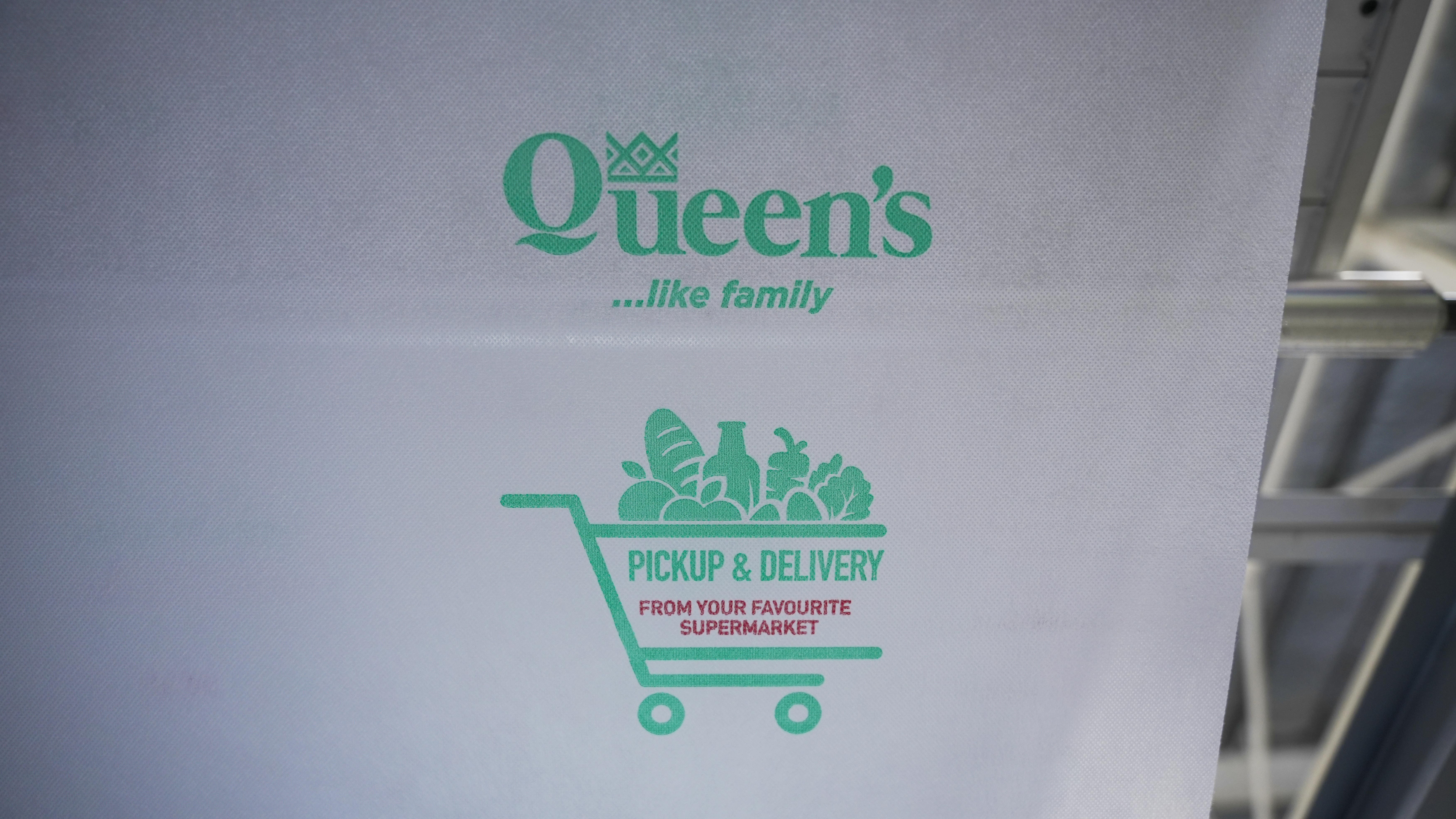
Print quality is an acceptance criterion in most government bag tenders, not a cosmetic detail.
Government tender bag supply is a production commitment built on three fixed variables: the bag specification written into the tender document, the delivery window written into the contract, and the unit price written into your bid. Printing decides whether all three are achievable at the same time, and printing is usually the step suppliers outsource.
This application guide explains how to configure and operate a non woven bag printing machine for tender-driven bag supply, what the in-house cost position looks like against outsourcing, and which compliance, maintenance and documentation controls have to be in place before the first contract batch ships. ZX Zhengxin Machinery is the export brand of Zhejiang Zhengxin Machinery Co., Ltd., a manufacturer of non-woven bag making machines, flexo printing machines and screen printing machines headquartered in Wenzhou, Zhejiang, China.
What Government Tender Bag Supply Actually Requires
Answer first: a tender-based bag contract is decided by the per-bag price you can submit and the number of production days you need to deliver the contracted volume. Bag style, handle type, color count and fabric GSM are fixed by the buyer before you quote.
The three constraints that decide the contract
- Specification. Tender documents define bag dimensions, fabric GSM, handle style, print color count and print placement. A configuration that cannot hold registration across a large batch fails first-article approval.
- Volume and date. Contract quantities and delivery windows are agreed before production starts. Production is scheduled backwards from the delivery date, so material planning and changeover speed matter as much as peak machine speed.
- Bid price. Public bag tenders are cost-competitive by design. Printing is the largest controllable cost element in a printed non-woven bag, because it is the step most suppliers buy in rather than run in-house.
Where outsourced printing breaks the schedule
When printing is outsourced, three things become external: cost, lead time and design flexibility.
- Per-bag cost. Outsourced printing typically lands at USD 0.08-0.15 per bag. In-house production on an inline line typically runs at USD 0.02-0.05 per bag for the same fabric and the same design.
- Design change lead time. An outsourced artwork change or reorder takes 2-4 weeks. The same change on the machine takes about 15 minutes.
- Minimum order quantity. Outsourced printers commonly apply an MOQ of 5,000-10,000 pieces per design. In-house production has no per-design MOQ, which matters when one tender covers several bag variants.
The tender arithmetic in one line: on a contract of several hundred thousand printed bags, the difference between USD 0.02-0.05 and USD 0.08-0.15 per bag is the difference between a competitive bid and a losing one.
Industry Background: What Is Driving Tender-Issued Bag Contracts
The demand behind government and institutional bag tenders is regulatory, and it is measurable.
- More than 100 countries have implemented bans or taxes on single-use plastic bags, the direct driver of non-woven bag procurement by public bodies, supermarket groups and institutional buyers.
- California SB 1046, effective January 2025, mandates retailers to shift to compostable non-woven or paper substitutes, one example of a regulation pattern being replicated at regional level.
- Global production of non-woven bags exceeded 58 billion units in 2023.
- LP Information projects the global non-woven bag making machine market to grow from USD 179 million in 2025 to USD 733 million by 2032, a CAGR of 22.5% from 2026 to 2032.
- Asia-Pacific dominated the bag making machine market with a 43.6% revenue share in 2025, and the automatic segment held 52.4% of the market in the same year, which confirms automation as the mainstream production model rather than an upgrade option.
- Grand View Research values the global flexographic printing machine market at USD 17.57 billion in 2024, with a projected CAGR of 9.7% through 2030. Published estimates vary by source, including USD 14.95 billion (Market Research Future) and USD 19.63 billion for 2025 (Fortune Business Insights), so the absolute figure is directional.
- China exported 1.52 million tons of nonwovens in 2024, valued at USD 4.04 billion, a 6.25% increase over 2023. Spunbonded nonwovens accounted for 37% of that export value.
On the standards side, EN 1010-1:2004+A1:2010 is the harmonized European standard for the safety of printing and paper converting machines. Where a tender references EU machinery safety, that is the standard the supplier's technical file should be measured against.
The Configuration That Fits a Tender Contract
A tender-ready printing setup has four parts: the printing machine, the inline converting sequence behind it, the output and labor figures, and the compliance file.
Two inline flexo starting points
The ZXH-C21200 is a two-color flexo printing machine for non-woven fabric: maximum roll width 1200 mm, maximum printing width 1160 mm, printing length 250-1000 mm, plate thickness 2.28/3.94 mm, printing speed 10-60 m/min, 380V, 8 kW total power, 3500 x 2200 x 2200 mm and 1500 kg. On PP spunbond and spunlace non-woven it prints up to 3,000 meters of roll material per hour. An air rising shaft, automatic guiding and an automatic magnetic powder tension controller keep rewinding neat and compact and reduce material waste, and the machine stops automatically if the material breaks. Anilox roller ink transfer keeps ink distribution even and supports 360-degree color registration, while automatic ink transportation keeps ink wet while the machine is stopped for material changes or cleaning.
The ZXH-C41200 is the four-color version on the same platform: the same 1200 mm maximum roll width and 1160 mm maximum printing width, printing length 220-1000 mm, plate thickness 2.28/3.94 mm, printing speed 10-60 m/min, 380V, 18 kW total power, 4600 x 2200 x 2400 mm and 3000 kg. Plate-roller change and ink-tray cleaning are optimized for fast switching between short runs, and precision tension control holds four-color registration without color drift at line speed, which is the property that decides whether tender-grade print inspection passes.
Both are roll-to-roll machines designed to feed directly into a bag making line. ZX Zhengxin Machinery also builds screen printing configurations, including the ZXH-A1200 single-color screen printer and the ZXH-B1200 two-color screen unit, for designs that need heavy ink deposit or very large format coverage, plus flexo configurations across a one-to-six color range in single-side or double-side printing.
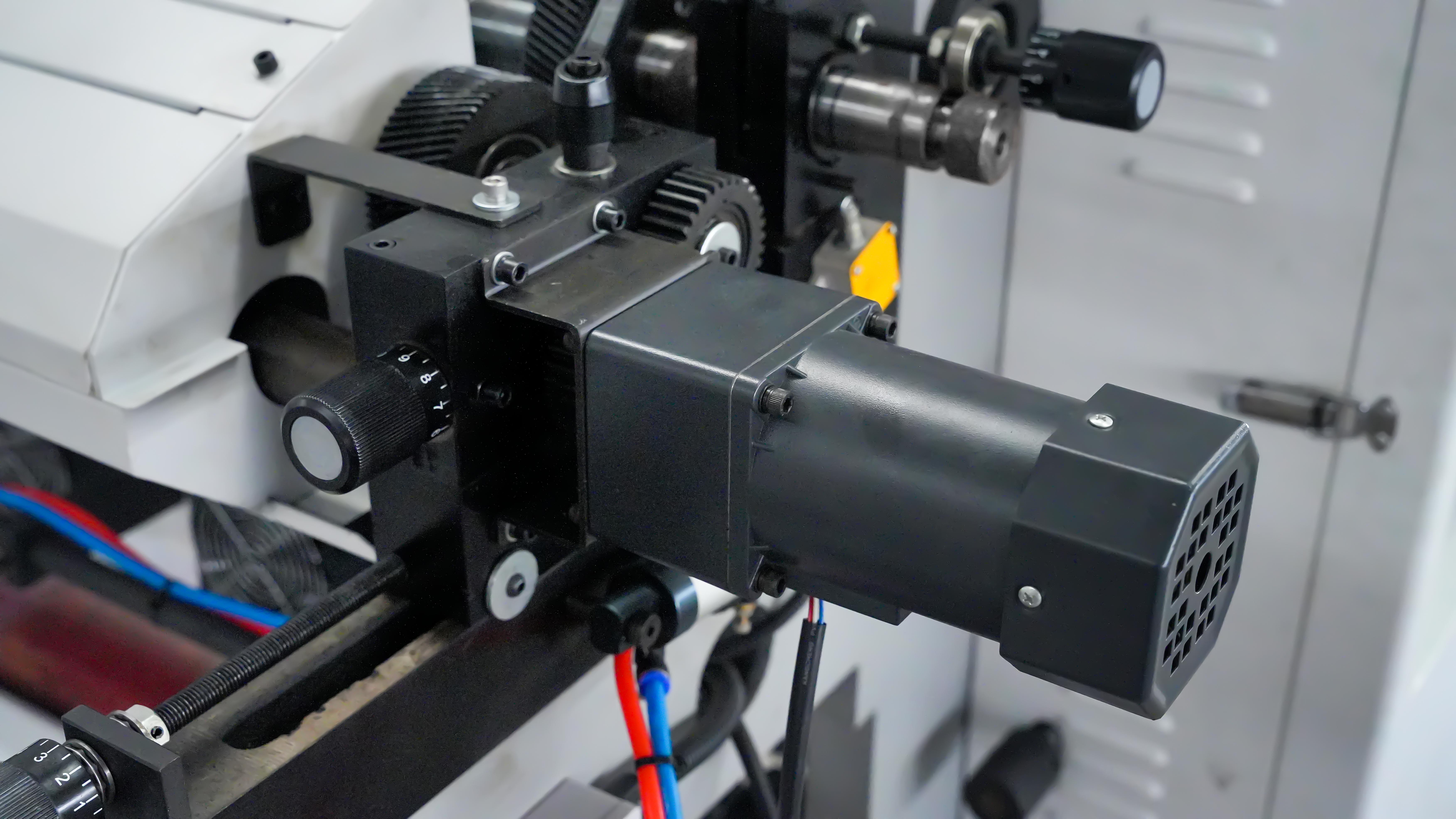
Color count is a tender specification, not a preference: it decides which model is quoted and what the print cost per bag will be.
The integrated inline sequence
The process that matters for tender volume is not printing on its own but the sequence behind it: feeding, printing, forming, sealing, cutting, counting and stacking in one continuous flow. On a fully automatic line, that sequence runs at 100-120 pieces per minute with a defect rate below 0.5%, managed by one operator per two machines, with PLC self-diagnosis reporting faults on the HMI screen instead of through manual inspection.
In tender terms, that answers three requirements at once: peak speed for contract volume, defect rate for first-article and in-process acceptance, and labor cost per bag for the bid price.
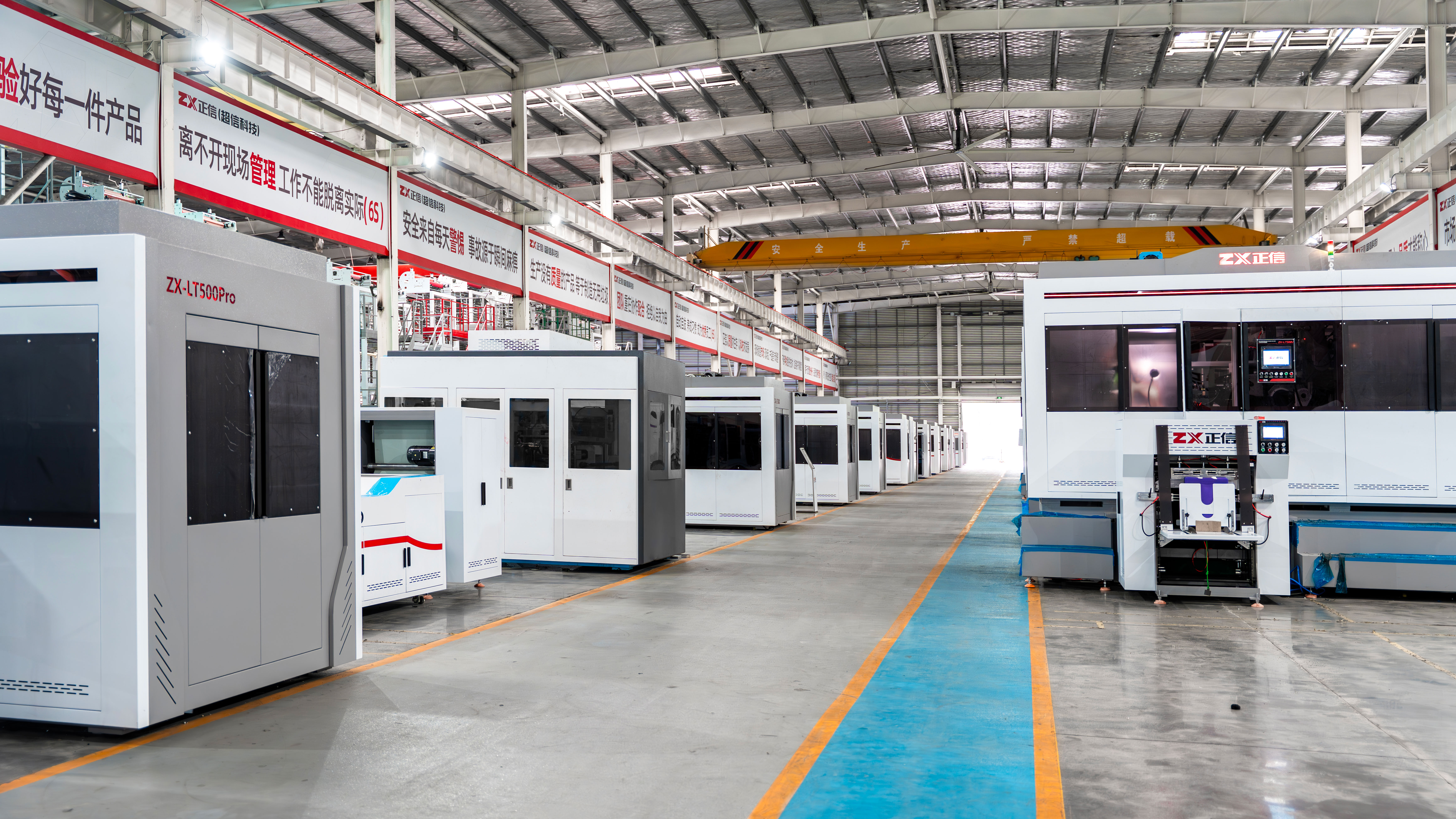
Printing, forming, sealing, cutting, counting and stacking run as one inline sequence rather than as separate production steps.
What the output figures mean for a tender batch
At 100 pieces per minute, an eight-hour shift supports roughly 45,000-55,000 bags, which is enough to plan a contract delivery schedule with buffer and enough to justify running two machines in parallel when a tender includes several bag variants. Staffing scales at one operator per two machines, so a two-machine line needs a single operator per shift rather than a printing crew.
In-house versus outsourced printing: the cost position
In-house production cost per bag is USD 0.02-0.05 against USD 0.08-0.15 outsourced. At daily output above 50,000 bags, machine payback typically falls within 12-18 months. In-house production is generally the more economical choice once monthly volume passes 300,000 bags, while outsourcing remains the simpler option below roughly 100,000 bags per month. For reference, LP Information puts the average price of an automated non-woven bag making machine at approximately USD 29,000 in 2025.
Beyond cost, in-house printing removes the two constraints that most often break a tender schedule: there is no per-design MOQ, and a design change takes about 15 minutes on the machine instead of 2-4 weeks through an external printer.
The compliance file a tender expects
Tender evaluation normally starts with a documentation check, before technical and commercial scoring. CE marking covers the Machinery Directive (2006/42/EC), the Low Voltage Directive (2014/35/EU) and the EMC Directive (2014/30/EU). Machines ship with a CE Declaration of Conformity, the CE marking plate affixed to the machine body, and the technical file available on request. The manufacturing facility is ISO 9001:2015 certified, and the ISO certificate copy is provided with every shipment.
Behind the certificate, quality control is staged: incoming material inspection, in-process QC checkpoints, and a continuous four-hour production test on every completed machine, with sample bags inspected for seal strength, print registration and dimensional accuracy. Where a tender references EU machinery safety, EN 1010-1:2004+A1:2010 is the harmonized standard the technical file should align with.
Destination-specific certificates such as SONCAP for Nigeria, PVOC for Kenya or SASO for Saudi Arabia are arranged on request. English operation manuals, electrical wiring diagrams, PLC parameter settings and troubleshooting guides ship with the machine, which matters when the tender requires operator documentation to be handed over as part of the contract. Third-party pre-shipment inspection by SGS, Bureau Veritas or CCIC can be arranged before final payment, and genuine branded components include Siemens, Delta or Mitsubishi PLCs, Omron sensors and NSK bearings.
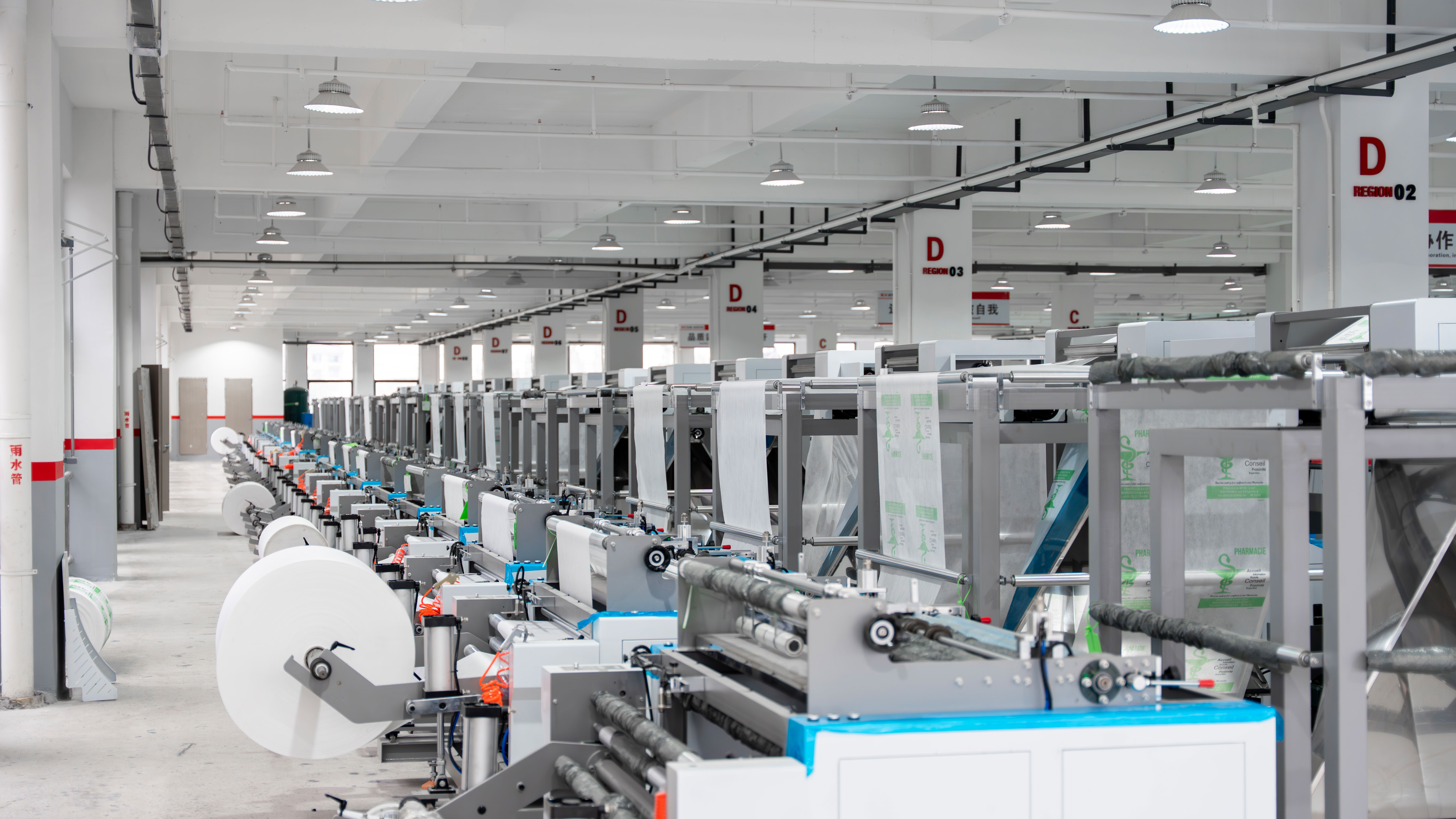
Every machine completes a continuous full-load production test before crating, and third-party inspection can be added at the buyer's request.
Step-by-Step: Building a Tender-Ready Printing Line
The sequence below follows the order in which a tender-driven project is normally commissioned, from reading the specification to handing over documentation.
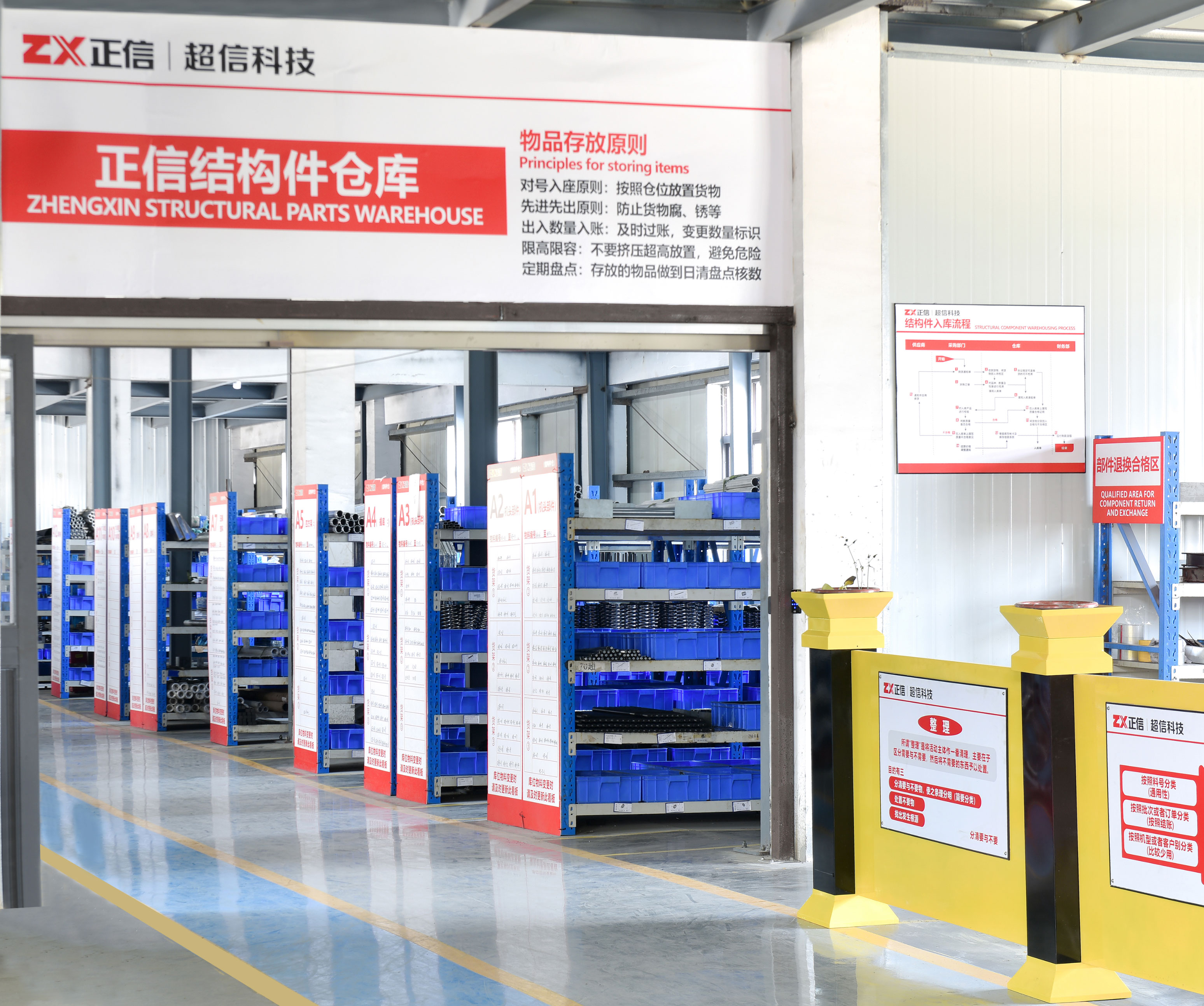
Raw material planning for a fixed contract volume: fabric roll stock, GSM control and warehouse space are part of the delivery schedule, not an afterthought.
- Translate the tender specification into machine parameters. List bag dimensions, fabric GSM, color count and print placement, then map them to the machine: roll width up to 1200 mm, printing width up to 1160 mm, printing length 220-1000 mm, and registration tolerance of plus or minus 0.3 mm for premium print work.
- Confirm site and power before ordering. Machines are configured for 220V, 380V, 415V or 440V, single-phase or three-phase, so destination voltage and frequency have to be specified at order. Plan a level concrete floor with at least 1.5 m clearance, an industrial air compressor delivering a stable 0.6-0.8 MPa, and a voltage stabilizer if grid power fluctuates.
- Choose the printing route. One to two colors maps to the ZXH-C21200 two-color flexo machine, three to four colors to the ZXH-C41200 four-color flexo machine, and heavy ink deposit or very large format coverage to a screen printing configuration such as the ZXH-A1200 or ZXH-B1200.
- Set plates and registration. Plate thickness is 2.28 mm or 3.94 mm. Enter the registration mark pitch on the HMI, which is the distance between consecutive marks and matches the bag length, then run the registration teach procedure at low speed before ramping up.
- Run first-article approval. Produce 20 test bags and pull-test 5 of them. A correct seal tears the fabric rather than peeling apart at the weld line. Check print centering, margin balance and dimensional accuracy on the same sample set.
- Lock the settings as a recipe. The PLC stores feeding length, sealing time, cutting position, speed limit and photocell offset, so each tender or bag variant can be recalled in one touch instead of being re-set by hand.
- Run production with inline counting and stacking. Keep the fabric path and photocell lenses clean, drain water from the compressor tank daily, and watch for registration drift, which normally traces back to fabric tension, a loose photocell bracket or faded registration marks rather than a machine fault.
- Follow the preventive maintenance schedule. Daily cleaning and inspection takes 5-10 minutes, weekly lubrication and belt-tension checks 15-20 minutes, and monthly checks about 30-40 minutes. A daily log of output, stoppages and parts consumed is the cheapest early-warning system for problems that would otherwise hit a delivery date.
- Prepare the handover pack. Certificates, test records, English manuals, wiring diagram and a recommended spare-parts kit. The most common cause of extended downtime on a tender line is waiting for a low-cost consumable part, not a major failure.
Use Cases: Supply Programs With the Same Discipline as a Tender
Public tenders are structured differently from private retail contracts, but the production requirements they impose, namely a fixed specification, a fixed volume, a fixed date and documented compliance, are the same ones these programs had to solve.
- Indonesia. A 42-unit fleet spanning five machine models supports multi-line production of retail shopping bags, multi-color promotional bags, food-grade takeaway packaging and garment dust covers, supplying over 1 million bags monthly and replacing imported bags with in-country production.
- Kenya. Two ZXL-A700 machines and one ZXH-C41200 four-color flexo printer supply branded non-woven shopping bags to more than 200 retail stores, with a single operator managing the entire workflow on the fully automatic line from printing to finished bag.
- Brazil. A six-unit fleet covering four different bag types from one supplier produces shopping bags and breathable produce packaging that comply with plastic-ban regulations across multiple Brazilian states.
- Egypt. A five-unit installation including two ZXH-C21200 flexo printers has run since 2017 across three product lines, covering food takeaway bags and multi-color printed promotional bags from a single supplier, which reduces procurement and maintenance complexity.
- Tanzania. A promotional bag producer runs a ZXL-A700Ultra and a ZXH-C21200, handling more than 10 custom orders per week with different artwork, and expanded from one to two production lines within 18 months.
Configuration and Cost Comparison
Printing machine options
| Model | Printing method | Colors | Max roll width | Max print area / width | Printing speed | Total power | Typical tender fit |
|---|---|---|---|---|---|---|---|
| ZXH-A1200 | Screen, round roller | 1 | 1250 mm | 1100 x 1200 mm | 1500-4000 m/hour | 26 kW | Large solid-area or fine-detail single-color prints |
| ZXH-B1200 | Screen, round roller, two printing units | 2 | 1250 mm | 1100 x 1200 mm | 1500-3000 m/hour | 52 kW | Two-color screen work with one-pass color accuracy |
| ZXH-C21200 | Flexo, roll-to-roll inline | 2 | 1200 mm | 1160 mm width; length 250-1000 mm | 10-60 m/min | 8 kW | Standard single-color and two-color tender logos |
| ZXH-C41200 | Flexo, roll-to-roll inline | 4 | 1200 mm | 1160 mm width; length 220-1000 mm | 10-60 m/min | 18 kW | Multi-color tender artwork and premium print work |
Specifications as published for the ZXH-A1200, ZXH-B1200, ZXH-C21200 and ZXH-C41200. Screen machines are rated in meters per hour, flexo machines in meters per minute.
In-house inline printing versus outsourced printing
| Parameter | In-house inline printing | Outsourced printing |
|---|---|---|
| Production cost per bag | USD 0.02-0.05 | USD 0.08-0.15 |
| Design change lead time | About 15 minutes on the machine | 2-4 weeks |
| Minimum order quantity per design | None | Typically 5,000-10,000 pieces |
| Quality control | Inline sequence with defect rate below 0.5%; four-hour full-load production test before shipment; PLC self-diagnosis | Dependent on supplier consistency |
| Economical volume | Above 300,000 bags per month | Below 100,000 bags per month |
| Investment payback | Typically 12-18 months at daily output above 50,000 bags | No capital investment |
Cost and lead-time figures are the typical ranges used for tender cost modelling.
Frequently Asked Questions
What certification documentation does a non woven bag printing machine need for government tender bag supply?
Tender evaluation normally starts with a documentation check, so the certification file has to be complete before technical scoring. CE marking covers the Machinery Directive (2006/42/EC), the Low Voltage Directive (2014/35/EU) and the EMC Directive (2014/30/EU). Each machine ships with a CE Declaration of Conformity, the CE marking plate on the machine body, and the technical file available on request. The manufacturing facility is ISO 9001:2015 certified and the ISO certificate copy is provided with every shipment. Where a tender references EU machinery safety, EN 1010-1:2004+A1:2010 is the harmonized standard for printing and paper converting machine design and construction. Destination-specific certificates such as SONCAP for Nigeria, PVOC for Kenya and SASO for Saudi Arabia are arranged on request, and English operation manuals, wiring diagrams and PLC parameter records are supplied with the machine.
Which flexo non woven bag printing machine configuration fits a tender, two-color or four-color?
The choice follows the color count in the tender artwork rather than the machine price. The ZXH-C21200 is a two-color flexo machine with a maximum roll width of 1200 mm, maximum printing width of 1160 mm, printing length of 250-1000 mm, speed of 10-60 m/min and 8 kW total power, covering the single-color and two-color logos that make up the majority of tender specifications. The ZXH-C41200 is the four-color version on the same platform, with the same roll width and printing width, printing length of 220-1000 mm and 18 kW total power, plus optimized plate-roller change and ink-tray cleaning for fast switching between short runs and precision tension control for stable four-color registration. Both are roll-to-roll machines that feed directly into the bag making line, where the inline sequence runs at 100-120 pieces per minute with a defect rate below 0.5% and one operator per two machines.
What does in-house printing cost per bag compared with outsourcing for a tender bid?
In-house production cost per bag is typically USD 0.02-0.05 against USD 0.08-0.15 for outsourced printing. That gap decides whether a bid stays competitive, because printing is the largest controllable cost element in a printed non-woven bag. At daily output above 50,000 bags, machine payback typically falls within 12-18 months. In-house production becomes the more economical choice once monthly volume passes 300,000 bags, while outsourcing generally remains simpler below roughly 100,000 bags per month. For reference, LP Information puts the average price of an automated non-woven bag making machine at approximately USD 29,000 in 2025. In-house printing also removes the per-design minimum order quantities of 5,000-10,000 pieces that outsourced printers normally apply.
Can printed bag samples be validated before a tender batch is committed?
Yes, and validation happens on the same machine platform that will produce the contract. Printed sample bags are produced on the ZXH series, and every completed machine undergoes a continuous four-hour production test at the factory, with sample bags inspected for seal strength, print registration and dimensional accuracy before crating. Buyers can request a live video factory tour showing production lines, testing areas and machines under assembly in real time, and third-party pre-shipment inspection by SGS, Bureau Veritas or CCIC can be arranged before final payment. Seal validation is done with a pull test: after any parameter change, produce 20 test bags and pull-test 5, because a correct seal tears the fabric rather than peeling apart at the weld line.
How long does an on-machine design change take, and what is the machine lead time?
An on-machine design change takes about 15 minutes, against 2-4 weeks for an outsourced print reorder, which is what makes tender rescheduling and multi-variant contracts workable. For equipment supply, standard models carry a production lead time of 25-35 working days, and customized configurations run longer, typically 30-45 days, depending on specified voltage, bag dimensions, printing colors and optional modules. Sea freight adds 15-45 days depending on destination, for example around 15 days to Indonesia, 25 days to Kenya, 35 days to Nigeria and 40 days to Brazil, for a total of roughly 45-80 days from order to arrival at port. Installation itself is normally completed in one to two working days, and more than 90% of installations are completed through remote video guidance. For a tender-specific configuration review, the Zhengxin engineering team can map a tender specification to a machine configuration and a per-bag cost estimate on request.
Conclusion: Printing Capacity Is What Decides a Tender Bid
A government tender bag contract rewards suppliers who control the printing step rather than buying it. On an inline roll-to-roll line, the economics move from USD 0.08-0.15 per bag outsourced to USD 0.02-0.05 in-house, design changes move from 2-4 weeks to about 15 minutes, and the same sequence that prints the bag also forms, seals, cuts, counts and stacks it at 100-120 pieces per minute with a defect rate below 0.5% and one operator per two machines.
What makes that configuration defensible in a tender evaluation is the documentation around it: CE marking across the Machinery, Low Voltage and EMC Directives, an ISO 9001:2015 certified manufacturing facility, EN 1010-1 alignment for printing and converting machine safety, destination certificates on request, English manuals and wiring diagrams, and a preventive maintenance routine that protects the delivery date rather than just the machine.
Next Step: Map Your Tender Specification to a Configuration
Send the bag specification, color count and contract volume from the tender document, and the engineering team can map it to a machine configuration and a per-bag cost estimate. Printed sample bags, the product catalogue and the certification file are available on request.
CE certifiedISO 9001:2015120+ export countries
Download the catalogue: ZX Zhengxin Machinery product catalogue (PDF)
Website: www.wzzxjx.com
Email: info@zxcorp.com
WhatsApp: +86 158-5888-9595
Address: No. 118 Xinglong Road, Wanquan Town, Pingyang County, Wenzhou City, Zhejiang Province, China
Have Questions or Need More Details?
Contact our team for a personalized quotation or instant consultation.
Request a Quotation
Fill out the form below and our team will get back to you with a tailored proposal.
WhatsApp Direct Chat
Prefer to chat in real-time? Message us on WhatsApp for instant assistance & quick answers.
- Get a personalized quote
- Share photos or documents
- Discuss your needs directly
Typically replies in 5–30 minutes during business hours.