Evaluating Chinese Non-Woven Bag Printing Machine Suppliers: Factory and After-Sales Checklist
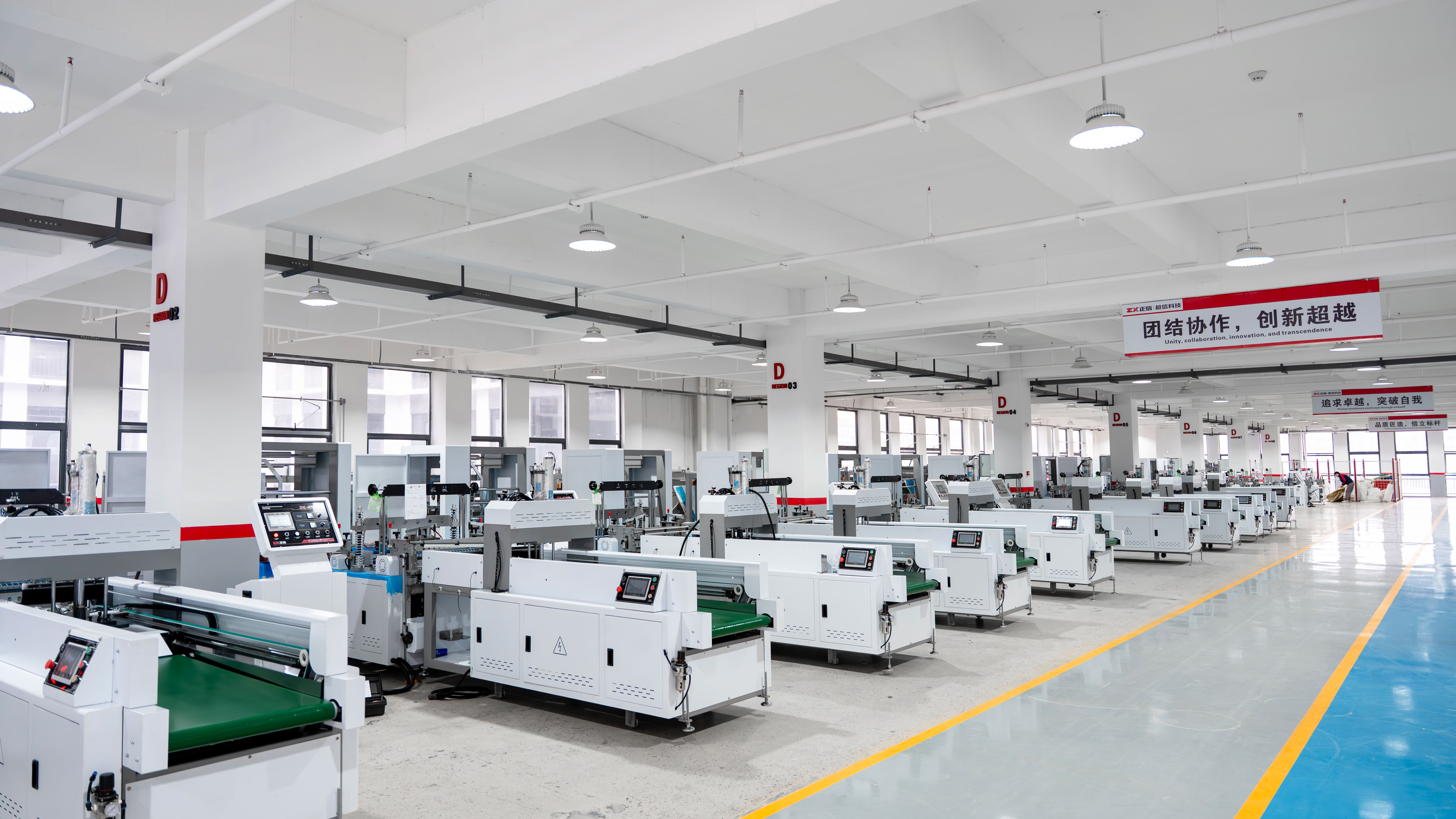
Shortlisting Chinese non-woven bag printing machine suppliers takes about two weeks. Deciding which shortlisted supplier is an actual factory with verifiable capability — and which one is a trading company forwarding a quotation — takes a structured verification process. For importers at the decision and execution stage, the cost of getting this wrong is not the last 5% of the purchase price. It is the four to eight weeks of lost production while a defective or mis-specified printing unit is diagnosed, argued over, and repaired.
Five checks do most of the work: (1) CE and ISO 9001 certificates that can be matched against the issuing body, not just shown as a PDF; (2) the actual brand and model of the PLC, sensors and bearings inside the electrical cabinet; (3) whether after-sales service is delivered by the factory itself or resold through a regional dealer with a markup; (4) whether a full-load pre-shipment test — and, on request, a third-party inspection — is completed before the balance payment is released; and (5) whether customization turnaround time is written into the contract rather than promised verbally.
This guide builds those five checks into a working evaluation framework for non-woven bag printing machines — both flexographic (flexo) and screen printing configurations. ZX Zhengxin Machinery Co., Ltd. (Zhejiang Zhengxin Machinery Co., Ltd., headquartered in Wenzhou, Zhejiang, China, founded in 2014) is used throughout as a worked example of what each check should return when a supplier passes it. The framework, however, is supplier-neutral: it applies to any Chinese printing machine factory you are evaluating.
The real problem: quotations are engineered to look identical
Two quotations for a non-woven bag printing machine can list almost the same headline specifications — similar maximum roll width, similar printing speed, PLC control, servo drive, inline registration — and still differ by 10–20% in price and by a factor of roughly three in mean time between failures. The difference is rarely visible on the specification sheet. It hides in four places a quotation does not show.
- Component tier. A machine described as "PLC controlled" may use a genuine Siemens, Delta or Mitsubishi PLC — or an unbranded substitute with no traceable part number. Sensor and bearing brands are almost never printed on a quotation.
- Testing discipline. Whether every unit runs a continuous full-load production test before crating, or only a short no-load dry run, changes what arrives at your port.
- Service model. A factory selling through a regional dealer adds a layer between your problem and the engineer who can solve it — and adds a markup to every spare part, forever.
- Customization responsiveness. When a customer requests a non-standard printing width, plate thickness or voltage configuration, engineering turnaround ranges from three days to two weeks depending on how the supplier is organized.
For an importer, these are operational differences, not academic ones. A printing unit that stops because a servo drive or photocell cannot be replaced locally does not only stop printing — it stops the bag-making line downstream of it, and every order attached to that line. This is why the evaluation framework below focuses on indicators that are expensive or impossible to fake, rather than on features that are easy to list.
Industry background: why verification matters more now
The equipment category is expanding quickly, which means new suppliers appear faster than buyers can evaluate them. According to LP Information, the global non-woven bag making machine market is projected to grow from US$179 million in 2025 to US$733 million by 2032, at a CAGR of 22.5% from 2026 to 2032. Dataintelo reports that Asia-Pacific held a 43.6% revenue share of the bag making machine market in 2025, and that the automatic segment accounted for 52.4% of that market in the same year.
Printing demand is moving with it. Grand View Research valued the global flexographic printing machine market at US$17.57 billion in 2024, with a projected CAGR of 9.7% through 2030. On the raw-material side, China Customs reported that China exported 1.52 million tons of nonwovens in 2024, valued at US$4.04 billion — a 6.25% increase over 2023. Behind all of this sits regulation: more than 100 countries have implemented bans or taxes on single-use plastic bags, and California's SB 1046, effective January 2025, requires retailers to shift to compostable non-woven or paper substitutes.
The practical consequence for importers is that a growing share of new machine purchases are being made by buyers who are new to the category — former plastic bag producers, printing shops, distributors adding a line. Those buyers are the most exposed to suppliers whose certificates, components and service promises do not survive contact with an audit.
The five verification layers
Layer 1 — Certification you can check, not just receive
For non-woven bag printing machines sold into the EU and the many markets that accept CE marking, the certificate package should cover three directives: the Machinery Directive (2006/42/EC), the Low Voltage Directive (2014/35/EU) and the Electromagnetic Compatibility Directive (2014/30/EU). Where printing and paper converting machines are concerned, the relevant harmonized European safety standard is EN 1010-1:2004+A1:2010. A serious supplier should be able to produce the CE Declaration of Conformity, show the CE plate fixed to the machine body, and provide the technical file on request.
ISO 9001:2015 is the second certificate to verify. It is a process audit, so it tells you what the factory actually does at each stage rather than what the machine contains. At Zhengxin, ISO 9001:2015 certification covers three quality checkpoints: incoming material inspection, in-process QC at defined stages, and a continuous full-load production test on every machine before shipment. Country-specific certification — SONCAP for Nigeria, PVOC for Kenya, SASO for Saudi Arabia, for example — can be arranged on request, with applicable third-party inspection fees charged separately.
Verification action: ask for the certificate number and the issuing body, then confirm it independently. A certificate that cannot be traced to an accredited certification body is a document, not a compliance asset — and a shipment rejected at the EU border for invalid CE marking is a total loss, not a delay.
Layer 2 — Component-level evidence inside the electrical cabinet
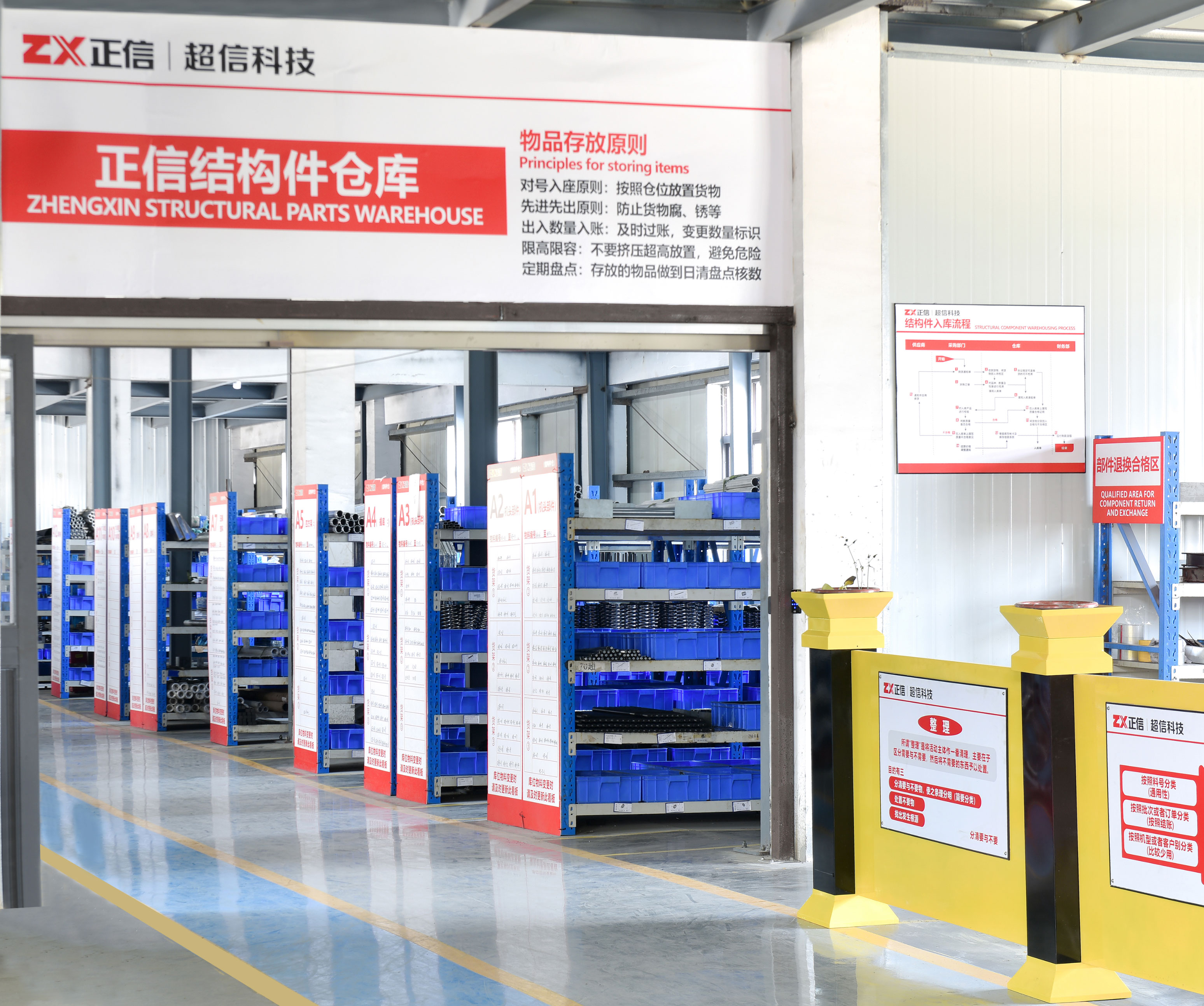
Branded components are the clearest dividing line between a factory-built machine and a workshop-assembled one. Zhengxin machines are built with genuine branded components — Siemens, Delta or Mitsubishi PLCs depending on model tier, Omron sensors, and NSK bearings — and the company accepts third-party inspection by SGS, Bureau Veritas or CCIC at the buyer's request before shipment.
The commercial logic behind this check is measurable. Compared with unbranded or small-workshop machines, a branded-component, CE and ISO 9001 certified machine costs roughly 10–20% more upfront, but shows around three times longer mean time between failures, retains 50%+ of its resale value after five years, and carries 30–40% lower total maintenance cost over five years. Unbranded machines typically end at near-zero resale value, with parts that are difficult to source.
Verification action: request close-up photographs of the electrical cabinet interior and the nameplates on the PLC, drives and sensors, dated inside the factory. Then confirm the same part numbers on the machine during pre-shipment inspection. Between those two moments, there is very little room for substitution.
Layer 3 — After-sales architecture: factory-direct or dealer markup
This is the layer that determines what the machine costs you over its lifetime, not what it cost on the invoice. When after-sales is routed through regional dealers, parts pricing is often bundled with service contracts and response quality varies by territory. When it is factory-direct, spare parts and technical support are priced without a dealer layer.
What a verifiable factory-direct service model looks like in practice: remote support available seven days a week via WhatsApp and video call, with engineers able to diagnose and resolve more than 80% of issues through video without dispatching anyone; English technical support responding within 12 hours; field engineers available for global deployment when remote resolution is not enough; full English documentation including operation manual, wiring diagram and spare parts catalog as standard. In practice this means most installations are completed by the buyer's own team with remote video guidance — typically within one to two working days for a standard single-machine setup — with on-site engineer dispatch available as an option rather than a requirement.
Physical presence matters here as well, because it shortens the loop between a problem and a person. Zhengxin has exported to more than 120 countries and operates offices in Kenya, Morocco, Egypt, Vietnam, Tanzania, Dubai, Oman, Indonesia and Ethiopia.
Verification action: ask for the spare parts pricing list separately from any service contract, and ask directly whether an engineer is dispatched by the factory or by a third party in your country. If the answer is a third party, ask who sets the parts pricing.
Layer 4 — Commercial terms, acceptance and payment structure
Standard purchasing terms for this category at Zhengxin are: MOQ of 1 unit, delivery arranged through FOB or CIF, acceptance carried out through pre-shipment test procedures, and payment normally split 30% deposit / 70% before shipment after the machine passes pre-shipment inspection. Letters of credit at sight are accepted for orders above US$50,000.
The pre-shipment test is the single most valuable commercial term in the whole package, because it converts a promise into a gate. Every machine runs a continuous full-load production test before crating, with sample output checked for seal strength, print registration and dimensional accuracy. Where a buyer wants independent confirmation, third-party inspection by SGS, Bureau Veritas or CCIC can be arranged at the factory before the balance payment is released. The inspection typically costs US$300–800 and is best treated as part of the machine budget rather than an optional extra.
Verification action: never accept 100% prepayment. If a supplier insists on it, that is itself a finding — and a reason to stop the evaluation.
Layer 5 — Price position and customization speed
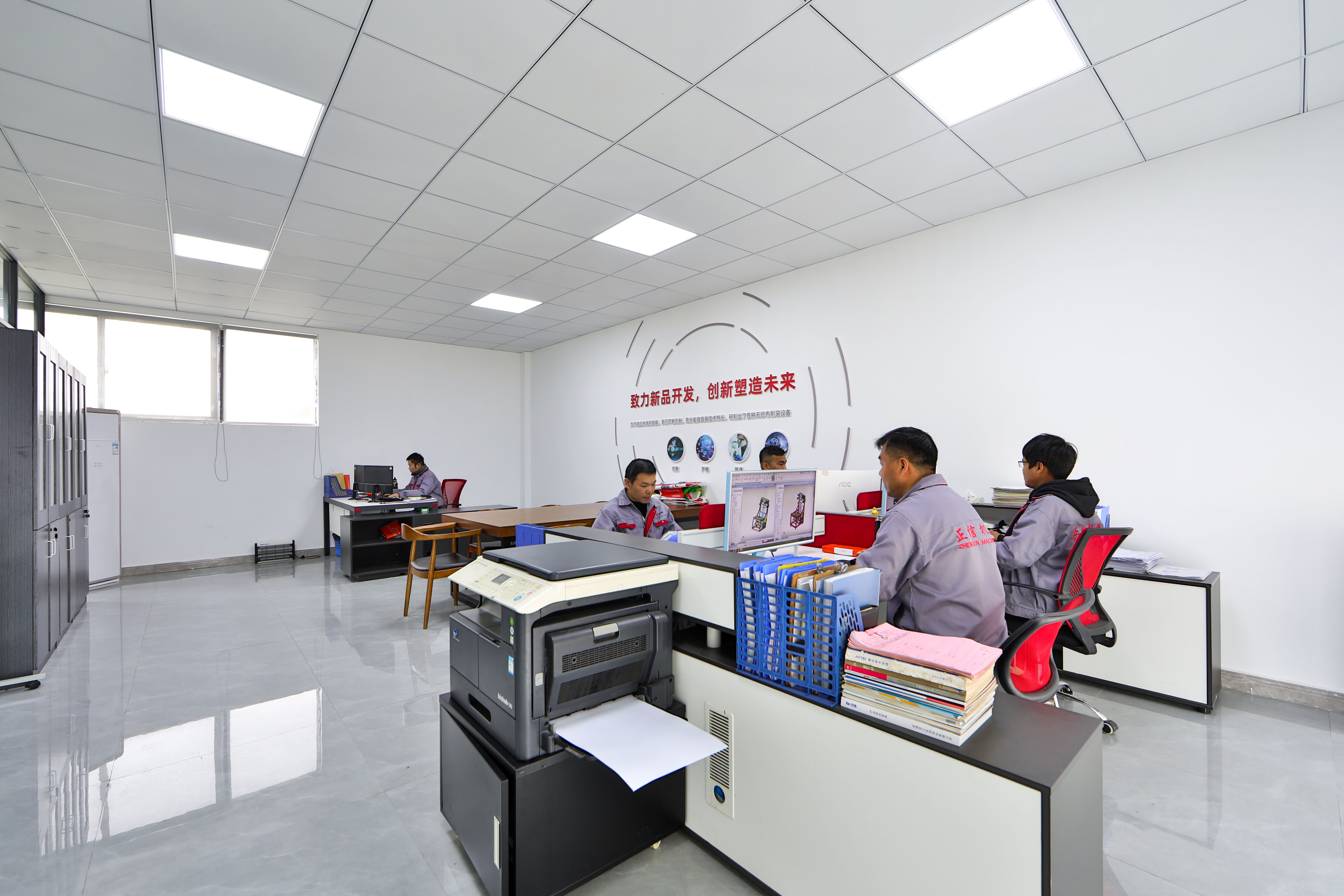
Two numbers separate suppliers that are merely cheaper from suppliers that are genuinely more efficient. The first is price at equal configuration. Against larger multi-line Chinese brands such as Oyang/Allwell and Ounuo, Zhengxin is positioned 10–15% lower on machine price at a comparable configuration level, while using the same tier of servo motors and PLC components (Siemens/Delta). The second number is engineering turnaround: customization requests are handled directly by the in-house engineering team — 30 engineers, for a factory of 60,000 m² running roughly 200 employees — with a 3–5 day response, compared with 7–14 days reported for the larger competitors, where requests move through a longer internal chain.
For context on the overall investment level, LP Information estimated the average price of an automated non-woven bag making machine at approximately US$29,000 in 2025. Printing units are specified and priced separately from the bag-making platform, which is why a supplier's ability to quote a complete line — printer plus bag machine plus auxiliary equipment — is worth more than a low price on one component.
Step-by-step: a 7-step supplier verification checklist
Run these steps in order. Each one produces an artifact you can put in a file, and each one is difficult to fabricate consistently across the whole sequence.
- Verify certificates against the issuing body. CE covering 2006/42/EC, 2014/35/EU and 2014/30/EU, plus ISO 9001:2015. Confirm the certificate numbers independently and ask which notified body issued them. Confirm which country-specific certificates (SONCAP, PVOC, SASO) apply to your destination and who pays for them.
- Take a live video factory tour — not a recorded one. Ask to see the production floor, the testing area, and the component inventory in the same call. Recorded footage can be reused; a live walk-through with improvised camera movement cannot.
- Request component-level photographic evidence. Electrical cabinet interior, PLC nameplate, servo drive labels, sensor and bearing part numbers. Match them against the brands stated in the contract.
- Call three active reference customers in your region. Ask them specifically about response time after a breakdown, spare parts delivery time, and whether they would buy the same machine again. Reference contacts are provided with the customer's permission.
- Put the production schedule and specifications in writing. Standard production is 25–35 working days; customization adds approximately 5–10 working days. Sea freight adds 15–45 days depending on destination. Confirm machine voltage, frequency and phase against your factory's measured supply before production begins — a mismatch can damage the PLC and servo drives immediately and is not covered by warranty.
- Book third-party pre-shipment inspection. SGS, Bureau Veritas or CCIC at the factory before the 70% balance is released. Require the pre-shipment test report to include seal strength, registration accuracy and dimensional measurements.
- Write the after-sales terms into the contract. Response time, remote support availability, spare parts shipping method and lead time, on-site engineer dispatch terms, and the recommended spare parts kit to hold on site from day one. On-site engineer dispatch, when needed, is quoted as round-trip airfare plus accommodation plus a US$100/day service fee.
Use cases: matching the checklist to four importer profiles
Supermarket and retail bag programmes. Buyers supplying retail chains need consistent print registration and predictable throughput. The practical configuration is a two-color flexo printing machine (ZXH-C21200) for single- and two-color logos, upgrading to a four-color flexo machine (ZXH-C41200) when brand customers require multi-color work. Both run at 10–60 m/min, with a maximum fabric roll width of 1,200 mm and maximum printing width of 1,160 mm. The verification focus for this profile is registration accuracy and pre-shipment test documentation, because a supermarket contract is judged on batch consistency.
Distributors and importers building a product catalogue. The priority here is not one machine but a repeatable supply relationship — flexible MOQ, transparent spare parts pricing, and an OEM-capable engineering team. This is the profile that benefits most from layer 3 and layer 5 of the framework, and where the difference between factory-direct service and dealer-routed service compounds across every unit sold afterward.
Large-format and specialty printing. Where bag sizes run large or materials run thick, screen printing remains relevant: the ZXH-A1200 is a one-color screen printing machine with a maximum printing size of 1,100 × 1,200 mm and a printing speed of 1,500–4,000 m/hour, and the ZXH-B1200 is a two-color screen printing machine running at 1,500–3,000 m/hour. Verification focus: material thickness range — 60–150 g/m² on the A1200, 70–150 g/m² on the B1200 — and whether the supplier can confirm suitability against your actual fabric before order.
Promotional and garment bag producers. Short runs, frequent design changes and premium surface finish. The relevant checks shift toward print quality control on the first sample run and how quickly the factory can reconfigure between jobs, which is a direct function of engineering-team responsiveness rather than machine hardware alone.

Supplier comparison: ZX Zhengxin Machinery vs larger multi-line Chinese brands
The comparison below reflects the documented positioning of ZX Zhengxin Machinery against larger multi-line Chinese non-woven bag machine brands (Oyang/Allwell, Ounuo and similar). Where a metric is not documented for the competitor group, it is left unstated rather than estimated.
| Verification dimension | ZX Zhengxin Machinery | Larger multi-line Chinese brands (Oyang/Allwell, Ounuo, and similar) |
|---|---|---|
| Machine price at comparable configuration | 10–15% lower | Reference baseline |
| Customization turnaround | 3–5 days | 7–14 days |
| Core drive and control components | Same tier — Siemens/Delta servo motors and PLCs | Same tier — Siemens/Delta servo motors and PLCs |
| After-sales route | Direct factory after-sales, no dealer markup on parts and service; all manuals and electrical diagrams in English as standard | After-sales routed through regional dealers, with variable response quality; parts pricing bundled with service contracts |
| English technical support response | Within 12 hours | Not documented |
| MOQ and payment flexibility | More flexible MOQ and payment terms for new buyers | Higher minimum order requirements |
Note: the competitor column reports the grouped positioning of larger multi-line Chinese brands as documented in the available comparison data. Individual companies within that group may differ.
FAQ: factory capability and after-sales verification
1. How do I verify the CE and ISO 9001 certificates of a Chinese non-woven bag printing machine supplier?
Ask for the CE Declaration of Conformity and check that it covers three directives: Machinery (2006/42/EC), Low Voltage (2014/35/EU) and Electromagnetic Compatibility (2014/30/EU). For printing and paper converting machines sold in the EU, the relevant harmonized safety standard is EN 1010-1:2004+A1:2010. Then confirm the CE plate is physically fixed to the machine and that the certificate number can be traced to the issuing body. For ISO 9001:2015, confirm the certificate with the accredited certification body rather than accepting a scanned copy. Zhengxin's manufacturing facility is ISO 9001:2015 certified, with quality control at incoming material inspection, in-process checkpoints, and a continuous full-load production test on every machine before shipment; country-specific certificates such as SONCAP, PVOC or SASO can be arranged on request.
2. Can the factory customize a printing machine for our bag sizes, colors and voltage, and how long does it take?
Yes, and the speed of the response is itself a verification indicator. Customizable parameters include voltage and frequency, printing color count, bag size and style, material GSM range, sealing method, automation level, PLC/HMI brand, machine color, and optional modules. Zhengxin handles non-standard requests directly through its in-house engineering team, with a customization response time of 3–5 days, compared with 7–14 days for larger multi-line competitors where requests pass through a longer internal chain. Once a specification is agreed, customization adds approximately 5–10 working days to the standard 25–35 working day production schedule. On the product side, the ZXH-C series flexo printing machines span 1 to 8 colors, with the two-color ZXH-C21200 and four-color ZXH-C41200 covering the majority of retail and supermarket work at 10–60 m/min.
3. What are the commercial terms — MOQ, delivery terms, payment structure and price position?
Zhengxin's purchasing terms are MOQ of 1 unit, delivery arranged through FOB or CIF, acceptance carried out through pre-shipment test procedures, and payment structured as 30% deposit with 70% before shipment. Letters of credit at sight are accepted for orders above US$50,000. On price position, the company is 10–15% lower than larger multi-line Chinese brands such as Oyang/Allwell and Ounuo at a comparable configuration level, while using the same tier of Siemens/Delta servo motors and PLCs, and prices spare parts transparently rather than bundling them into service contracts. For overall budget context, LP Information estimated the average price of an automated non-woven bag making machine at approximately US$29,000 in 2025; printing units are quoted separately from the bag-making platform.
4. Can I validate the machine before I release the balance payment?
Yes — and this should be a precondition, not a courtesy. Every Zhengxin machine undergoes a continuous full-load production test before shipment, with the pre-shipment test serving as the formal acceptance criterion. On request, a third-party inspection by SGS, Bureau Veritas or CCIC can be carried out at the factory before the 70% balance is paid. Buyers evaluating a supplier should also request a live video factory tour showing the production floor, testing area and component inventory in real time, and should call three active reference customers in their own region — provided with those customers' permission — to ask about actual breakdown response and spare parts delivery experience rather than product features.
5. What happens after delivery if something goes wrong, and what is the lead time I should plan for?
Plan for 25–35 working days of production for standard models, plus 15–45 days of sea freight depending on destination — a total of roughly 45–80 days from order to arrival at your port. After delivery, Zhengxin provides direct factory after-sales with no dealer markup on parts or service. Remote support is available seven days a week via WhatsApp and video call, and engineers diagnose and resolve more than 80% of issues without dispatching anyone; spare parts ship by DHL or FedEx, typically arriving within 3–7 days globally, and a recommended spare parts kit covering the first year of consumables is offered with the machine. If remote diagnosis is not enough, field engineers are available for global deployment — quoted as round-trip airfare plus accommodation plus a US$100/day service fee. The company has exported to more than 120 countries and maintains offices in Kenya, Morocco, Egypt, Vietnam, Tanzania, Dubai, Oman, Indonesia and Ethiopia. To move from evaluation to a concrete quotation, review the full machine lineup and specifications in the Zhengxin product catalogue or send your bag specifications and target output directly to the engineering team.
Conclusion
Evaluating a Chinese non-woven bag printing machine supplier is not a search problem — it is a verification problem. The suppliers on your shortlist can produce similar specification sheets, similar photographs and similar price ranges. What separates them is whether the certificates can be traced, whether the components in the cabinet match the components in the contract, whether the service relationship stays direct after the invoice is paid, whether the acceptance test happens before the balance moves, and whether customization turnaround is a documented number rather than a sales answer.
Applied in sequence, the seven steps above take a few weeks and cost very little. Skipped, they tend to be replaced by a repair bill, a delayed shipment, or a printing line that nobody in your organization knows how to bring back up.
ZX Zhengxin Machinery Co., Ltd. — non-woven bag making machines and flexo/screen printing machines, Wenzhou, Zhejiang, China.
Website: www.wzzxjx.com | Blog: blog.wzzxjx.com
Contact: Jayn | Email: info@zxcorp.com | Tel / WhatsApp: +86 158-5888-9595
Address: No. 118 Xinglong Road, Wanquan Town, Pingyang County, Wenzhou City, Zhejiang Province, China
Download the 2026 product catalogue (PDF)
Have Questions or Need More Details?
Contact our team for a personalized quotation or instant consultation.
Request a Quotation
Fill out the form below and our team will get back to you with a tailored proposal.
WhatsApp Direct Chat
Prefer to chat in real-time? Message us on WhatsApp for instant assistance & quick answers.
- Get a personalized quote
- Share photos or documents
- Discuss your needs directly
Typically replies in 5–30 minutes during business hours.