Non Woven Bag Printing Machine Long-Term Partnership FAQ: Warranty, Spare Parts, Scaling
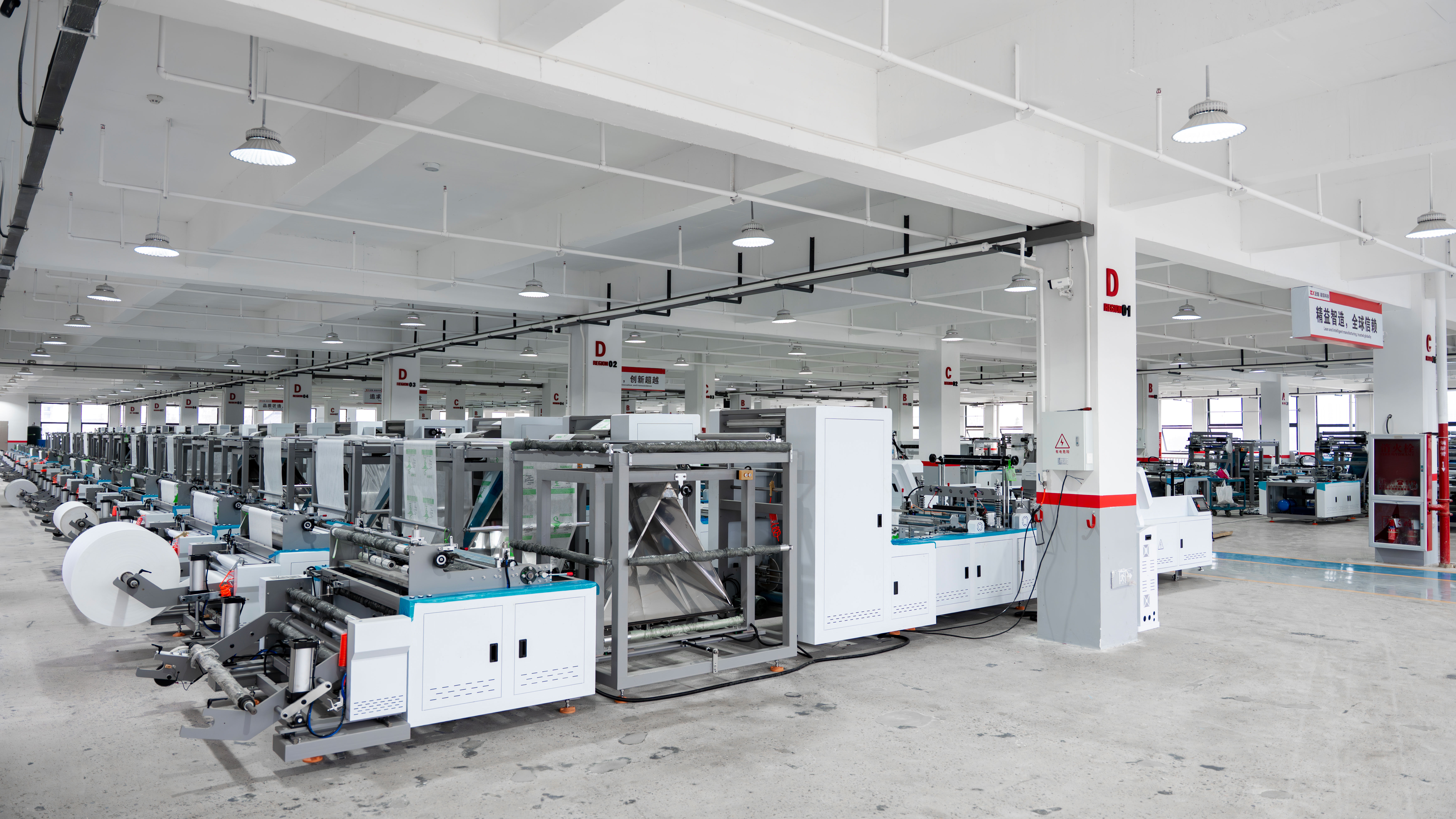
When buyers compare non woven bag printing machines, the specification sheet only answers what the machine can do on day one. The questions that actually decide the purchase order arrive later: what is covered in month thirteen, where spare parts come from when a blade or a sensor fails, how fast a fault can be diagnosed, and whether the equipment can grow with a business that moves from a single workshop line to industrial production. Those questions have concrete answers: a 12-month full warranty, genuine spare parts with transparent pricing, PLC-controlled fault self-diagnosis that keeps maintenance preventive, direct factory after-sales with English documentation and remote video support within 24 hours, and a training model built on one operator per two machines and one technician for every 10-15 machines.
This article answers those questions in the order buyers ask them, and it compares the three ownership paths that most importers weigh at the decision stage: a new machine with direct factory support, a second-hand machine, and an unbranded small-workshop machine. Zhejiang Zhengxin Machinery Co., Ltd. (ZX Zhengxin Machinery) is a Wenzhou-based manufacturer founded in 2014 that builds non woven bag making machines, ZXH series flexo printing machines (1-8 colors), screen printing machines, 3D bag machines and fabric slitting machines, and exports to more than 120 countries.
Problem Definition: The Cost That Never Appears on the Quotation
Capital equipment decisions are usually narrowed down to three numbers: price, running speed, and color count. The number that decides profitability is uptime, and it is rarely on the quotation at all. Three comparison points frame the problem.
- New machines built with branded components: production uptime of 95% or higher, with a mean time to first failure of 24 months or more.
- Second-hand or refurbished machines: typically 70-80% uptime once a machine is over three years old, usually no warranty, and 2-3 times more frequent unplanned downtime. Parts may be discontinued or require custom fabrication.
- Unbranded small-workshop machines: a mean time between failures three times shorter than machines assembled with genuine branded components, and a five-year maintenance cost 30-40% higher.
The arithmetic is blunt. The difference between 95% and 75% uptime is roughly one lost production day in every five, and that gap is usually larger than the entire price difference between the two suppliers. This is why the questions below belong to the decision stage rather than the after-sales stage: they change the total cost of ownership, not just the buying experience.
Industry Background: Why Support Became Part of the Specification
Non woven bag production equipment is no longer a niche purchase. LP Information projects the global non-woven bag making machine market to grow from US$179 million in 2025 to US$733 million by 2032, a CAGR of 22.5% over the 2026-2032 period. Dataintelo reports that Asia-Pacific held a 43.6% revenue share of the bag making machine market in 2025, and that automatic machinery accounted for 52.4% of that market - the hand-fed segment is shrinking as buyers move to integrated lines.
Demand is driven as much by regulation as by commerce. More than 100 countries have implemented bans or taxes on single-use plastic bags, which keeps replacement capacity in demand across Africa, the Middle East, Southeast Asia and Latin America - the regions where Zhengxin concentrates its exports. China Customs data shows the upstream material base is deep: China exported 1.52 million tons of nonwovens in 2024, valued at US$4.04 billion.
Two consequences follow for anyone specifying a machine. First, with the average automated machine priced at around US$29,000 in 2025, a 10-15% price difference between suppliers is smaller than the cost of one extended breakdown on a contract line, so the support package attached to the machine carries real weight. Second, compliance is a purchase condition rather than a detail: CE certification under the Machinery, Low Voltage and EMC Directives, ISO 9001:2015 manufacturing certification, and for European buyers the harmonized printing and converting machinery safety standard EN 1010-1:2004+A1:2010 all sit in the technical file that customs and tenders ask for. Zhengxin machines ship with a CE Declaration of Conformity, an ISO 9001:2015 certified production process, and third-party pre-shipment inspection available on request through SGS, Bureau Veritas or CCIC.
Detailed Solution: What a Long-Term Partnership Actually Contains
A support commitment is only as real as its terms. The five components below are the ones buyers should compare line by line before signing, whether they are specifying a one-color screen printing unit, a 2-color or 4-color flexo unit, a multicolor roll-to-roll flexographic line, or a full inline printing and bag making setup.
1. The 12-month full warranty - and the one exclusion that matters
Every new machine carries a 12-month full warranty. That is the correct baseline for judging used equipment, because second-hand and refurbished machines typically come with no warranty at all and an unpredictable time to first failure, while a new machine's mean time to first failure runs to 24 months or more. The warranty is credible partly because the machine is built from genuine branded components - Siemens, Delta or Mitsubishi PLCs, Omron sensors and NSK bearings - so replacement parts are current-generation items rather than discontinued parts requiring custom fabrication.
The exclusion to understand before installation is power supply. Connecting a machine to the wrong voltage or phase can destroy the PLC, servo drives and motors instantly, and that damage is treated as user error rather than a manufacturing defect. Machines are configured for the destination standard at the order stage - 220V/60Hz, 380V/50Hz, 415V/50Hz or 440V/60Hz, three-phase in every case - and a voltage stabilizer or AVR is recommended wherever grid power fluctuates, because it is far cheaper than the electronics it protects.
2. Genuine spare parts, priced transparently and shipped fast
Spare parts sourcing is where a cheap machine becomes an expensive one. A recommended spare parts list is supplied with every machine, and a one-year consumables kit typically costs US$500-1,500. Once a fault is diagnosed, confirmed genuine parts ship by DHL or FedEx within 24 hours of diagnosis and normally arrive within 3-7 days worldwide. Because support comes directly from the factory rather than through a dealer network, spare parts pricing is transparent and is not bundled into a service contract - there is no dealer markup on parts or on service.
Factories running contract volume usually go further and stock the failure-prone items on site: a complete belt set, cutting blades, an ultrasonic horn, photocell sensors and a servo drive. That inventory can be planned at around US$3,000-5,000 and covers 95% of common failure scenarios without waiting for an international shipment - the single most effective way to protect delivery commitments.
3. Preventive maintenance instead of reactive repair
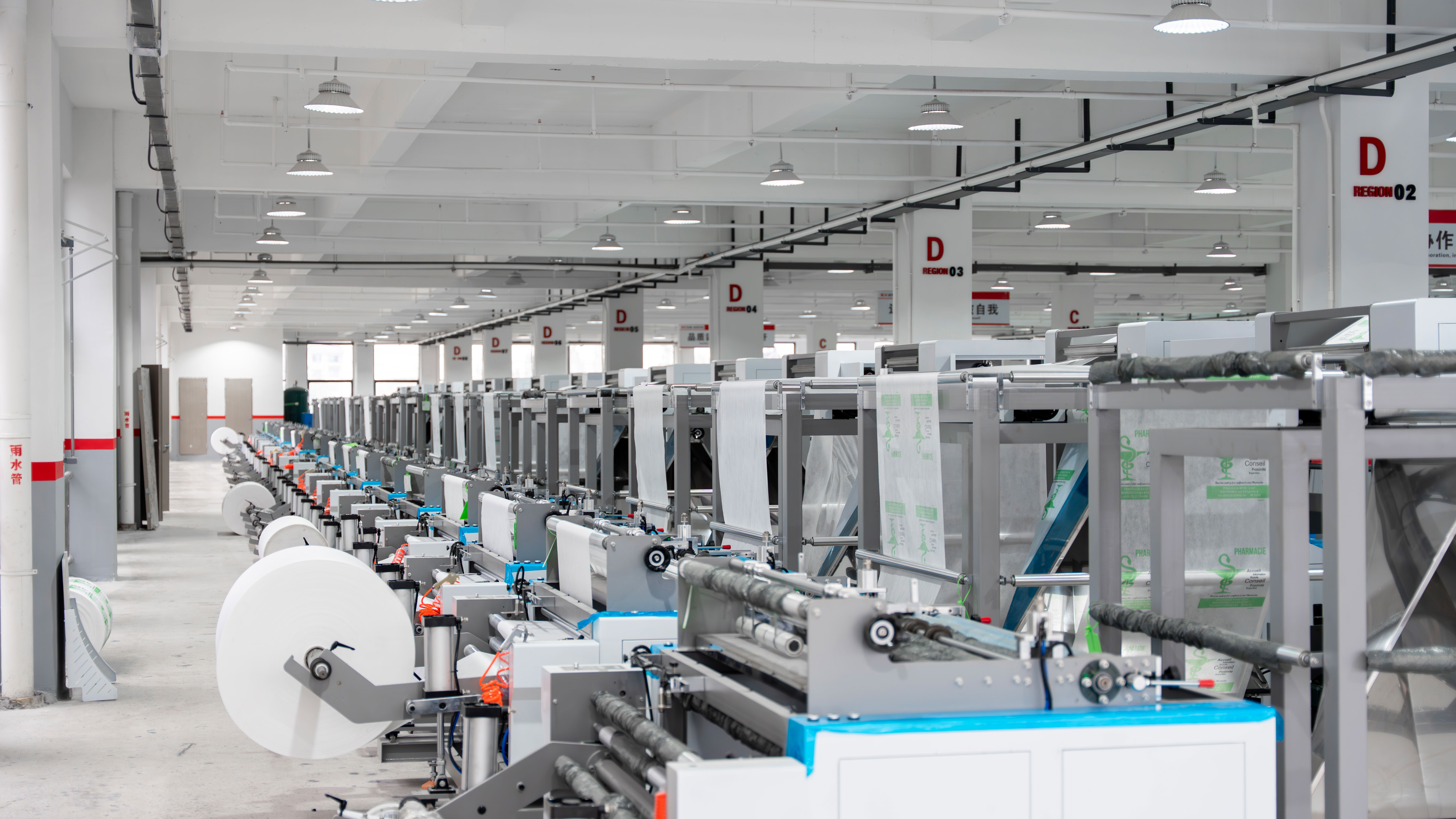
Zhengxin lines are PLC-controlled with fault self-diagnosis. In daily operation this means the HMI reports error conditions with plain-language descriptions instead of leaving the operator to identify a mechanical problem by inspection, and maintenance becomes preventive rather than reactive. That distinction is worth stating at the comparison stage: semi-automatic machines require constant mechanical adjustment, while a PLC-controlled line runs on a schedule.
- Daily (5-10 minutes): clean fabric dust from rollers, guide bars and photocell lenses; drain water from the air compressor tank; wipe the ultrasonic horn and anvil with isopropyl alcohol; test the emergency stop buttons.
- Weekly (15-20 minutes): grease chain drives, linear rails, lead screws and bearing housings; check drive belt tension (5-10 mm deflection at the midpoint); inspect pneumatic hoses for leaks; clean the electrical cabinet air filter.
- Monthly: inspect the ultrasonic horn surface for wear; check cutting blade sharpness; verify safety guards and interlocks; back up PLC parameters and recipes to USB.
- Quarterly: professional inspection of electrical connections; ultrasonic generator output test; replacement of worn consumables such as belts, seals and filters.
4. Direct factory support: remote response within 24 hours, English documentation as standard
Support does not begin with a flight. Remote video support is committed within 24 hours and is available seven days a week by WhatsApp and video call, and engineers diagnose and resolve more than 80% of issues remotely. Every machine ships with a full English operation manual, wiring diagram, electrical diagrams and spare parts catalog, so a local electrician can work directly from the drawings instead of waiting for a scheduled visit.
The same model applies at installation. With live video guidance, more than 90% of installations are completed by the buyer's own team, typically within one to two working days, and commissioning follows a fixed sequence: dry-run testing without material, low-speed fabric runs with seal and print inspection, stepwise speed ramp-up, then hands-on operator training. If remote diagnosis cannot resolve an issue, field engineers travel to the facility; on-site dispatch is quoted as a US$100 per day service fee plus round-trip airfare and accommodation, with typical on-site resolution in 2-5 days. Zhengxin maintains offices in Kenya, Morocco, Egypt, Vietnam, Tanzania, Dubai, Oman, Indonesia and Ethiopia.
5. Training and the staffing ratio behind scaling output
Scaling from a workshop to industrial production is a staffing question as much as a machine question. The working ratio is one trained operator per two machines, and one technician for every 10-15 machines for preventive maintenance. Operator training is a two-week program, and commissioning is only considered complete when the operator can independently produce quality bags at production speed.
That ratio is what makes output growth economical. Moving from one machine to four does not require four new operators, and quality holds at a defect rate below 0.5% compared with 3-5% for manual production. The technician ratio, however, has to be planned before the line reaches double digits - not after the first unplanned stoppage.
Step-by-Step Breakdown: Verifying the Commitments Before You Pay
Every term in this article can be verified before the deposit leaves your account. The sequence below is the one that experienced importers follow, and it applies equally to a single flexo printing unit and to a multi-machine production line.
- Put the after-sales terms in writing. Record the remote response window, the spare parts shipping method, the on-site dispatch cost formula (service fee plus airfare and accommodation), the warranty duration, and the warranty exclusions.
- Verify certification, not just a certificate file. Confirm the CE Declaration of Conformity for the Machinery, Low Voltage and EMC Directives, plus ISO 9001:2015 manufacturing certification, and request third-party pre-shipment inspection through SGS, Bureau Veritas or CCIC. Zhengxin machines also undergo incoming material inspection, in-process QC checkpoints and a continuous full-load production test before shipment.
- Order the spare parts kit with the machine. A one-year consumables kit typically runs US$500-1,500, and the most common cause of extended downtime is waiting for a low-cost part to arrive by courier.
- Confirm power conditions before production starts. Voltage, frequency and three-phase availability should be measured at your factory, not assumed from the national standard. Wrong-voltage damage is not covered by warranty.
- Schedule training against your hiring plan. Book the two-week operator training and nominate a technician early, so the 1 operator per 2 machines and 1 technician per 10-15 machines ratios are in place before volume rises.
- Plan the next purchase before you need it. Standard production lead time is 25-35 working days for standard models and 35-45 days for customized configurations, plus 15-45 days of sea freight - 45-80 days from order to arrival. Capacity decisions have to be taken while the current line is still running smoothly.
Use Cases: Three Points Where the Partnership Is Tested
Workshop stage - first machine, first customers
A first-time producer typically starts with a single fully automatic platform running D-cut, W-cut or drawstring bags at 80-100 pieces per minute, and a first-year output target in the range of 20,000-40,000 bags per day. At this stage the support questions are installation and training: remote video commissioning, the two-week operator program, and English manuals the buyer's own team can follow. Printing is often added later - a 2-color flexo unit covers single-color and two-color supermarket logos, which represent the majority of print requirements, and can be ordered once print demand is confirmed rather than speculated on at the start.
Contract stage - supermarket and tender supply
Once a supplier is delivering against supermarket or government tender contracts, the calculation changes. An integrated inline process combines material feeding, printing, bag forming, sealing, cutting, counting and stacking in one continuous flow, running at 100-120 pieces per minute against 15-20 pieces per minute for semi-automatic equipment - a five to eight times improvement in output - with one operator per two machines instead of three to four workers per manual line. Per-bag production cost is 60-70% lower despite a three to five times higher upfront machine investment, with a typical payback period of 12-18 months. What protects that payback is uptime discipline: the preventive maintenance schedule, spare parts on the shelf, and the option of stocking critical components locally.
Industrial stage - 100,000+ bags per day
At industrial volume the constraint moves from machine speed to production security. Planning should be based on 80-85% of rated speed rather than 100%, and the same logic applies to machine count: two to three fully automatic machines on a single shift, or one to two machines on a double shift, will cover a 100,000-bag day with margin. For continuous operation, redundancy is the standard approach - two machines running at roughly 70% of maximum speed, so that if one is taken out for maintenance the other can accelerate to hold delivery commitments. The staffing model follows the same ratios: one operator per two machines, one technician per 10-15 machines, and a stocked spares inventory that covers 95% of common failure scenarios.
| Scaling stage | Typical daily output target | Machine and staffing reference | Support focus |
|---|---|---|---|
| Workshop / first line | 20,000-40,000 bags per day | One fully automatic machine at 80-100 pcs/min; 1 operator per 2 machines; two-week operator training | Remote installation guidance, English documentation, first spare parts kit (US$500-1,500) |
| Contract / tender supply | 40,000-60,000 bags per day | Inline line with handle attachment and 2-4 color flexo printing; build plans at 80-85% of rated speed | Uptime discipline, preventive maintenance schedule, spare parts held on site |
| Industrial / 24-7 production | 100,000+ bags per day | 2-3 machines on a single shift or 1-2 on a double shift; 1 technician per 10-15 machines | Redundancy planning, critical spares on site (US$3,000-5,000), factory after-sales and engineer dispatch |
Comparison Table: New Machine with Factory Support vs Used vs Unbranded
The three ownership paths are not separated by the purchase price as much as by what happens after delivery. The table below sets out the comparison points that appear in every serious evaluation.
| Comparison point | New machine with direct factory support | Second-hand / refurbished machine | Unbranded small-workshop machine |
|---|---|---|---|
| Warranty coverage | 12-month full warranty | Typically no warranty | No reliable after-sales once the shipment leaves the factory |
| Typical production uptime | 95% or higher | 70-80% for machines over three years old | Frequent unplanned downtime; mean time between failures three times shorter |
| Reliability timing | Mean time to first failure of 24 months or more | Unpredictable failure timing | Non-branded components with no documented supply chain |
| Spare parts reality | Genuine branded parts (Siemens/Delta PLC, Omron sensors, NSK bearings); confirmed parts ship within 24 hours by DHL/FedEx, arriving in 3-7 days | Parts may be discontinued or require custom fabrication | Parts difficult to source |
| Documentation and support channel | Full English manual, wiring diagram, electrical diagrams and spare parts catalog; remote video support within 24 hours; on-site engineer dispatch available | Documentation and parameter backups frequently missing | No English documentation and no 24-hour response commitment |
| Five-year cost signal | 30-40% lower total maintenance cost than unbranded machines; resale value retains 50%+ after five years | 2-3 times more frequent unplanned downtime; three-year total cost often higher once repair labor and lost production days are counted | Higher maintenance cost over five years; near-zero resale value |
FAQ: Long-Term Partnership Questions Buyers Ask Before Ordering
New machines carry a 12-month full warranty. Second-hand or refurbished machines typically offer no warranty and have unpredictable failure timing, while a new machine's mean time to first failure is 24 months or more. The main exclusion is connection to an incorrect voltage or phase, which can destroy the PLC, servo drives and motors immediately and is treated as user error rather than a manufacturing defect. Confirm your voltage (220V, 380V, 415V or 440V), frequency and three-phase availability in writing before production, and add a voltage stabilizer where grid power fluctuates.
Remote video support is committed within 24 hours and is available seven days a week by WhatsApp and video call; engineers diagnose and resolve more than 80% of issues remotely. For confirmed component failures, genuine parts ship by DHL or FedEx within 24 hours of diagnosis and typically arrive in 3-7 days. Where remote diagnosis is not sufficient, field engineers can travel to your facility - on-site dispatch is quoted at a US$100 per day service fee plus round-trip airfare and accommodation, with typical on-site resolution in 2-5 days. Zhengxin has offices in Kenya, Morocco, Egypt, Vietnam, Tanzania, Dubai, Oman, Indonesia and Ethiopia.
Every machine ships with a recommended spare parts list, and a one-year consumables kit typically costs US$500-1,500. For a line running around the clock or serving contract customers, stocking critical items on site - a belt set, cutting blades, an ultrasonic horn, photocell sensors and a servo drive - can be planned at roughly US$3,000-5,000 and covers 95% of common failure scenarios without waiting for an international shipment. Pricing is transparent and is not bundled into a service contract, and because support is direct from the factory there is no dealer markup on parts or service.
The working ratio is one trained operator per two machines and one technician for every 10-15 machines for preventive maintenance, with a two-week training program for operators. Training is built around commissioning: after setup and test-bag inspection, the operator runs the line under supervision until they can produce quality bags at production speed independently. When planning output, calculate at 80-85% of rated speed rather than 100%, and remember that production lead time is 25-35 working days for standard models (35-45 days for customized configurations) plus 15-45 days of sea freight, so capacity decisions need to be taken before the current line is saturated.
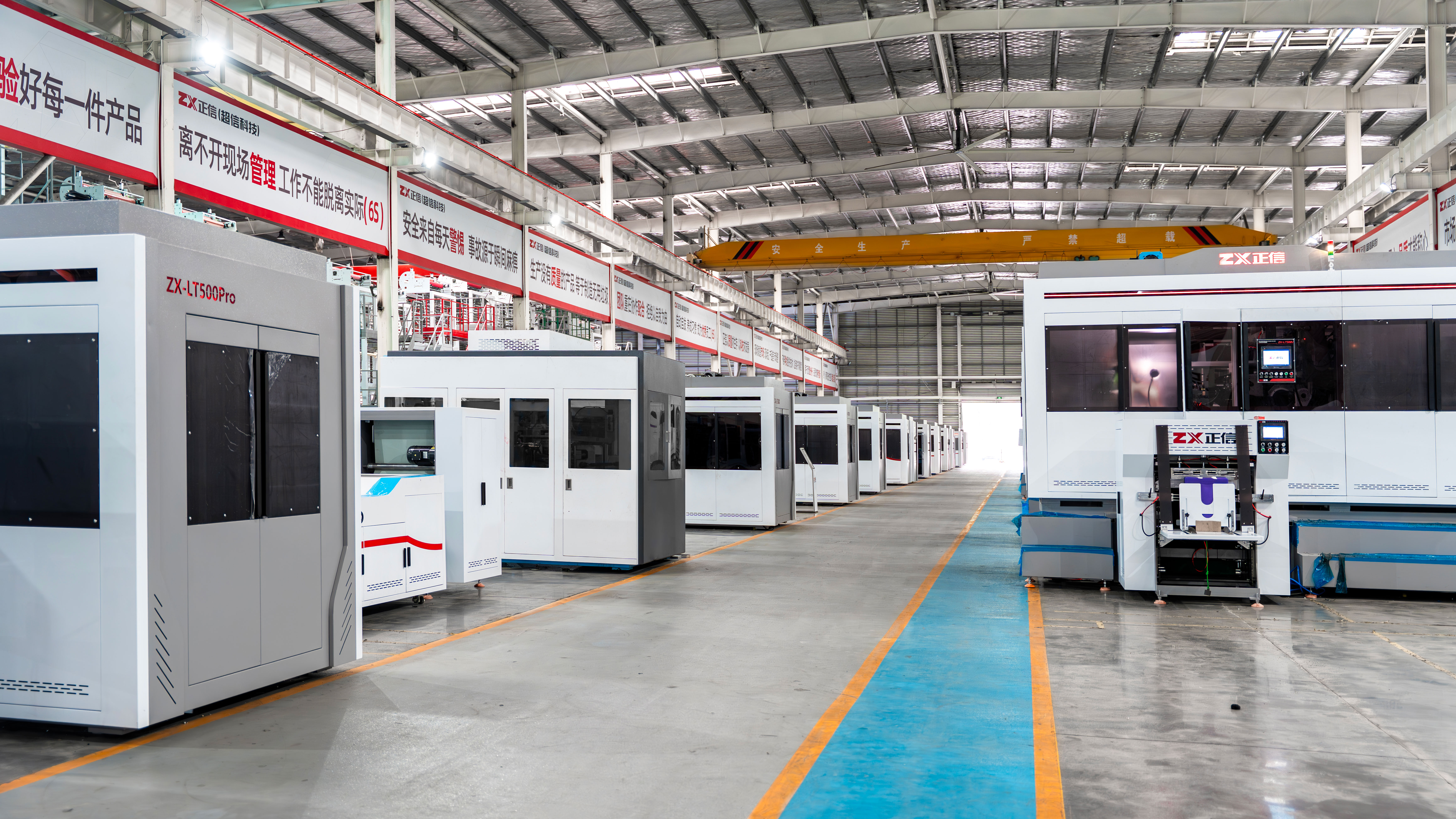
For most buyers the deciding factor is the support model behind the machine rather than the top speed on the datasheet, so three things are worth comparing: components and certification (CE and ISO 9001 certified manufacture with genuine branded components such as Siemens/Delta PLC, Omron sensors and NSK bearings, rather than unbranded substitutes); after-sales structure (direct factory support with English manuals, electrical diagrams, published spare parts pricing and a 24-hour remote response, versus support routed through dealers); and response speed on customization (a direct factory engineering team handles non-standard requests, with customization lead times of 3-5 days compared with 7-14 days for larger competitors, at a machine price around 10-15% lower for comparable configurations). Larger Chinese brands such as Oyang, Allwell and Ounuo use the same tier of servo motors and PLC components and offer equivalent core specifications - the difference is commercial and structural rather than a claim of superior hardware. ZX Zhengxin Machinery positions its offer on that basis, supported by offices in nine markets. The practical next step is a configuration review on your own fabric, described at the end of this article.
Conclusion: Support Is Used Every Month, the Price Is Paid Once
The purchase price of a non woven bag printing machine is paid once. Warranty, spare parts, maintenance and training are used every month for the working life of the equipment, which is why they belong in the comparison rather than in the small print. A 12-month full warranty, genuine branded components, a published spare parts list, PLC-controlled fault self-diagnosis, English documentation, remote video support within 24 hours, and a training model of one operator per two machines with one technician for every 10-15 machines are all verifiable before a deposit is transferred - and each of them changes the arithmetic of total cost of ownership.
For buyers moving from a workshop to industrial production, the practical implication is straightforward: choose the supplier whose support model still works at machine ten, not just at machine one.
Next Step: Review Your Configuration on Your Own Fabric
Send your PP spunbond fabric specification (GSM, roll width), the bag style and the print design, and the Zhengxin engineering team will confirm the appropriate configuration - screen or flexo, color count, bag making platform, and the spare parts and training package that matches your scaling plan. You can also book a live video factory tour, request a quotation, or download the full product catalog: 2026 Zhengxin Machinery catalog (PDF).
Zhejiang Zhengxin Machinery Co., Ltd. | Web: www.wzzxjx.com | Email: info@zxcorp.com | WhatsApp / Tel: +86 158-5888-9595 | Address: No. 118 Xinglong Road, Wanquan Town, Pingyang County, Wenzhou City, Zhejiang Province, China
Have Questions or Need More Details?
Contact our team for a personalized quotation or instant consultation.
Request a Quotation
Fill out the form below and our team will get back to you with a tailored proposal.
WhatsApp Direct Chat
Prefer to chat in real-time? Message us on WhatsApp for instant assistance & quick answers.
- Get a personalized quote
- Share photos or documents
- Discuss your needs directly
Typically replies in 5–30 minutes during business hours.