New vs. Used Non-Woven Bag Printing Machines: A Cost-Per-Bag Comparison Guide
New vs. Used Non-Woven Bag Printing Machines: A Cost-Per-Bag Comparison Guide
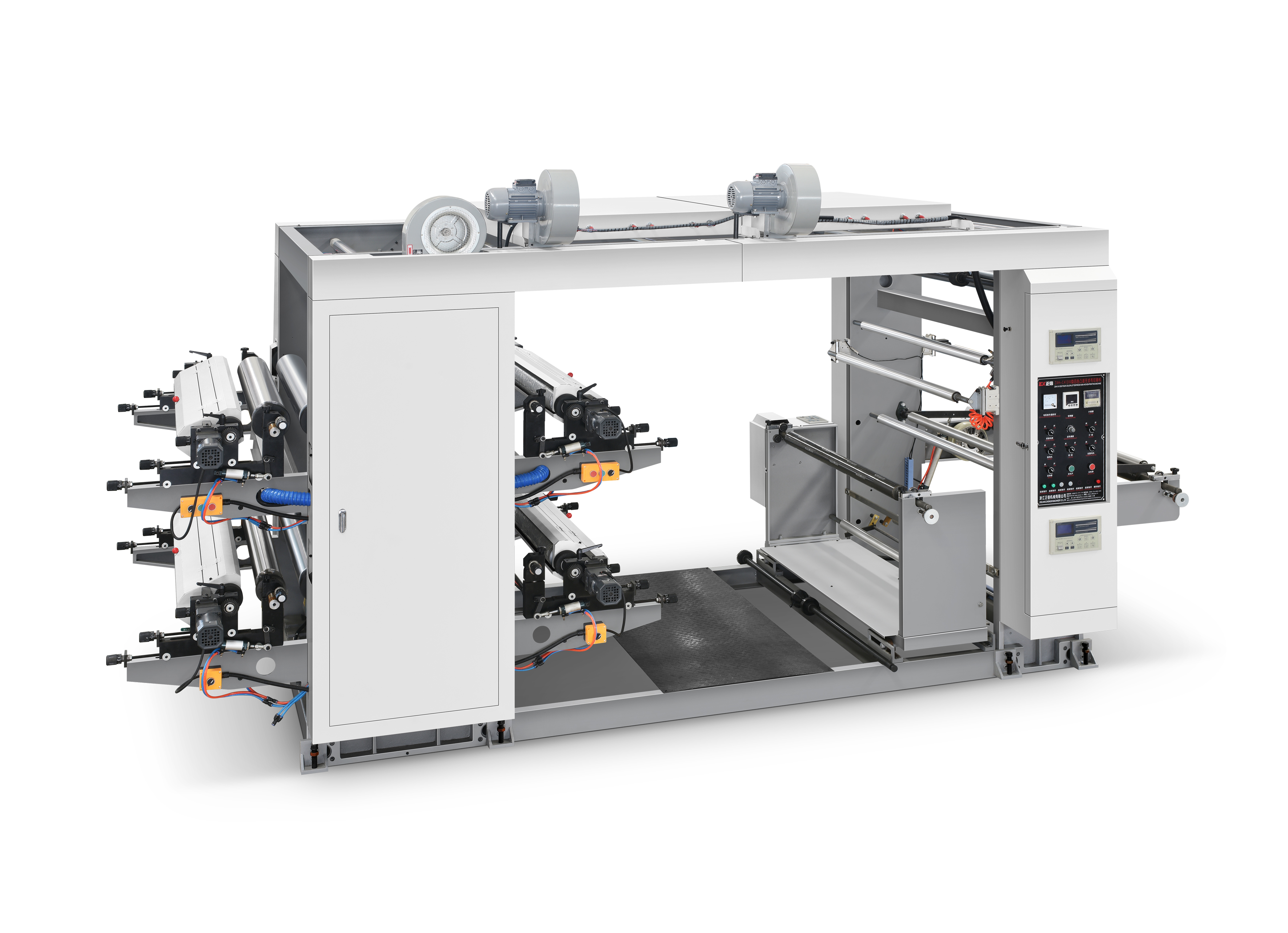
For most bag producers, a non woven bag printing machine is not an optional add-on. Printed bags are what retail chains, supermarkets, and promotional buyers expect. When a bag project moves from quoting to production, the equipment decision usually narrows to two paths: buy a new printing machine with full manufacturer support, or buy a used unit at a lower initial price.
The direct answer for an Evaluation-to-Execution buyer is this: buy new when uptime, predictable per-bag cost, spare parts availability, and certification matter. A used printing machine can appear 50–70% cheaper at the purchase moment, but the operating comparison changes once the machine is three or more years old. Typical uptime for such used machines falls to 70–80%, compared with 95%+ for a new machine, and the lost production is rarely included in the original price comparison.
Why the New vs. Used Question Is Really a Per-Bag Cost Question
Buyers do not purchase a printing machine for its appearance. They purchase it for the number of acceptable printed bags it can produce over a planning period. This is why a cost-per-bag comparison is more useful than a sticker-price comparison.
A new Zhengxin machine, for example, is documented in the ZXH series as a roll-to-roll flexo or screen printing platform. The models offered by Zhejiang Zhengxin Machinery Co., Ltd. include the ZXH-A1200 one-color screen printing machine, the ZXH-C21200 two-color flexo printing machine, and the ZXH-C41200 four-color flexo printing machine. Print speeds on the flexo models are rated at 10–60 m/min. These specifications are consistent and verified before shipment. A used machine, in contrast, has an unknown repair history, often missing documentation, and control components that may have been discontinued by the original maker.
The market context makes the decision more urgent. LP Information estimates the global non-woven bag making machine market will grow from US$179 million in 2025 to US$733 million by 2032. More production volume means more printed bags and more pressure on printing capacity. A machine that runs at 70–80% uptime creates a bottleneck that affects the entire bag line, not just the printing station.
The Hidden Risks of Used Printing Machines
The phrase “hidden cost” is overused, but in used capital equipment it is literal. A used non woven bag printing machine may not arrive with a wiring diagram, a parameter backup, or a service record. Without these documents, even a skilled local technician must reverse-engineer basic settings.
Several risks appear again and again in used-machine purchases:
- No meaningful warranty. A used machine is commonly sold as-is. By contrast, a new Zhengxin machine is supplied with a 12-month warranty covering major components.
- Unpredictable downtime. Used machines older than three years typically deliver only 70–80% uptime, while a new machine is engineered for 95%+ production availability.
- Obsolete electronics. Many used non-woven bag machines sold in Africa and Southeast Asia are five or more years old. When the PLC fails, replacement cost can exceed the remaining value of the machine.
- Discontinued spare parts. Older printing units often require custom-fabricated parts. A new ZXH unit is supported by genuine spare parts shipped by express courier within 3–7 days of a confirmed diagnosis.
- No remote or on-site support. A used machine has no original manufacturer standing behind it. Zhengxin provides remote support via WhatsApp and video call, and field engineers can be dispatched to a buyer’s factory.
These risks do not always create a problem in the first week. They usually appear in the second month, when a sensor fails or a print register drifts and nobody can identify the original parameter set.
Industry Background: Why Printed Non-Woven Bags Keep Growing
Non-woven bags are now the default replacement for single-use plastic bags in many regulated markets. Over 100 countries have implemented bans or taxes on single-use plastic bags, according to third-party market research. This regulatory push supports demand for non-woven bag printing machines and the printed retail bags they produce.
Global flexographic printing machine demand is also expanding. The flexographic printing machine market was valued at US$17.57 billion in 2024, with a projected CAGR of 9.7% through 2030. Flexo remains the dominant process for non-woven bag decoration because water-based flexo inks offer practical per-bag cost and compatibility with retail and food-adjacent packaging requirements.
This growth creates a secondary market for older printing machines. Sellers of used equipment often describe their machines as “lightly used” or “recently serviced,” but these statements are rarely verifiable. A document trail, factory test report, and genuine spare parts catalog are verifiable assets that come standard with new equipment.
What a New Machine Actually Provides
A new non woven bag printing machine from Zhengxin is a factory-tested system, not an assembly of unknown components. The company’s manufacturing facility is ISO 9001:2015 certified, and every machine is tested before shipment. The ZXH printing series is also CE certified under the Machinery, Low Voltage, and Electromagnetic Compatibility Directives, which supports customs clearance in the EU and other regions that accept CE marking.
For a buyer moving from Evaluation to Execution, the practical advantages of new equipment include:
- Full 12-month warranty on major components.
- Serial numbers and documentation that can be traced to the manufacturer.
- Free pre-shipment testing with 100% quality control checks.
- Options for customization: voltage and frequency, printing colors, bag width, control system brand, and automation level.
- Operator training at installation, with installation and commissioning services included in the standard package.
- A one-year warranty plus a remote after-sales team that can diagnose 80%+ of issues via video.
Zhengxin also supports fleet buyers with a practical MOQ of 1 unit. OEM and ODM services are available for buyers who need their own branding, special voltage, or unique machine configuration.
Comparing Total Cost of Ownership
A used machine with a 70–80% uptime record and no warranty does not just cost money to repair. It also costs money in missed deliveries. A new machine’s higher uptime translates into predictable output, which is the foundation of any cost-per-bag calculation.
Consider the reference configuration used in many supermarket supply projects: a fully automatic non-woven bag making machine paired with an inline flexo printing machine. For a typical supermarket-grade line, the documented payback period is 14–18 months at an output level of 40,000 bags per day. This calculation assumes continuous production with minimal unscheduled stops. A used printing unit that operates at 70–80% uptime breaks that assumption.
The table below compares a new Zhengxin printing unit with a typical used machine older than three years. The comparison is based on documented machine behavior and industry-verifiable conditions, not on hypothetical repair costs.
| Comparison Factor | New ZXH Printing Machine | Used Machine Older Than 3 Years |
|---|---|---|
| Initial purchase price | Higher initial cost; full manufacturer setup | Typically 50–70% lower than equivalent new equipment |
| Warranty | 12-month warranty on major components | Usually no warranty |
| Expected uptime | 95%+ production availability | Typical 70–80% for machines over 3 years old |
| First major failure | Mean time to first failure 24+ months | Unknown; depends on prior maintenance |
| Electrical components | Current PLC and servo technology; replacements available | Risk of obsolete or discontinued controllers |
| Spare parts | Genuine parts shipped within 3–7 days | May require custom fabrication; weeks of downtime |
| Documentation | English manual, wiring diagram, parameters, test report | Frequently missing or incomplete |
| Manufacturer support | Remote support within 12 hours; on-site engineers available | No original manufacturer relationship |
| Certification readiness | CE certified; ISO 9001 factory certification | Depends on original export version and documentation |
| Resale value after 5 years | Retains 50%+ of value with service record | Near zero once electronics age out |
Step-by-Step Framework for the New vs. Used Decision
Use this framework when your buying committee, bank, or internal approval process asks for a structured comparison.
Step 1: Define the output guarantee
Write down the daily bag volume you must deliver. Then calculate the printing capacity required at realistic uptime. Use 85% as a planning baseline, never 100% of rated speed. A used machine with 70–80% uptime must be planned at the low end of that range.
Step 2: Convert downtime into a monetary value
Estimate how many printed bags are lost per hour of printer stoppage. Multiply by your contribution margin per bag. This gives an hourly downtime cost. Compare that number with the price gap between new and used equipment. In most mid-volume bag factories, the comparison favors new equipment within the first production year.
Step 3: Verify the availability of critical spare parts
Ask the used machine seller for the PLC model, servo drive model, sensor list, and printing cylinder specifications. Then check whether those components are still manufactured. If the control system is discontinued, even a small electrical failure can idle the machine for weeks.
Step 4: Check documentation and parameter backups
Request the original wiring diagram, HMI parameters, and registration calibration records. If the seller cannot provide them, assume the machine will need re-engineering before it runs reliably.
Step 5: Confirm certification requirements
If your finished bags are exported to the EU, the printing and bag-making line should be CE certified. A used machine imported without CE documentation can create customs and end-customer compliance problems. A new ZXH unit includes the CE Declaration of Conformity and ISO 9001 factory certification.
Step 6: Compare after-sales response times
For a new Zhengxin machine, the after-sales process is documented: remote video support is available 7 days a week via WhatsApp and video call, and engineers diagnose 80%+ of issues remotely. Genuine spare parts can be shipped by express courier within 24 hours of a confirmed diagnosis. For a used machine, define who will provide this service before you sign the purchase order.
Use Cases: When a Used Machine Can Be Justified
A used non woven bag printing machine is not always the wrong choice. The following conditions make a used machine more defensible:
- You employ an in-house maintenance engineer who speaks Chinese and can independently diagnose and repair machines.
- You can personally inspect the machine before purchase and verify that the PLC and servo drives are still in production.
- You have access to original wiring diagrams and parameter settings from the previous owner.
- You are running short pilot batches and can tolerate unplanned downtime without penalty.
These conditions are rare among first-time buyers. For most importers, distributors, and bag manufacturers, the hidden risk of a used printing machine outweighs the initial price saving.
Evidence from the Field
Real installations show how new equipment supports scaling decisions. A promotional bag producer in Mwanza, Tanzania, started with two Zhengxin units, including a ZXH-C21200 two-color flexo printing machine. Within 18 months, the company expanded from one production line to two and became a leading promotional bag supplier in the city. The installation was supported by Zhengxin’s commissioning process and operator training.
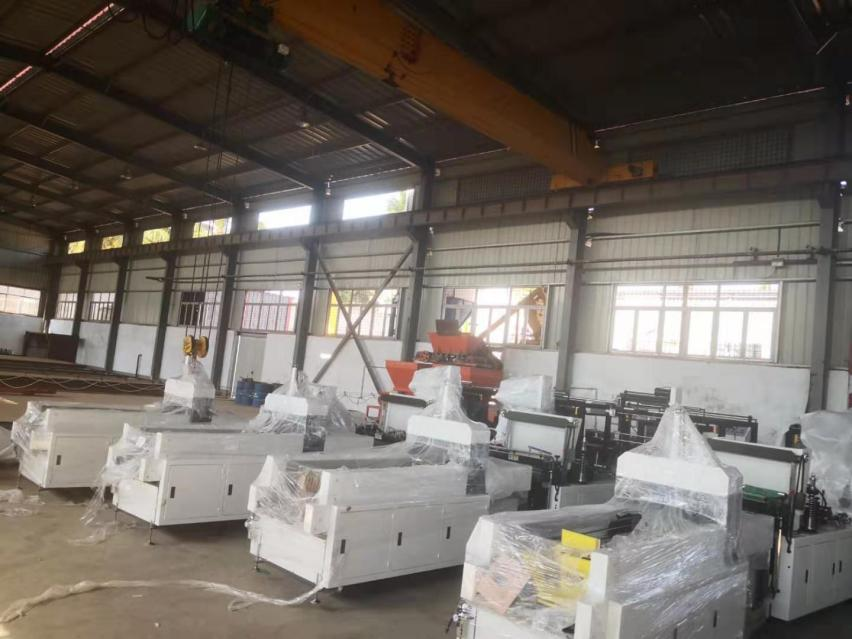
Another documented example comes from Egypt, where a food packaging and retail shopping bag manufacturer has used Zhengxin equipment since 2017. The company operates five units, including two ZXH-C21200 printing machines, to produce printed promotional shopping bags for retail malls and food takeaway bags for restaurant chains. One equipment supplier supports three different product lines, which reduces procurement complexity and maintenance overhead.
Configuration Considerations for New Printing Machines
Buyers who decide on a new machine should choose the printing platform based on the number of colors their customers require.
- ZXH-A1200 is a one-color screen printing machine for non-woven fabric. It handles roll widths up to 1250 mm and prints at 1500–4000 m/hour, with a maximum printing size of 1100×1200 mm.
- ZXH-C21200 is a two-color flexo printing machine. It supports a maximum fabric roll width of 1200 mm, a maximum printing width of 1160 mm, and printing speeds of 10–60 m/min.
- ZXH-C41200 is a four-color flexo printing machine for multicolor logos. It shares the same roll width capacity and print speed range, with total power of 18 kW.
All ZXH models support continuous or intermittent printing modes where applicable, and CE certification is included. If a buyer already operates a bag making line, adding a ZXH flexo printer at the same time as the main machine is usually more efficient than retrofitting later.
Why Per-Bag Cost Is the Deciding Metric
If a new machine costs more per month but produces more acceptable bags per month, the cost per bag can still be lower. That is the central logic of this guide.
A new non woven bag printing machine is supported by a predictable maintenance schedule, original parts, and factory-calibrated settings. A used machine may offer a lower entry ticket, but it also brings unplanned stoppage into your production plan. When you divide the total cost of ownership by the number of printed bags actually shipped, the used machine often becomes the more expensive option.
For a company supplying supermarket chains, consistency is part of the product. Supermarket contracts require predictable quality and delivery. A printing machine failure that reduces line uptime to 70–80% can jeopardize an entire contract, not just one order.
FAQ
1. For an OEM flexo non woven bag printing machine manufacturer, should new machines be the only reliable option?
New machines are the reliable option for most OEM buyers because they include the manufacturer’s quality system, CE and ISO 9001 certification, English documentation, and after-sales support. Zhejiang Zhengxin Machinery provides OEM and ODM services, with an MOQ of 1 unit, so an OEM buyer can order a configured flexo machine without waiting for a large batch. A used machine cannot offer the same certification traceability or manufacturer warranty.
2. What capability should a buyer verify before choosing a new flexo machine?
Verify three capabilities: printing colors, roll width, and line integration. The ZXH-C21200 covers two-color flexo printing; the ZXH-C41200 covers four-color flexo printing. Both accept fabric rolls up to 1200 mm wide and print at 10–60 m/min. Also confirm that the supplier can customize voltage, frequency, and control system brand. Zhengxin can configure voltages including 220V, 380V, 415V, and 440V, with PLC options from Siemens, Mitsubishi, or Delta.
3. How does a buyer verify manufacturing quality before shipment?
Every Zhengxin machine is tested under load before shipment. Buyers can request a live video factory tour, third-party pre-shipment inspection by SGS, Bureau Veritas, or CCIC, and the ISO 9001 and CE certificates. The CE certificate includes the machinery, low voltage, and EMC directives, which supports export to the EU and other CE-accepting markets.
4. What is the lead time for a new customized non woven bag printing machine?
Standard lead time from Zhengxin is 30–45 days for production, depending on configuration. Customization such as voltage, color count, or PLC brand may extend the production schedule. Sea freight then adds 15–45 days depending on destination. The MOQ is one unit, and payment terms are typically 30% deposit with 70% before shipment after successful testing.
5. Can I request a sample print or a machine brochure before placing an order?
Zhengxin publishes a complete machine brochure with model specifications, and buyers can contact the sales team directly for configuration recommendations. The sales contact is Jayn via email at info@zxcorp.com, by phone at +86 158-5888-9595, or through WhatsApp at the same number. The downloadable brochure is available here: Zhengxin 2026 Machinery Brochure.
Conclusion
New and used non woven bag printing machines both have a place in the market. The used option fits buyers with in-house repair capability, a verifiable machine history, and tolerance for downtime. The new option fits every other buyer, especially those who sell printed bags to supermarkets and retail chains under delivery deadlines.
Compare cost-per-bag, not purchase price. Include uptime, warranty, spare parts, documentation, certification, and after-sales response in the calculation. For a producer targeting predictable output, a new ZXH flexo or screen printing machine is the lower-risk route from evaluation to execution.
Have Questions or Need More Details?
Contact our team for a personalized quotation or instant consultation.
Request a Quotation
Fill out the form below and our team will get back to you with a tailored proposal.
WhatsApp Direct Chat
Prefer to chat in real-time? Message us on WhatsApp for instant assistance & quick answers.
- Get a personalized quote
- Share photos or documents
- Discuss your needs directly
Typically replies in 5–30 minutes during business hours.