High-Speed Non Woven Bag Making Machine: A Decision-First Manufacturer Comparison
High-Speed Non Woven Bag Making Machine: A Decision-First Manufacturer Comparison
At the decision stage, buyers are usually comparing actual quotes and specifications rather than searching for general definitions. The question is no longer what is a non woven bag making machine? but which fully automatic high-speed non woven bag making machine manufacturer should I approve? This guide is built around that question. It compares the main purchasing routes — fully automatic machines versus semi-automatic lines, new machinery versus used equipment, certified suppliers versus unbranded workshops, and in-house production versus outsourcing — and provides a repeatable framework for final supplier selection.
The Buying Problem at the Decision Stage
The risk at this stage is not missing information; it is comparing the wrong facts. A price quote from a small unbranded workshop may be lower, but the machine may use unbranded electrical components and lack verifiable CE and ISO certification. A used machine may be 50% to 70% cheaper, but typical uptime for machines over three years old falls to 70% to 80%, and spare parts may be discontinued. Meanwhile, a fully automatic inline machine can produce 100 to 120 pieces per minute, requires one operator per two machines, and holds a defect rate below 0.5%, while semi-automatic production is limited to 15 to 20 pieces per minute with three to four workers and a 3% to 5% defect rate.
Because these differences produce very different total cost results, a decision framework should compare output and duty cycle, bag style and format range, automation and control, sealing technology, certifications and component quality, total cost of ownership, and after-sales response.
Industry Context: Why This Decision Is Time-Sensitive
Market data from LP Information projects the specialized global non-woven bag making machine market to grow from US$179 million in 2025 to US$733 million by 2032, with a CAGR of 22.5% from 2026 to 2032, largely driven by plastic-ban policies. Dataintelo estimates the broader bag making machine market at US$4.8 billion in 2025, reaching US$8.1 billion by 2034. Asia Pacific accounted for a 43.6% revenue share in 2025, and automatic bag making machines held a 52.4% share of total product type in 2025. More than 140 countries have enacted legislation restricting or banning single-use plastic bags as of 2026. In China, spunbond nonwovens accounted for 37% of nonwoven export value in 2024.
For a buyer, this signals that demand and manufacturing capacity are both scaling quickly. Equipment buyers who select a machine based only on upfront price may face customisation delays, certification problems at the port, and long downtime after installation.
Detailed Solution: A Capability Baseline From ZX Zhengxin Machinery
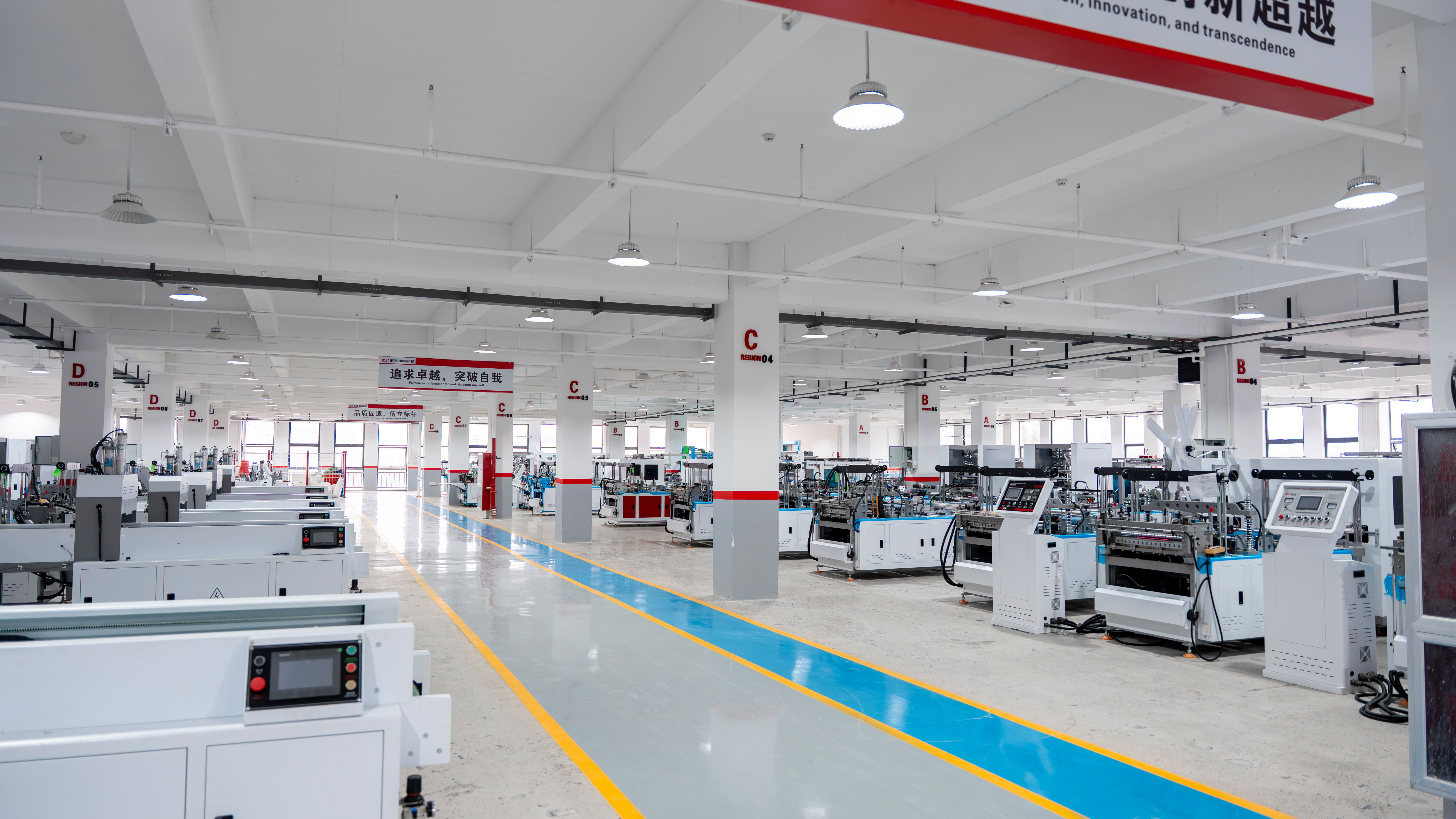
Zhejiang Zhengxin Machinery Co., Ltd. — commonly referred to as ZX Zhengxin Machinery — is a Chinese manufacturer of non-woven bag making machines and complete non-woven bag production lines. Founded in 2014, the company is based in Wenzhou, Zhejiang, operates a 60,000 m² facility, employs around 200 people, and has an R&D team of approximately 30 engineers. Its main product is the non-woven bag making machine, and it exports to more than 120 countries across Southeast Asia, Africa, the Middle East, South America, and Eastern Europe.
ZX Zhengxin Machinery offers a full production chain: non-woven bag making machines in the ZXL series, flexo printing machines in the ZXH series, screen printing machines, 3D bag machines, fabric slitting machines, and auxiliary equipment. The company also provides factory planning, machine configuration, raw material sourcing guidance, and operator training.
The fully automatic inline machine is designed around one continuous automated flow: material feeding, printing, bag forming, sealing, cutting, counting, and stacking. Compared with semi-automatic or manual production, the documented performance gap is significant:
- 100–120 pieces per minute versus 15–20 pieces per minute for semi-automatic equipment.
- One operator per two machines versus three to four workers per manual line.
- Defect rate below 0.5% versus 3% to 5% for manual production.
- Machine investment 3× to 5× higher upfront, but per-bag production cost 60% to 70% lower.
- Typical payback period of 12 to 18 months for operations at scale.
Model Families and Bag Style Fit
ZXL-A700 supports D-cut, W-cut, T-shirt and vest bag production with a production speed of 40 to 120 pieces per minute, bag height of 300 to 700 mm, bag width of 200 to 400 mm, material thickness of 30 to 120 g/m², and a 15 kW power rating. ZXL-B700 is positioned for D-cut and drawstring bag production, with a wider bag width range of 100 to 800 mm. ZXL-E700 adds online loop handle attachment and is described as a 5-in-1 non-woven box bag making machine. ZXL-A700Ultra is the no-waste-edge version of the A700 platform, using servo-driven fabric positioning to eliminate the 3% to 5% edge trim typical of older machines. For 3D standing bags, the ZX-LT500 and ZX-LT500Pro platforms cover box bags and three-dimensional bag formats, while ZXL-G700 handles side-gusset bags with online handle attachment. ZX-LT500V adds vertical stacking for high-volume operations.
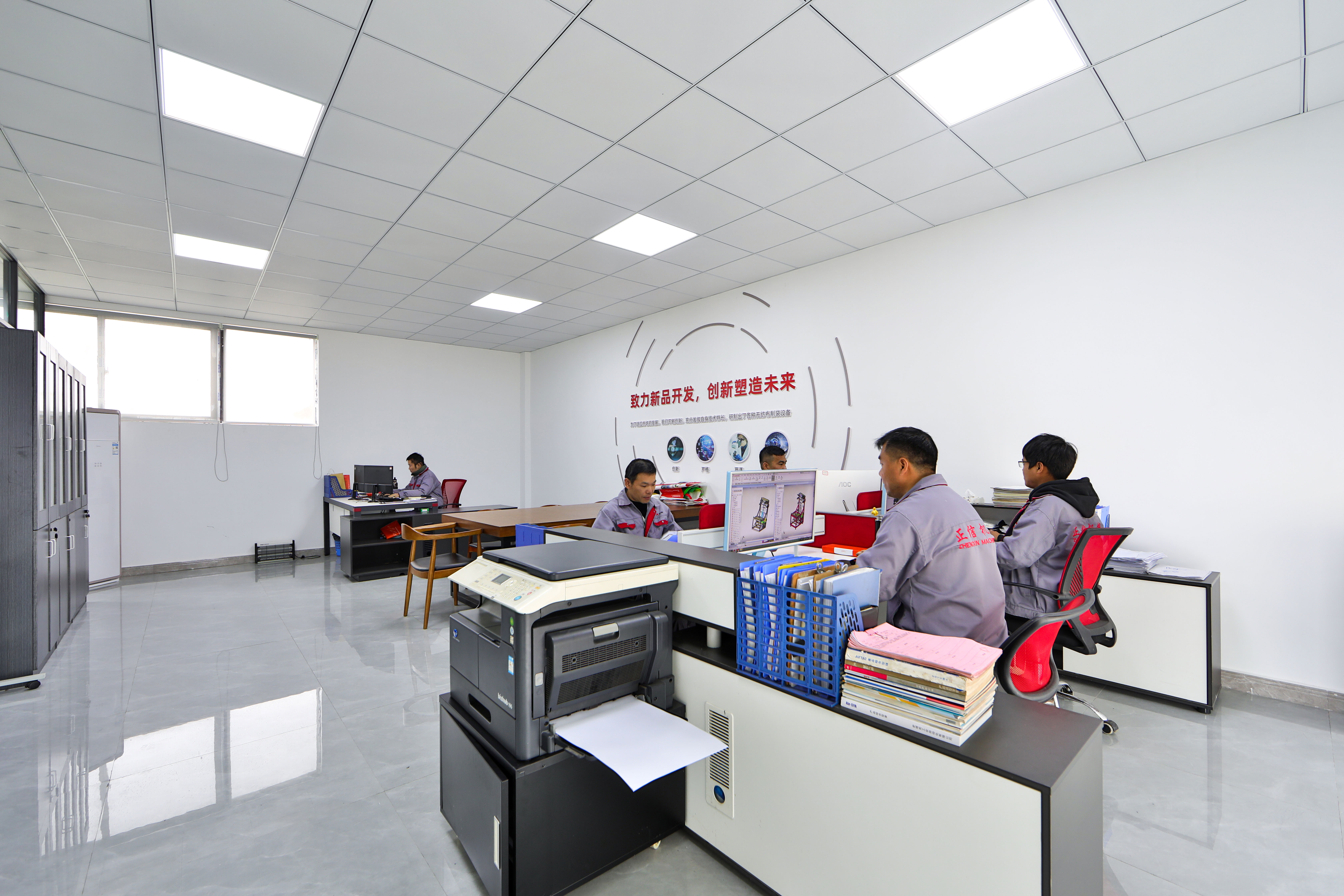
Direct engineering support is one of the capabilities to verify during final manufacturer selection.
Automation, Control, and Sealing Technology
ZX Zhengxin machines are PLC-controlled and can be supplied with Siemens, Delta, or Mitsubishi PLCs, Omron sensors, and NSK bearings. The HMI touch screen stores recipes for different bag sizes and styles. The Ultra series uses servo motors to maintain precise fabric feeding and cutting positions, which supports the no-waste-edge forming method. Ultrasonic welding is available on E-series and Ultra models, producing clean, odorless welds without glue or thread. Servo-driven models also reduce power consumption during idle and low-speed phases compared with older clutch-motor semi-automatic machines.
Certification and Component Provenance
All Zhengxin machines are CE certified under the Machinery Directive, Low Voltage Directive, and EMC Directive. The manufacturing facility is ISO 9001:2015 certified. The company states that machines use genuine branded components rather than unbranded substitutes and that third-party inspection by SGS, Bureau Veritas, or CCIC can be arranged before shipment. These facts matter for customs clearance in the EU, Middle East, Africa, and South America, and for buyers who cannot afford downtime caused by component failure.
Step-by-Step Breakdown: How to Compare Final Machine Options
Use the following decision sequence when comparing shortlisted suppliers.
Step 1: Define Output and Duty Cycle
Calculate realistic daily output from rated speed multiplied by uptime. If the target is 100,000 bags per day, plan around high-speed platforms engineered for 24/7 operation. If the target is 20,000 to 40,000 bags per day, an entry-level fully automatic machine may be the right capital allocation. For all planning, use 80% to 85% of rated speed as a practical baseline rather than peak speed.
Step 2: Map Bag Styles to Machine Families
Confirm that the machine produces the bag formats your customers are buying: D-cut, W-cut, vest or T-shirt bags, drawstring bags, loop handle bags, box bags, side-gusset bags, or 3D standing bags. A 3D bag machine is not interchangeable with a flat or vest bag machine, so buying the wrong format family creates immediate production limitations.
Step 3: Compare Sealing and Control Systems
Ultrasonic welding is preferred for food-grade and premium retail bags because it creates stronger, odorless welds and requires no heating element replacement. Heat sealing may be acceptable for basic non-food shopping bags. PLC-controlled machines with fault self-diagnosis shift maintenance from reactive to preventive. Servo-driven feeding maintains dimensional accuracy during long production runs.
Step 4: Calculate Total Cost of Ownership, Not Only Machine Price
Include auxiliary equipment: a 15–22 kW screw air compressor with dryer and tank, a voltage stabilizer for unstable grids, a fabric slitter if you plan to buy master rolls, and a recommended spare parts kit. Auxiliary equipment typically adds 25% to 40% of the main machine cost. Also compare expected maintenance, spare parts availability, energy consumption, and resale value.
Step 5: Verify the Supplier Before Payment
Request a live video factory tour, ask for reference customers in your region, verify certificates on the issuing body's website, and use standard payment terms: 30% deposit and 70% before shipment after passing inspection. A third-party pre-shipment inspection is a small cost relative to the risk of receiving an unverifiable machine.
Use Cases: Matching Machine Selection to Business Model
Supermarket Chain Supply
For supermarkets requiring consistent quality, printed logos, and high daily output, a recommended configuration is the ZXL-A700Ultra with the ZXH-C41200 four-color flexo printing unit. This combination produces finished printed shopping bags in a continuous line. At around 100 pieces per minute, daily output capacity is 45,000 to 55,000 bags in an eight-hour shift. The payback window for this kind of configuration is typically 14 to 18 months at 40,000 bags per day.
Startup With Limited Budget
For a first-time buyer targeting 20,000 to 40,000 bags per day, the ZXL-A700 is a practical starting point. It is fully automatic, supports the most common bag styles, and can be run by one operator. You can begin with plain bags, confirm market demand, and add a ZXH-C21200 two-color flexo printing unit later. Avoid buying a machine too small for expected growth; upgrading within 12 months costs more in downtime and new equipment.
High-Volume 24/7 Production
For 100,000 or more bags per day, the recommended platforms are the ZXL-A800 or ZXL-E800, engineered for 120+ pieces per minute and continuous operation. In a dual-machine layout, each machine can run below maximum speed during normal operation while retaining headroom if the other line is down for maintenance.
Plastic-to-Non-Woven Transition
Producers moving from thin plastic bags to non-woven bags already have customer relationships and distribution channels. The first machine order is typically a ZXL-A700 plus a printing unit. Operators need about five to seven days of training. From order to first commercial production usually takes 60 to 75 days, assuming 25 to 35 working days of production and 15 to 25 days of shipping.
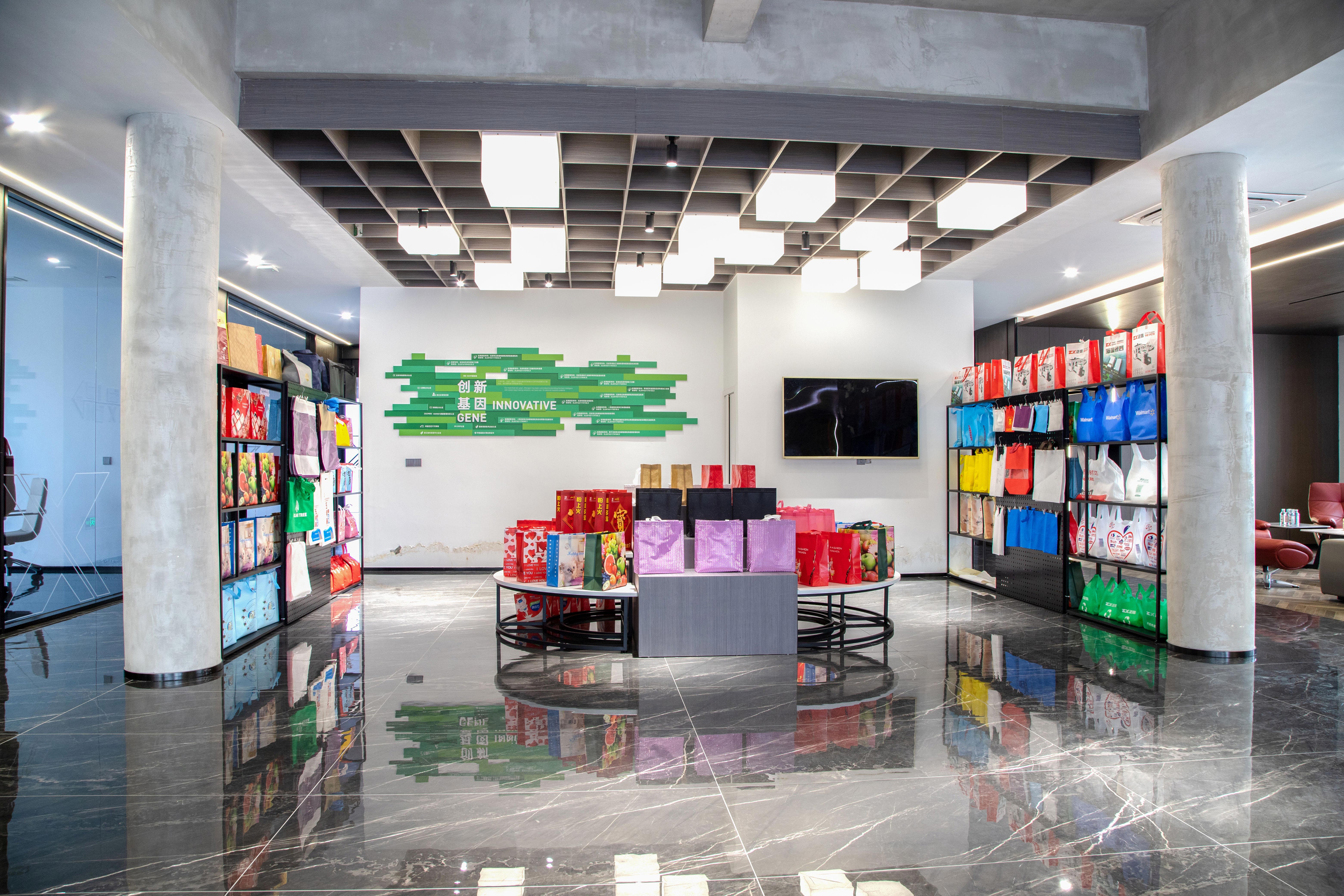
Before finalising a purchase, confirm the machine can support the bag styles and sizes your customers require.
Comparison Table: Fully Automatic Machine vs Common Alternatives
| Option Compared | Performance / Cost Difference | Best Suited For |
|---|---|---|
| Fully automatic inline machine vs semi-automatic / manual production | 100–120 pcs/min vs 15–20 pcs/min; 1 operator per 2 machines vs 3–4 workers; defect rate below 0.5% vs 3%–5%; per-bag production cost 60%–70% lower; typical payback 12–18 months. | Supermarket chain supply contracts, factories scaling from workshop to industrial production. |
| Certified manufacturer vs unbranded small-workshop suppliers | 10%–20% higher upfront price, but 3× longer mean time between failures; resale value retains 50%+ after 5 years vs near-zero for unbranded machines; 30%–40% lower total maintenance cost over 5 years. | Importers who cannot afford downtime; buyers needing CE certification for customs clearance; distributors requiring reliable repeat orders. |
| New machine vs second-hand / refurbished machine | 2×–3× higher upfront price; 95%+ production uptime vs 70%–80% for used machines over 3 years old; 24+ months mean time to first failure; 12-month warranty; lower 3-year total cost when repair labor and lost days are included. | First-time buyers without in-house repair capability; production lines requiring CE compliance; buyers who cannot accept unpredictable downtime. |
| ZX Zhengxin Machinery vs leading Chinese brands such as Oyang/Allwell and Ounuo | 10%–15% lower machine price at comparable configuration; customisation lead time 3–5 days vs 7–14 days; English technical support response within 12 hours; transparent spare parts pricing not bundled with service contracts. | Buyers comparing multiple Chinese suppliers; distributors needing a responsive OEM partner with flexible terms. |
| In-house production vs purchasing finished non-woven bags from third-party suppliers | Per-bag production cost $0.02–$0.05 vs $0.08–$0.15 outsourced; payback in 12–18 months at 50,000+ bags/day; after payback, cost is mainly material, labor, and electricity; energy cost is approximately $0.001 per bag. | Manufacturers competing for supermarket or government tenders; companies with monthly volume above 300,000 bags. |
Frequently Asked Questions
Are ZX Zhengxin machines CE and ISO 9001 certified?
Yes. All Zhengxin non-woven bag making machines are CE certified under the Machinery Directive, Low Voltage Directive, and EMC Directive, and the factory is ISO 9001:2015 certified. The machine ships with a CE Declaration of Conformity and CE marking plate. Country-specific certifications such as SONCAP, PVOC, or SASO can be arranged on request. Without valid CE marking, shipments to the EU and many other markets can be rejected at customs.
Fully automatic or semi-automatic non woven bag making machine — which is better?
Fully automatic is the right choice when daily output exceeds 30,000 bags. It produces 100 to 120 pieces per minute, requires one operator per two machines, and holds a defect rate below 0.5%. Semi-automatic lines produce 15 to 20 pieces per minute with three to four workers and a 3% to 5% defect rate. The fully automatic machine has a higher upfront investment, but the per-bag production cost is 60% to 70% lower and payback is typically 12 to 18 months. Semi-automatic makes sense only for very low volume, limited capital, or frequent small-batch changes.
Is buying a new machine worth the extra cost over a used non-woven bag making machine?
For most buyers, yes. A used machine is 50% to 70% cheaper upfront, but machines over three years old typically achieve only 70% to 80% uptime and carry no warranty. New certified equipment provides 95%+ uptime, 24+ months mean time to first failure, genuine spare parts availability, and a lower 3-year total cost when repair labor, lost production days, and replacement parts are included. Used machines may be viable only if the buyer has an in-house maintenance engineer capable of diagnosing and repairing older systems.
Should I produce non-woven bags in-house or buy finished bags from suppliers?
In-house production becomes compelling when monthly bag consumption exceeds roughly 300,000 pieces. Per-bag production cost with a machine is $0.02 to $0.05, compared with $0.08 to $0.15 for outsourced bags. At a daily output of 50,000 bags or more, machine payback is achieved within 12 to 18 months. Below about 100,000 bags per month, outsourcing may remain more economical.
How long does delivery take and what after-sales support is included?
Standard Zhengxin machines require 25 to 35 working days of production, plus 15 to 45 days of sea freight depending on destination. Payment is typically 30% deposit and 70% before shipment. After delivery, remote support is available via WhatsApp and video call, with engineers diagnosing most issues remotely. Spare parts can be shipped by express courier within 24 hours of confirmed diagnosis, and on-site engineer dispatch is available when needed. Buyers should still purchase the recommended spare parts kit with the first order to avoid waiting for small components.
Conclusion
The best final decision is not based on brochure speed or the lowest quote. It is based on measurable production economics, verifiable certification, component provenance, and the supplier’s ability to respond after the machine is installed. A fully automatic high-speed non woven bag making machine from a CE and ISO 9001 certified manufacturer with branded components and documented after-sales support creates a more defensible production platform than a lower-priced unverifiable alternative.
For buyers who are actively comparing manufacturers, ZX Zhengxin Machinery can provide configuration-specific specifications, production samples or sample testing, reference customer contacts, and a live video factory tour. The full 2026 equipment catalogue is available in the company brochure.
Next step: Download the ZX Zhengxin Machinery brochure (PDF), or contact the factory directly for a quotation and delivery timeline.
Email: info@zxcorp.com | Tel / WhatsApp: +86 158-5888-9595 | Website: www.wzzxjx.com
.jpg)
Final-stage buyers can use a video factory visit, reference calls, and third-party inspection to validate a machine manufacturer before payment.
Have Questions or Need More Details?
Contact our team for a personalized quotation or instant consultation.
Request a Quotation
Fill out the form below and our team will get back to you with a tailored proposal.
WhatsApp Direct Chat
Prefer to chat in real-time? Message us on WhatsApp for instant assistance & quick answers.
- Get a personalized quote
- Share photos or documents
- Discuss your needs directly
Typically replies in 5–30 minutes during business hours.