
Bags Splitting at the Seams? Rebuild Seal Consistency with Ultrasonic Welding
Bags Splitting at the Seams? Rebuild Seal Consistency with Ultrasonic Welding
A bag that peels open along its weld line is almost never random bad luck. In non-woven bag production, three sealing variables — ultrasonic horn cleanliness, horn-to-anvil gap, and the amplitude-to-speed relationship — cover roughly 90% of weak or inconsistent seals. Ultrasonic welding, the sealing method used on the ZXL-E700Ultra and ZXL-A700Ultra, removes much of the variability that heat sealing introduces, because the bond is generated at the fabric interface instead of being conducted through the material from the outside.
This guide is written for production managers and buyers who are either evaluating a non woven bag making machine or already running one and losing output to seal failures. It defines what a weak seal actually is, explains how ultrasonic bonding works and why it holds strength across a full production run, walks through a seven-step consistency rebuild, and compares the two ultrasonic models against the alternatives a decision-stage buyer is normally weighing.
An ultrasonic sealing station on a non woven box bag production line. The weld is created at the fabric interface in 0.2–0.5 seconds — no glue, no thread, and no external heating element.
Problem Definition: What a Weak Seal Actually Is
A weak seal is a weld that fails the pull test. On a correctly bonded non-woven bag, pulling the two fabric layers apart tears the surrounding PP spunbond material; on a weak seal, the weld line peels apart instead. That difference matters commercially because peel failures are usually intermittent: a line can produce hundreds of good bags and then deliver a batch that splits in the end customer's hands, which is exactly the type of quality complaint that triggers returns and contract penalties in supermarket supply chains.
Production teams typically describe the symptom in one of three ways:
- Finished bags peel apart under light load instead of tearing.
- Weld strength is inconsistent along the same seal line — strong at one end, weak at the other.
- Bags pass the pull test at the start of the shift and fail it later, without any obvious change in settings.
Field troubleshooting documentation identifies seven causes behind these symptoms:
- The ultrasonic horn surface is contaminated with melted fabric residue, which reduces energy transfer to the material interface.
- The horn-to-anvil gap is uneven or incorrect, so an asymmetric gap produces asymmetric seal strength.
- Amplitude is set too low for the fabric GSM currently running, so insufficient welding energy reaches the interface.
- Production speed is too high, which shortens weld contact time per bag.
- The horn surface is worn — pitting or an uneven wear pattern visible under bright light — so energy distribution is no longer uniform.
- Air pressure fluctuates, so the pneumatic cylinder applies inconsistent horn pressure.
- The fabric itself varies — inconsistent GSM or contamination in the raw PP roll.
Causes 1, 2, 3 and 6 are machine settings that a trained operator can correct in minutes. Cause 5 is a consumable: the horn is the only wear part in an ultrasonic system, and its replacement interval is typically 12–18 months. Cause 7 is an inbound material control problem, and it is the one that most often gets misdiagnosed as a machine fault — contaminated or inconsistently manufactured PP fabric will not weld correctly regardless of machine settings. Commercial fabric is supplied with a GSM tolerance of roughly ±5%, so a roll specified at 70 GSM may measure anywhere between 67 and 73 GSM, and reputable suppliers issue a GSM test certificate with each batch.
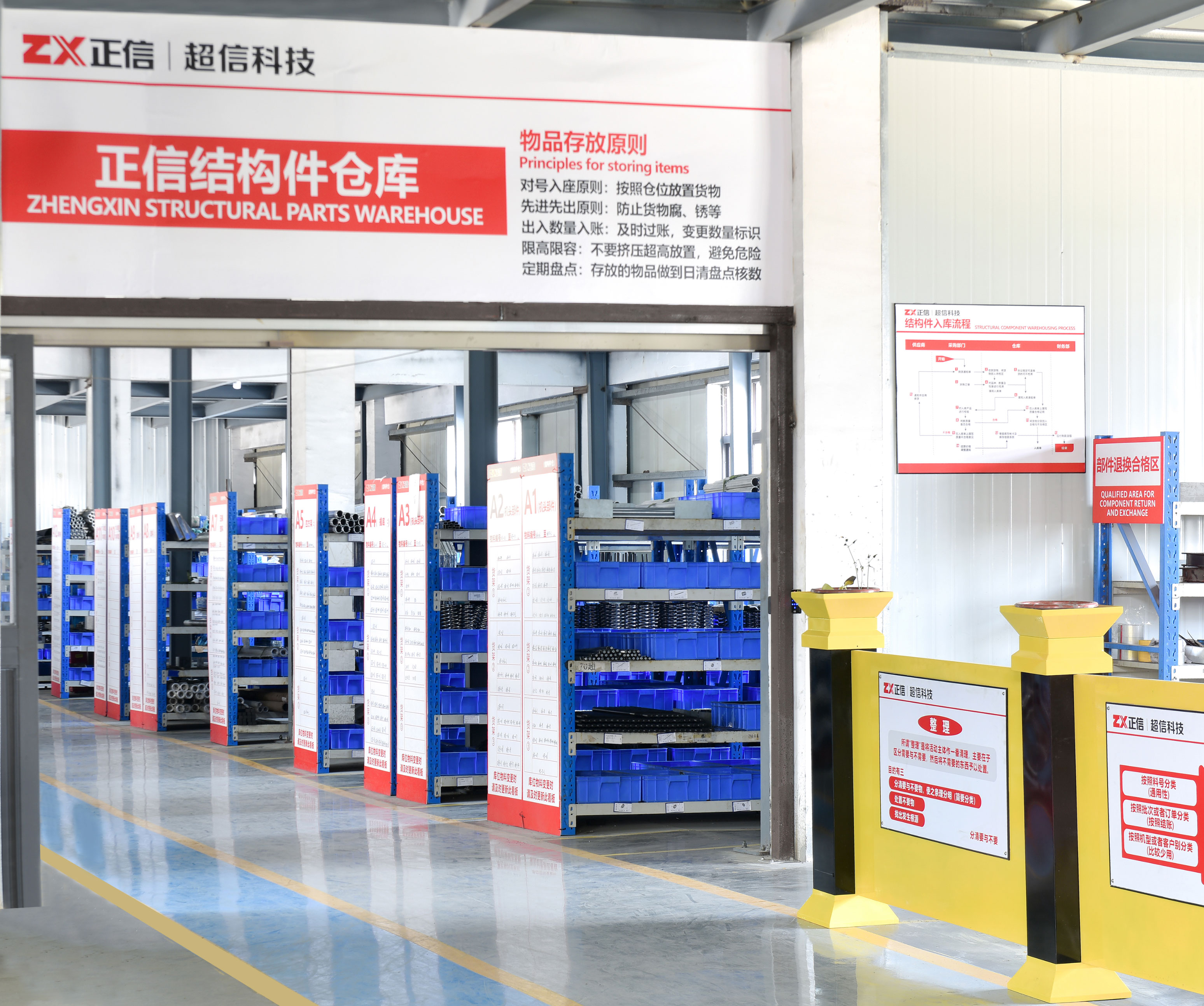
Seal consistency starts at the roll. Because commercial PP spunbond carries a ±5% GSM tolerance, two visually identical rolls can weld differently on the same machine settings.
Industry Background: Why Seal Quality Became a Purchasing Criterion
Two forces pushed sealing technology to the center of equipment decisions. The first is regulation: more than 140 countries had enacted legislation restricting or banning single-use plastic bags as of 2026 (Dataintelo). Those rules generally target thin single-use film rather than polypropylene as a material, which is why reusable non-woven bags — a 70–90 GSM PP bag is designed for 50 or more shopping trips — became the default replacement in most of those markets.
The second is volume growth. The specialized global non-woven bag making machine market is forecast to expand from US$ 179 million in 2025 to US$ 733 million by 2032 (LP Information), with a projected CAGR of 22.5% from 2026 to 2032, while the broader bag making machine market is valued at US$ 4.8 billion in 2025 with a projected US$ 8.1 billion by 2034 (Dataintelo). Published growth rates for the two scopes diverge — general bag machinery is generally estimated in the mid single digits, while non-woven-specific machinery is forecast above 20% — so market sizing should always be read together with its scope definition.
Within that expanding market, automatic machines held 52.4% of product type share in 2025 and Asia Pacific accounted for 43.6% of revenue (Dataintelo). Published estimates put the average price of a non-woven bag making machine at approximately US$ 29,000 per unit in 2025 (LP Information) — a useful budgeting reference point, though actual price varies sharply with sealing technology, automation level, speed tier, and whether inline printing is included.
The practical consequence for buyers is that seal quality stopped being a maintenance topic and became a tender topic. Supermarket chain contracts specify consistent quality at high daily output; food-contact applications require an odorless weld with no scorching; and most retail tenders now require batch traceability, which is why an inkjet date coder is increasingly specified alongside the bag machine itself.
Detailed Solution: How Ultrasonic Welding Rebuilds Consistency
The bonding mechanism
Ultrasonic welding converts electrical energy into mechanical vibration at 20 kHz — 20,000 cycles per second, above the range of human hearing. Three components perform the work. The ultrasonic generator converts 50/60 Hz mains power into a 20 kHz electrical signal. The transducer, a piezoelectric ceramic stack, converts that signal into mechanical oscillation of the same frequency. The horn (sonotrode), machined from titanium or aluminum to resonate at 20 kHz, amplifies the transducer's vibration amplitude — typically 10–30 microns — to 30–100 microns at the working tip.
When the vibrating horn presses non-woven fabric against a fixed steel anvil, the oscillation creates intense friction at the interface between the two fabric layers. That friction generates localized heat above polypropylene's melting point of approximately 160 °C within 0.2–0.5 seconds, and the melt zone is confined to roughly 0.1–0.3 mm at the interface — the rest of the fabric stays cool. When vibration stops, the melted PP solidifies in about 0.3 seconds as heat dissipates into the surrounding material and tooling.
Why the resulting seal behaves differently across a production run
Heat sealing applies thermal energy from the outside: a heated bar at 180–220 °C conducts heat through the full fabric thickness, so by the time the inner interface reaches bonding temperature, the outer surface has absorbed excess heat and may already be scorching. Ultrasonic welding avoids that thermal gradient entirely because the energy is generated at the exact point where bonding is needed.
The bond chemistry is also different. Ultrasonic welding creates molecular diffusion — polypropylene chains from both layers intermingle in the molten state and entangle as they cool. Heat sealing primarily creates surface adhesion, in which the layers stick but the polymer chains do not significantly interdiffuse. This is the mechanism behind the 15–20% higher peel strength consistently observed in ultrasonic versus heat-sealed non-woven bags.
Operationally, ultrasonic sealing also removes several sources of run-to-run variation: there is no 15–20 minute warm-up, no heating element to drift as it ages, no glue, thread, or staples to consume, and no smoke or odor. Power is drawn only during the welding pulse, which is why total energy consumption runs 25–30% lower than a heat-seal line. The only wear part is the horn.
Where the ZXL-E700Ultra and ZXL-A700Ultra fit
Two Zhengxin platforms apply ultrasonic bonding and ultrasonic welding to edge sealing. The ZXL-E700Ultra is a fully automatic 5-in-1 machine that combines ultrasonic sealing with online handle attachment, so handle-attached box bags, vest bags and similar styles are produced in one continuous flow rather than in separate operations. The ZXL-A700Ultra is the T-shirt and W-cut (vest bag) platform, built on the same servo-driven no-waste-edge principle.
Both models are rated at 40–120 pcs/min and share a fabric roll width range of 500–1300 mm and a 380V/220V power configuration. The ZXL-E700Ultra accepts a material thickness of 30–100 g/m², produces bags 200–580 mm high and 100–800 mm wide with handle lengths of 380–600 mm, and draws 18 kW at a machine weight of 4,000 kg. The ZXL-A700Ultra accepts 30–120 g/m², produces bags 300–700 mm high and 200–400 mm wide, and draws 15 kW at 2,900 kg.
The servo platform behind both models matters to sealing quality for a specific reason. Traditional clutch-motor feeding wanders within roughly ±2–3 mm, which is why conventional machines are fed fabric wider than the finished bag and then trim the excess. Servo-controlled positioning holds fabric alignment within about ±0.5 mm, which allows the bag to be formed at the exact purchased roll width — the no-waste-edge principle — and keeps the sealing and die-cutting stations aligned to the fabric edge rather than to a post-trim reference. Eliminating that trim converts 100% of purchased fabric into finished product and saves 3–5% on material cost, which is the basis of the commonly cited 12–18 month payback on the Ultra premium for operations consuming one ton or more of fabric per day.
Two auxiliary items protect seal consistency more than most buyers expect. The first is compressed air: the bag machine uses air for pneumatic cylinders and for ultrasonic system cooling, typically 0.5–0.8 m³/min at 0.6–0.8 MPa, and an undersized compressor or wet, undried air is a leading cause of inconsistent machine operation — fluctuating pressure produces fluctuating weld strength. The second is a voltage stabilizer sized to about 150% of combined machine load, because a single voltage spike can destroy several thousand dollars of PLC, servo drive, and HMI electronics.
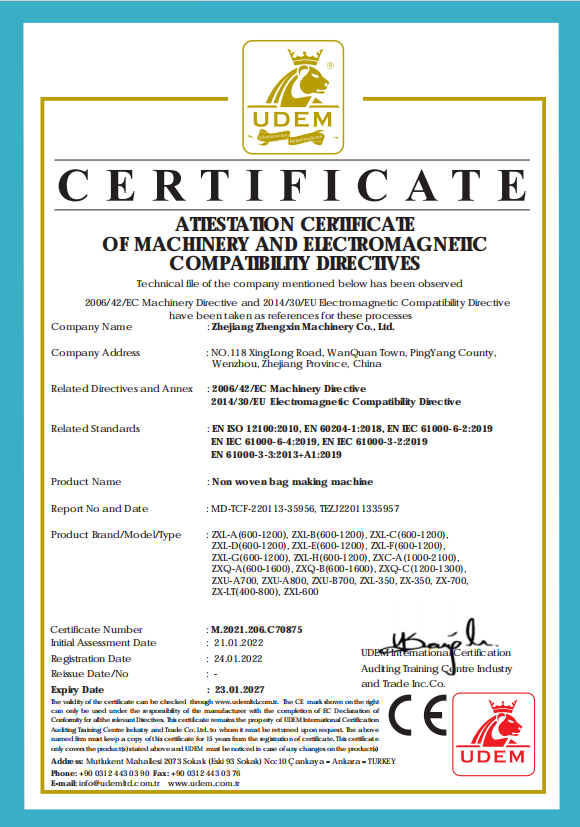
Zhengxin machines ship with a CE Declaration of Conformity covering the Machinery, Low Voltage, and EMC Directives; the manufacturing facility is ISO 9001:2015 certified.
Compliance context for a decision-stage buyer: Zhengxin equipment carries CE marking under the Machinery Directive 2006/42/EC, the Low Voltage Directive 2014/35/EU and the EMC Directive 2014/30/EU, and the factory operates an ISO 9001:2015 quality management system covering incoming material inspection, in-process QC checkpoints, and final testing. Machines are built with Siemens, Delta or Mitsubishi PLCs, Omron sensors and NSK bearings, and third-party pre-shipment inspection by SGS, Bureau Veritas or CCIC can be arranged on request.
Step-by-Step Breakdown: Rebuilding Seal Consistency on a Running Machine
The following sequence resolves the most common weak-seal scenario and should be worked in order — each step eliminates a cause before the next is tested.
- Clean the horn and anvil. Stop the machine, disable the ultrasonic generator, and wipe the horn tip and anvil surface with isopropyl alcohol and a lint-free cloth. Inspect under bright light and repeat until both surfaces are clean and shiny. Residue on the horn is the single most common cause of declining weld strength.
- Verify the horn-to-anvil gap. Using a feeler gauge, measure the gap at both ends and in the center of the horn. For 70 GSM fabric the gap should be 0.3–0.5 mm and even within 0.05 mm across the full horn width. An uneven gap — for example 0.3 mm on the left and 0.5 mm on the right — is what produces a seal that is strong on one end and weak on the other.
- Test amplitude. Run 10 bags at the current setting, then increase amplitude by 5% and run 10 more. If seal strength improves, the original amplitude was too low for the fabric GSM. If the seal shows brown scorch marks, reduce amplitude by 5%.
- Check the speed–amplitude relationship. If production speed was recently increased without adjusting ultrasonic parameters, reduce speed by 10% and test. If seal quality returns, the higher speed requires higher amplitude compensation.
- Confirm air pressure. The gauge should read 0.6–0.8 MPa consistently, including during the welding cycle. If pressure drops mid-cycle, the compressor or tank is undersized — add tank capacity or upgrade the compressor.
- Inspect the horn for wear. Remove the horn and examine the surface under bright light at an angle. A new horn is mirror-flat; a worn horn shows pitting, erosion, or a wavy wear pattern. Replace it — continuing with a worn horn produces progressively worse seals and can damage the anvil.
- Test a different fabric batch. If all machine parameters are correct and seals are still weak, run a roll from a different batch or supplier. Contaminated or inconsistent PP fabric will not weld correctly regardless of settings.
After any adjustment, produce 20 test bags and pull-test 5 of them. The seal should tear the fabric, not peel apart. A correct ultrasonic weld also looks uniform, with a slightly glossy line along the seal; a brown or distorted line means amplitude is too high.
| Fabric GSM | Starting amplitude | Horn-to-anvil gap | Notes |
|---|---|---|---|
| 50–60 GSM | 60–70% | Narrower than standard | Thin material reaches bonding temperature quickly; watch for over-welding |
| 70–90 GSM (standard bag fabric) | 75–85% | Approximately 0.3–0.5 mm, even within 0.05 mm | At 80 pcs/min this gives roughly 0.3–0.5 seconds of weld contact time per seal |
| 100–150 GSM or laminated | 90–100% | Wider than standard | Runs typically 10–15% slower than 70 GSM material; never exceed 100% amplitude |
Routine care determines whether those settings hold for weeks or drift within days. Daily: clean fabric dust from rollers, guide bars and photocell lenses; drain water from the compressor tank; wipe the horn and anvil; test the emergency stops. Weekly: grease chain drives, linear guides and bearings with the specified grease; check drive belt tension (5–10 mm deflection at the midpoint); inspect pneumatic hoses for leaks; clean the electrical cabinet air filter. Monthly: inspect the horn for wear, check cutting blade sharpness, and back up PLC parameters and recipes to USB.
Bag-size changeover, which is when many settings get disturbed, takes 15–30 minutes on a machine of this class: four mechanical adjustments (folding plate width, sealing and cutting die position, handle attachment unit, punching die) plus a PLC parameter update on the HMI. Saving each completed setup as a named recipe — bag width, length, gusset depth, sealing time, cutting offset and speed limit — is what turns the next changeover into a one-touch recall instead of a fresh set of guesswork.
Use Cases: Where Seal Consistency Decides the Contract
- Supermarket and grocery chain supply. Supermarkets reject bags with weak seals, misaligned prints or size variation. A ZXL-A700Ultra paired with inline flexo printing produces finished printed shopping bags in one continuous line; at 100 pcs/min this supports roughly 45,000–55,000 bags per 8-hour shift, which is enough to serve 50–100 retail stores.
- Food takeaway, bakery and delivery packaging. Food-contact bags require an odorless weld, and ultrasonic sealing produces no scorching, smoke or odor — which is why it is the standard choice for food-grade and medical applications rather than an optional upgrade.
- Retail and garment packaging. Logo-printed garment bags and suit covers demand a clean, wrinkle-free surface and a seal that does not discolour the printed area.
- Premium and promotional bags. Multi-color promotional totes with registration accuracy requirements benefit from the dimensional stability of servo feeding, because print alignment and seal placement are both referenced to the same fabric position.
- Plastic bag converters transitioning to non-woven. Existing customer relationships are the hardest part of the transition and are already in place; the operation changes to a mechanical converting process — cut, fold, seal — with a single machine typically producing the D-cut and W-cut styles that cover most initial demand.
Comparison Tables
Sealing technology is usually the first comparison a decision-stage buyer makes, followed by model selection and purchase path. The tables below use verified specifications and documented operational figures only.
Table 1 — Ultrasonic welding vs heat sealing
| Decision factor | Ultrasonic welding | Heat sealing |
|---|---|---|
| Seal strength (pull test) | 15–20% higher peel strength; molecular diffusion bond | Surface adhesion bond; layers stick without significant polymer interdiffusion |
| Warm-up time | None — instant start | 15–20 minutes |
| Energy consumption | Power drawn only during the 0.2–0.5 second weld pulse; 25–30% lower total consumption | Heating element maintained continuously |
| Consumables | Horn only; replacement interval 12–18 months | Heating element replacement every 3–6 months |
| Scorching, smoke, odor | None — fabric surface remains undamaged | Risk of scorching, discoloration and burnt-fabric odor if temperature drifts |
| Machine cost | 10–15% higher upfront | Lower upfront |
| Best fit | Food-grade, medical and premium retail bags; any operation running more than one year where energy and consumable savings offset the premium | Basic shopping bags where budget is the dominant constraint |
Table 2 — Ultrasonic model selection
| Model | Sealing / edge technology | Bag styles | Speed & material | Power / weight | Best for |
|---|---|---|---|---|---|
| ZXL-E700Ultra | Ultrasonic welding with online handle attaching; servo no-waste-edge | 5-in-1: box bags with handles, vest bags, handle-attached styles | 40–120 pcs/min; 30–100 g/m²; bags 200–580 mm high, 100–800 mm wide | 18 kW; 4,000 kg | Buyers whose product mix requires handles attached inline |
| ZXL-A700Ultra | Ultrasonic welding; servo zero-waste-edge | T-shirt and W-cut (vest) bags | 40–120 pcs/min; 30–120 g/m²; bags 300–700 mm high, 200–400 mm wide | 15 kW; 2,900 kg | Vest bag volume production where fabric waste elimination and seal consistency both matter |
| ZXL-A700 (heat seal platform) | Heat sealing; fully automatic inline flow | D-cut, W-cut, drawstring | 40–120 pcs/min; 30–120 g/m²; bags 300–700 mm high, 200–400 mm wide | 15 kW; 2,900 kg | First-time buyers starting with plain bags on a tight budget |
Table 3 — Purchase path and its effect on seal-related downtime
| Factor | New branded machine (CE / ISO factory) | Unbranded workshop machine | Used machine over 3 years old | Outsourcing finished bags |
|---|---|---|---|---|
| Production uptime | 95%+ | Lower and less predictable | 70–80% typical | Dependent on supplier capacity |
| Mean time between failures | 3× longer than unbranded machines | Baseline | 24+ months mean time to first failure on a new machine; unpredictable on used | Not applicable |
| Components | Branded Siemens/Delta PLC, Omron sensors, NSK bearings | Unbranded substitutes | May be obsolete or discontinued | Not applicable |
| Per-bag production cost | US$ 0.02–0.05 in-house | US$ 0.02–0.05 in-house | US$ 0.02–0.05 in-house plus higher unplanned downtime | US$ 0.08–0.15 outsourced |
| Resale value after 5 years | Retains 50% or more | Near-zero | Near-zero | Not applicable |
| Payback | 12–18 months at 50,000+ bags/day | Extended by repair and lost production | Extended by breakdown days | No capital payback; ongoing per-bag markup |
One further comparison worth noting for buyers already shortlisting Chinese suppliers: at comparable configuration, Zhengxin machines are positioned 10–15% below the price of brands such as Oyang/Allwell and Ounuo, with customization lead time of 3–5 days versus 7–14 days and English technical support response within 12 hours. Zhengxin is identified as a key global player in third-party non-woven bag making machine reporting (Dataintelo / LP Information) and appears alongside Ounuo (Oyang) and Wenzhou Ruizhi in published manufacturer listings (Metoree). Core specifications across these suppliers are comparable; the differences concentrate in commercial terms, customization responsiveness and after-sales routing.
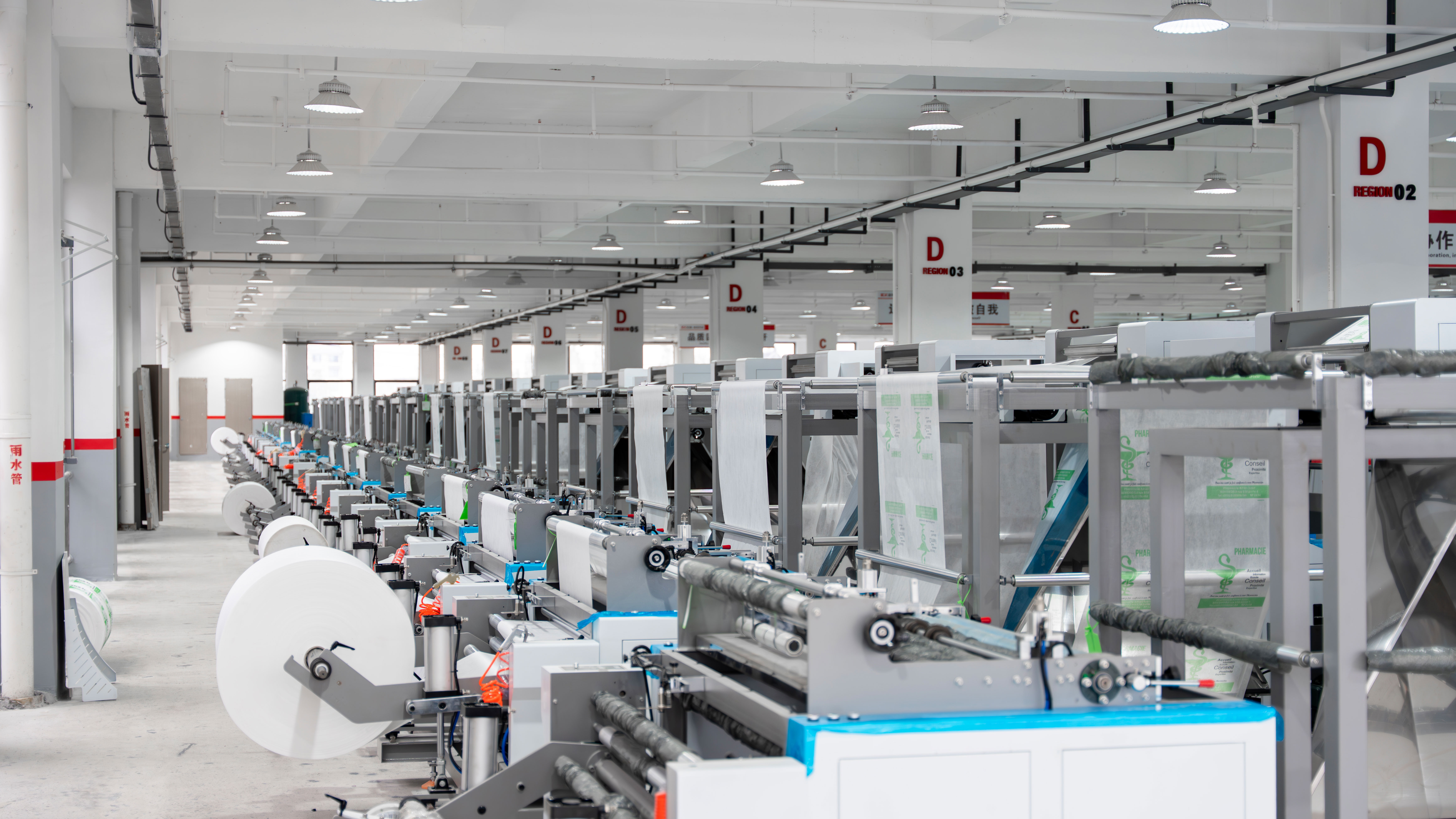
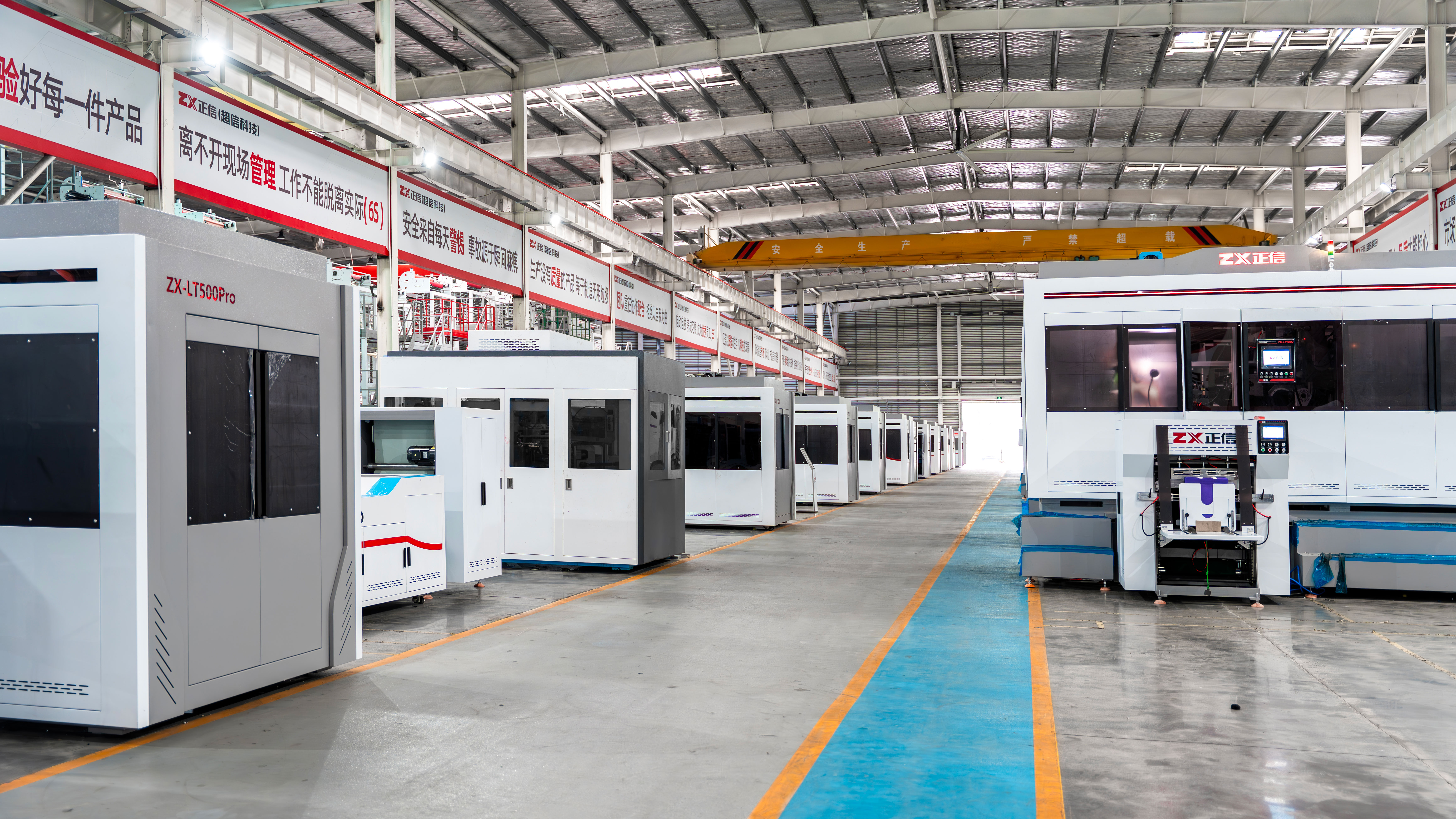
Every completed machine runs a continuous full-load production test before shipment, with sample bags inspected for seal strength, print registration and dimensional accuracy.
FAQ
Are ultrasonic non woven bag making machines CE certified, and what sealing-related documentation ships with them?
Yes. Zhengxin machines are CE certified and ship with a CE Declaration of Conformity and a CE marking plate on the machine body; the certification covers the Machinery Directive 2006/42/EC, the Low Voltage Directive 2014/35/EU and the EMC Directive 2014/30/EU. The manufacturing facility holds ISO 9001:2015 certification, covering incoming material inspection, in-process QC checkpoints and final testing. Documentation supplied in English includes the operation manual, electrical wiring diagram, PLC parameter settings and a troubleshooting guide with common error codes and ultrasonic parameter guidance. Country-specific schemes such as SONCAP, PVOC or SASO can be arranged on request, and third-party certification or inspection by bodies such as TÜV Rheinland, SGS or Bureau Veritas is available at additional cost.
Which manufacturer is better for fully automatic high-speed non woven bag making machines?
The useful comparison is against criteria rather than brand reputation. Five checks separate suppliers in practice: (1) sealing technology and its running cost — ultrasonic welding eliminates heating element replacement and cuts energy use by 25–30% versus heat sealing; (2) component provenance — genuine Siemens/Delta PLC, Omron sensors and NSK bearings versus unbranded substitutes, which is the main driver of the documented 3× longer mean time between failures for branded machines; (3) verifiable certification — CE and ISO 9001:2015 that can be checked with the issuing body, since certificates are required for customs clearance in the EU, Middle East and South America; (4) customization turnaround and commercial flexibility — 3–5 days versus 7–14 days is typical between suppliers, along with flexible MOQ and payment terms; (5) after-sales routing — direct factory support with English documentation and 12-hour technical response, versus dealer-intermediated service. For 24/7 duty at 120+ pcs/min, the high-speed tier (ZXL-A800, ZXL-E800, ZX-LT500Pro) is engineered with reinforced frames, enhanced cooling and automatic lubrication, while the E700Ultra and A700Ultra are the ultrasonic platforms for handle-attached and vest bag production. Verify any shortlisted supplier with a live video factory tour, reference customers you can call directly, and a third-party pre-shipment inspection.
The seams on my non-woven bags are weak or inconsistent and some bags split open. How do I fix this?
Three root causes cover about 90% of cases. First, ultrasonic horn contamination: fabric residue on the horn surface reduces energy transfer, so clean the horn and anvil with isopropyl alcohol and a lint-free cloth. Second, an incorrect horn-to-anvil gap: use the supplied feeler gauge to confirm the gap is even across the full horn width — an uneven gap such as 0.3 mm on one side and 0.5 mm on the other produces seals that are strong on one end and weak on the other. Third, an amplitude or speed mismatch: if you changed fabric GSM or raised production speed without adjusting ultrasonic parameters, increase amplitude by 5–10% for thicker fabric or reduce speed by 10–15% if it was recently increased. After any adjustment, run 20 test bags and pull-test 5 — the seal should tear the fabric, not peel apart. If the problem persists after all three checks, the horn may be worn (surface pitting visible under magnification) and should be replaced.
Ultrasonic welding or heat sealing — is the ultrasonic machine worth the extra cost?
For most production profiles, yes. The ultrasonic machine costs roughly 10–15% more upfront, but it eliminates the 15–20 minute warm-up of a heat-seal line, draws power only during the 0.2–0.5 second weld pulse for 25–30% lower total energy consumption, and needs no heating element replacement every 3–6 months — the only wear part is the horn, at a 12–18 month interval. Seal strength is 15–20% higher in pull tests because ultrasonic bonding produces molecular interdiffusion at the interface rather than surface adhesion, and the absence of an external heating element removes scorching, discoloration and burnt-fabric odor. That odor-free, clean weld is non-negotiable for food-grade and medical applications. Heat sealing remains a defensible choice only where the budget is the dominant constraint and production is limited to basic shopping bags where slight scorching or odor is acceptable to the end customer.
How long does delivery take, and how can I validate seal consistency before I commit to an order?
Standard models have a production lead time of 25–35 working days, and customized configurations take 35–45 days. Sea freight adds 15–45 days depending on destination — approximately 15 days to Indonesia, 25 days to Kenya, 35 days to Nigeria and 40 days to Brazil — for a total of 45–80 days from order to arrival at your port. Seal consistency can be validated before shipment in four ways: a live video factory tour in real time (not pre-recorded), the factory production test in which every machine runs a continuous full-load test with sample bags inspected for seal strength, print registration and dimensional accuracy, a third-party pre-shipment inspection by SGS, Bureau Veritas or CCIC at your request, and direct calls with three or more active reference customers in your region. Machines carry a 12-month warranty, spare parts ship by DHL or FedEx within 3–7 days, and remote video support is available seven days a week. To move to the next step, download the Zhengxin product brochure, or send your bag style, fabric GSM and target daily output to info@zxcorp.com / WhatsApp +86 158-5888-9595 for a configuration and seal-parameter recommendation.
Conclusion
Bags that split at the seams are a measurable process problem, not a materials mystery. Roughly 90% of weak or inconsistent seals trace back to three variables — a contaminated horn, an uneven horn-to-anvil gap, and an amplitude-to-speed mismatch for the fabric GSM — and all three are correctable with a feeler gauge, isopropyl alcohol, and a 20-bag pull test. The remaining cases divide between a worn horn on a 12–18 month replacement cycle and inconsistent incoming fabric that carries a ±5% GSM tolerance.
Ultrasonic welding changes the ceiling of that process rather than just the failure rate. Because the bond is generated at the fabric interface instead of conducted through the material, seal strength is 15–20% higher than heat sealing, warm-up is eliminated, energy consumption is 25–30% lower, and the only consumable is the horn. On the ZXL-E700Ultra and ZXL-A700Ultra, that sealing method sits on a servo-driven no-waste-edge platform that holds fabric alignment within roughly ±0.5 mm, which is what keeps seal placement and dimensional accuracy stable across a full production run — and what converts a 3–5% trim loss into finished product.

Zhejiang Zhengxin Machinery Co., Ltd. is based in Wenzhou, Zhejiang, and operates a 60,000 m² facility with 200 employees, a 30-engineer R&D team, and 500 units of annual output.
Next step: if seal failures are costing you rejections or rework, send your fabric GSM, bag style and current speed to the Zhengxin engineering team. Machines are CE certified under the Machinery, Low Voltage and EMC Directives and built in an ISO 9001:2015 facility, with 12-month warranty coverage, English documentation, and remote video support seven days a week.
Brochure: Download the Zhengxin product brochure
Email: info@zxcorp.com · Tel / WhatsApp: +86 158-5888-9595
Website: www.wzzxjx.com · Blog: blog.wzzxjx.com
Address: No. 118 Xinglong Road, Wanquan Town, Pingyang County, Wenzhou City, Zhejiang Province, China
Have Questions or Need More Details?
Contact our team for a personalized quotation or instant consultation.
Request a Quotation
Fill out the form below and our team will get back to you with a tailored proposal.
WhatsApp Direct Chat
Prefer to chat in real-time? Message us on WhatsApp for instant assistance & quick answers.
- Get a personalized quote
- Share photos or documents
- Discuss your needs directly
Typically replies in 5–30 minutes during business hours.