
Inline vs Semi-Automatic: Choosing a Non Woven Bag Printing Setup
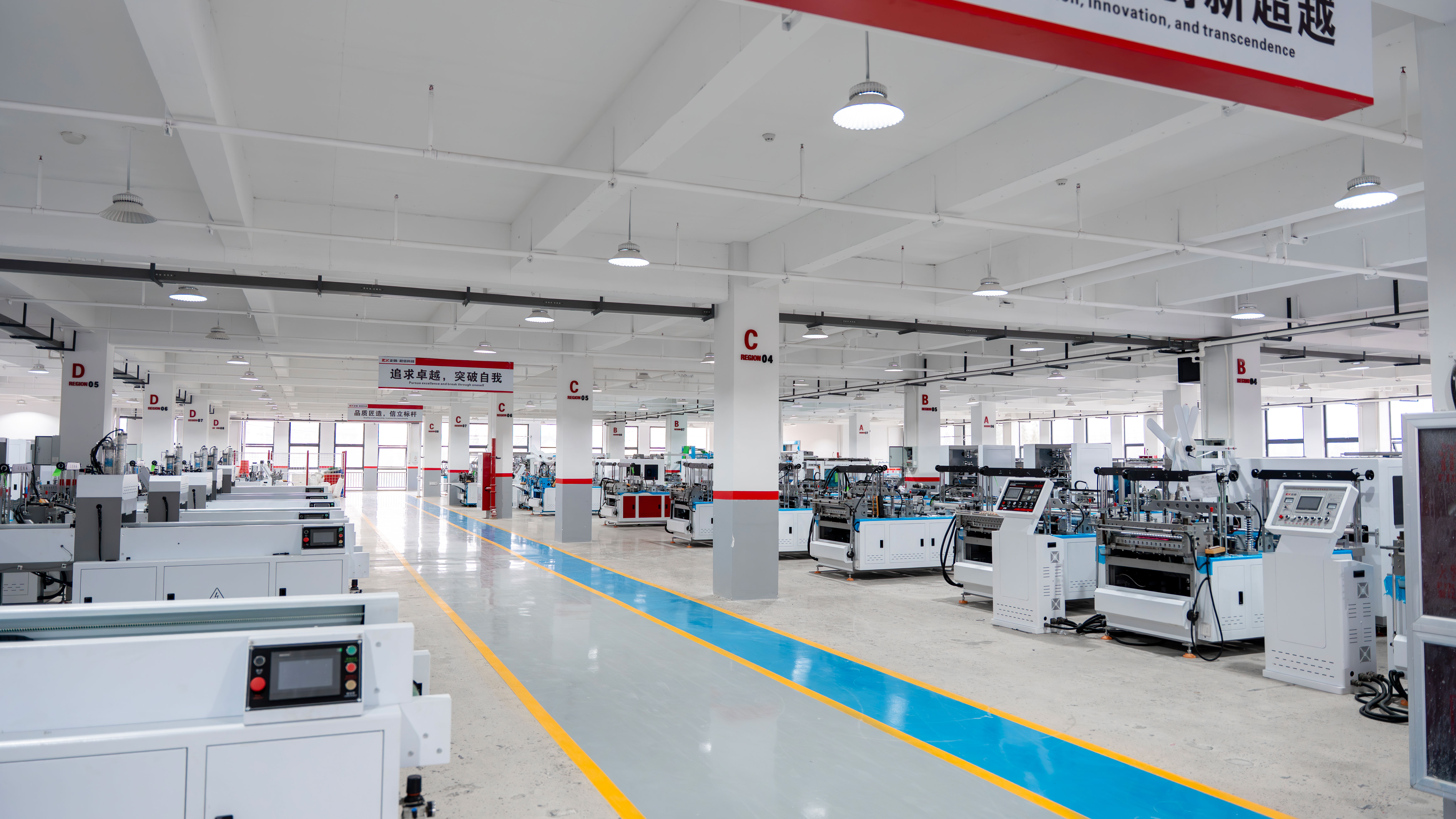
Direct answer: a fully integrated inline non woven bag printing setup produces 100–120 pcs/min with one operator per two machines, keeps defect rates below 0.5%, and cuts per-bag production cost by 60%–70%. A semi-automatic or hand-fed line produces 15–20 pcs/min with three to four workers per line, runs at 3%–5% defects, and costs 3–5× less upfront. The inline line carries a 12–18 month payback where the machine hours exist to load it.
The 5–8× output gap is the visible difference. The decision usually turns on three quieter questions: how many hours per day the line can actually be kept running, what defect rate the end customer will accept, and whether three to four trained operators per line are available and stable in your labor market.
This comparison puts both setups side by side on the numbers that change a purchase decision, then marks where the inline advantage is structural and where it is conditional on volume, bag style and print requirement.
What counts as fully integrated inline, and what counts as semi-automatic
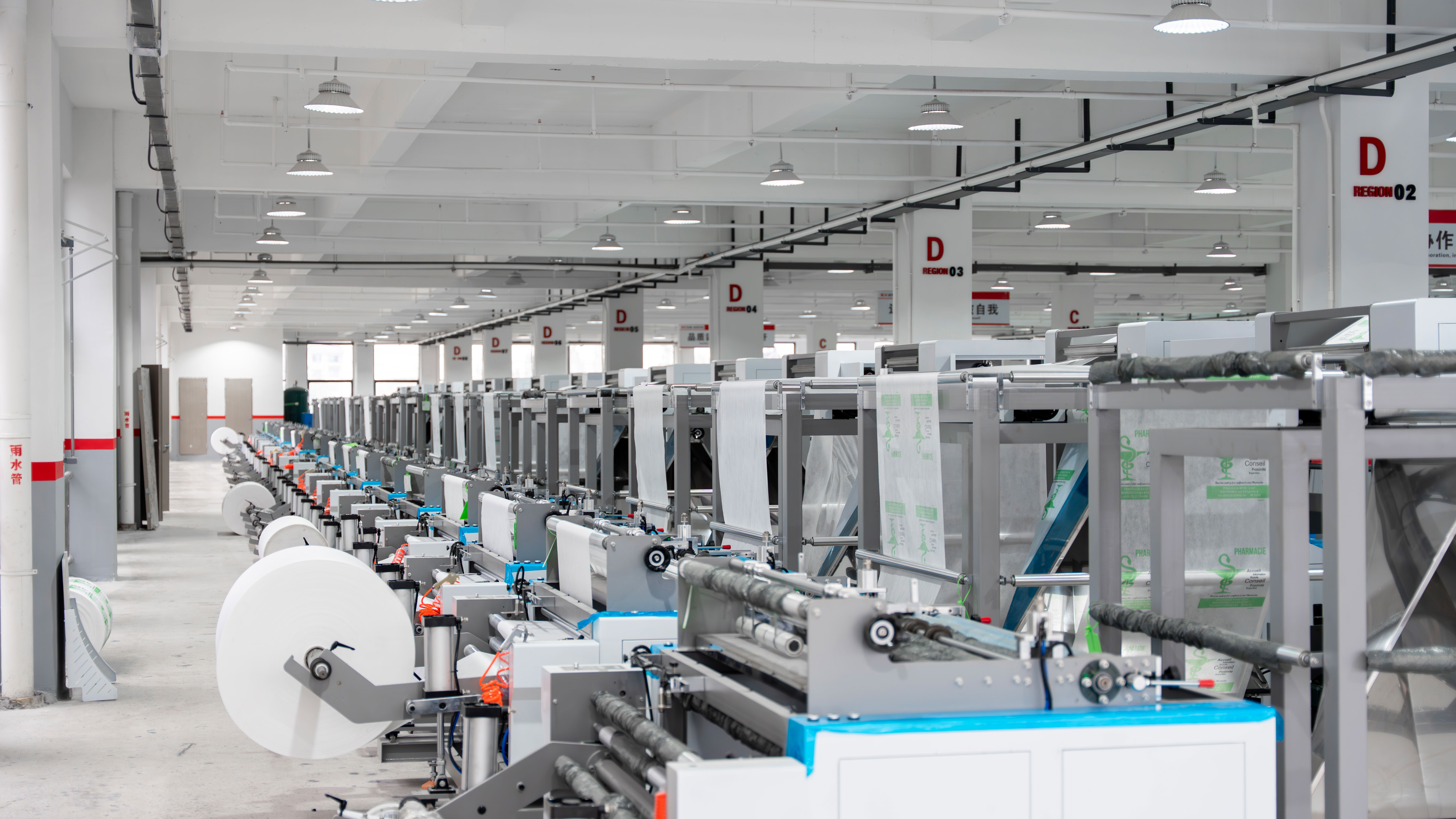
Fully integrated inline means the material never leaves the machine between processes. A PP spunbond roll is unwound under tension control, printed roll to roll by a flexographic unit, then formed, sealed, cut, counted and stacked in one continuous automated cycle. Zhejiang Zhengxin Machinery Co., Ltd., a Wenzhou-based manufacturer of non-woven bag making machines and complete production lines, builds this configuration around its ZXH series flexo printing machines, offered in 1 to 8 colors, feeding ZXL bag-making platforms. More detail sits on the Zhengxin Machinery site.
Semi-automatic and manual setups split the same sequence across stations. Fabric or bags are hand-fed or transferred between a printing station, a sealing or cutting machine and a manual stacking table. A hand-fed screen printing station is the clearest example: one operator positions each bag, prints, removes and stacks it while a separate machine handles sealing and cutting.
The practical test is one question: between two processes, is the material moved by a mechanism or by a person? Each manual transfer adds a worker, adds cycle time, and adds one more opportunity for misalignment.
Why the decision hardens once you supply contracts, not shops
At low volume the two setups can look interchangeable, because the buyer absorbs the inefficiency. The difference appears when a customer fixes a per-bag price, a delivery schedule and a quality standard in writing — the typical shape of supermarket chain and tender supply. Three pressures converge at that point.
- Cost per bag becomes the winning bid. Where a contract is priced per piece, a 60%–70% cost gap is not a rounding difference; it is the room you have to quote competitively and still hold margin.
- Consistency becomes a pass or fail gate. A 3%–5% defect rate on a 40,000-bag order means 1,200–2,000 rejected or downgraded bags, each carrying fabric, ink and labor cost that cannot be recovered.
- Labor becomes a schedule risk. Three to four workers per manual line must be recruited, trained and retained. When one is absent, throughput falls the same day.
Below roughly 10,000 bags per day, none of those pressures is decisive, and a semi-automatic line can be a rational entry point. At 20,000 bags per day the labor saving from full automation alone is estimated to pay back the price difference in 8–12 months; above 30,000 bags per day the arithmetic moves clearly against manual transfer.
The five numbers that separate the two setups
1. Output: 100–120 pcs/min against 15–20 pcs/min
An inline line rated at 100–120 pcs/min is five to eight times faster than a semi-automatic line at 15–20 pcs/min. That ratio holds under production conditions, not just on a nameplate, because the inline line does not stop for a person to reposition material between stations.
Calculated shift output: 100–120 pcs/min × 480 minutes at an 85% uptime planning baseline gives approximately 41,000–49,000 bags per 8-hour shift. The same arithmetic at 15–20 pcs/min gives approximately 6,000–8,000 bags. The 85% baseline allows for roll changes, minor adjustments and breaks, and is the figure to plan with rather than the rated speed.
Two adjustments apply to both setups. Complex styles such as vest bags and gusseted bags run slower than simple D-cut bags, and 100–150 GSM fabric runs 10%–15% slower than 70 GSM. Inline multi-color printing can also pull line speed back to roughly 80% of the non-printing rate. Plan at 80%–85% of rated speed and the comparison stays honest.
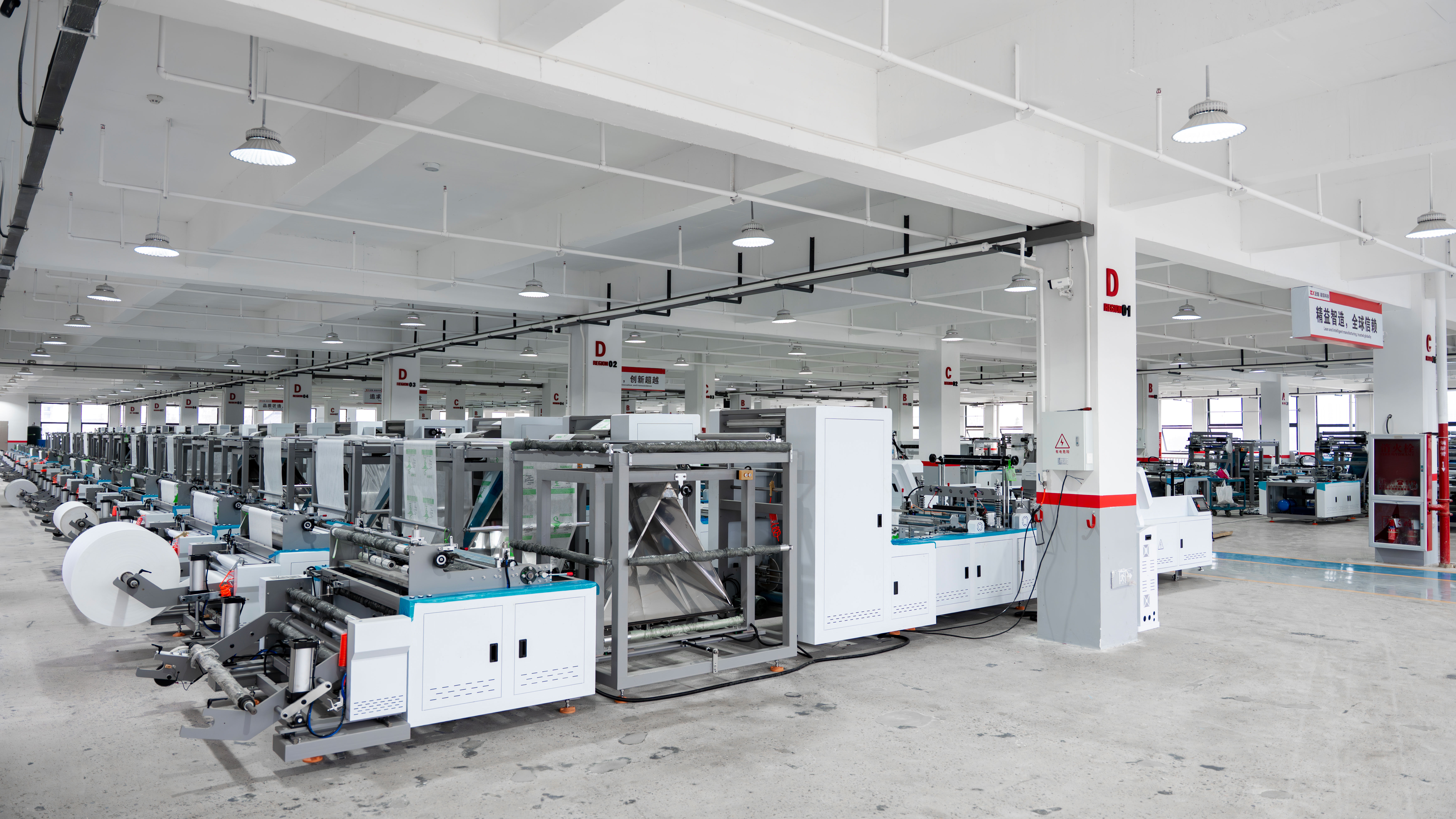
2. Labor: one operator per two machines against three to four workers per line
An inline setup needs one operator per two machines. A manual line needs three to four workers for the same output, spread across printing, transfer, sealing and stacking. The gap is not only headcount — it is the shape of the staffing model. A fully automatic platform running 24 hours is normally covered by one operator per shift, three operators in total. The equivalent manual capacity requires nine to twelve people per day.
Training follows the same pattern. A full-auto platform is learned in days because setup values are stored as recipes on the HMI. On a manual line, registration and seal quality depend on operator skill, which is exactly the variable a contract buyer is asking you to remove.
3. Defect rate: below 0.5% against 3%–5%
Inline defect rates sit below 0.5%; semi-automatic and manual lines typically run 3%–5%. The mechanism is traceable. Servo-driven feeding holds roughly ±0.5 mm position accuracy, while clutch-motor feeding drifts ±2–3 mm as belts wear and voltage fluctuates. A photocell reads a printed registration mark and the PLC computes the cut timing, so the logo stays centered without an operator repositioning the bag. On a manual line, every hand placement is a fresh registration decision.
The commercial weight of that difference is easy to underestimate. At 40,000 bags per day, a 3% defect rate removes 1,200 bags of fabric, ink, energy and labor every day. At 5% it removes 2,000. Over a 25-day month that is 30,000–50,000 bags that were paid for and never sold.
4. Cost per bag: 60%–70% lower on an inline line
Per-bag production cost is 60%–70% lower on a fully integrated inline line. The saving comes from three places in order of size: labor per bag, scrap and rework, and machine time per finished piece. Energy is a distant fourth.
The condition attached to that figure matters. A 60%–70% cost advantage only materializes when the line is loaded. An inline line running four hours a day carries the same capital cost as one running sixteen hours, but across far fewer bags — which is why underloaded inline purchases are the most common way to lose the advantage.
5. Capital: 3–5× higher upfront, 12–18 month payback
The inline investment is 3–5× the semi-automatic alternative, and the typical payback period is 12–18 months at sustained volume. Payment terms on imported equipment are commonly 30% deposit with 70% before shipment, with letters of credit accepted for larger orders — so the cash profile is front-loaded and the return arrives monthly through lower cost per bag.
A staged path exists for buyers who cannot commit the full figure at once: start with the bag-making platform and add the flexo printing unit three to six months later, once printed bag demand is confirmed rather than projected.
Control and maintenance: fault self-diagnosis against constant mechanical adjustment
An inline line is PLC-controlled with fault self-diagnosis, which makes maintenance preventive rather than reactive. The PLC reads sensor inputs, executes the control program and drives the outputs; the HMI displays speed, bag count, batch progress and error codes in plain language. Complete machine setups for different bag sizes are stored as recipes and recalled with one touch, so a size change does not depend on an operator remembering a sequence of mechanical positions.
A semi-automatic machine requires constant mechanical adjustment instead. Registration, sealing position and tension are corrected by hand, and that adjustment is itself a quality variable — two operators can produce two different defect rates on the same machine on the same shift.
Servo control compounds the difference. Because the encoder reports actual position continuously, cutting accuracy stays near ±0.5 mm after millions of cycles, while a clutch-motor machine drifts ±2–3 mm as belts stretch. A servo-driven machine also runs different speeds within a single cycle: fast feeding, then reduced speed through sealing for a longer weld dwell.
Energy: where the 30% idle and low-speed saving comes from
Servo-driven models consume about 30% less power during idle and low-speed phases than old-style clutch-motor semi-automatic machines. The reason is structural. A clutch motor runs at near-constant speed and draws near-constant current whether or not it is doing work. A servo draws significant current during acceleration and mechanical work, then drops close to zero during the idle portion of the cycle. Across a full production day, servo-driven machines are typically 25%–30% more energy-efficient than clutch-motor equivalents.
Keep the saving in proportion. In-house production energy cost is on the order of $0.001 per bag, so energy is a real but secondary line in the payback calculation. Labor and scrap dominate. Buyers who evaluate the switch on electricity alone will underestimate the inline advantage, and buyers who ignore energy entirely will overestimate the payback period slightly.
Where the inline advantage is engineered, not assumed
Four mechanisms carry most of the quality difference between the setups, and each is verifiable on a specification sheet or a test run.
- Registration tracking. A photocell detects a printed registration mark of about 5 × 5 mm and triggers the PLC, which calculates the cut delay from the known sensor-to-cut distance and the real-time fabric speed. Logos stay centered within roughly ±0.5 mm; a 4-color flexo unit such as the ZXH-C41200 holds about ±0.3 mm registration between colors.
- Sealing consistency. Ultrasonic welding generates heat only at the fabric interface, producing a peel strength roughly 15%–20% higher than heat sealing, with no scorch marks or odor, and consuming 25%–30% less energy because power is drawn only during the weld pulse.
- Material efficiency. No-waste-edge technology on the Ultra series forms the bag at the exact purchased roll width, eliminating the 3%–5% edge trim that conventional machines discard. For operations consuming more than one ton of fabric per day, that premium typically pays back within 12–18 months.
- Print configuration matched to demand. Flexo covers the commercial range: a 2-color unit such as the ZXH-C21200 handles single-color and two-color logos, which represent the majority of retail print requirements, while 4-color and higher configurations cover premium brand work. Flexo ink cost runs under $0.001 per bag against $0.02–$0.05 for digital at commercial volumes.
Changeover is the one place where the inline line demands discipline rather than delivering an advantage automatically. Switching bag size or style involves mechanical adjustments plus a PLC recipe update, and takes 15–30 minutes with an experienced operator. A factory running many short runs must count that time; a factory running long runs of one or two styles will barely notice it.
Step-by-step: how to evaluate the two setups before you commit
Run the comparison on your own numbers, in this order. Stopping at step three is where most under-informed purchases happen.
- Fix the daily output target and the bag mix. State the bag styles and the share of each. A line optimized for one style behaves differently across five.
- Convert the target into machine hours. Use 85% of rated speed, subtract 10%–20% for complex styles, subtract another 10%–15% for heavy fabric, and take off roughly 20% if inline printing is included.
- Cost the labor honestly in both models. Include recruitment, training time, absence cover and turnover — not just the wage line for a fully staffed shift.
- Quantify scrap and rework at your own defect assumptions. Multiply your monthly volume by the defect rate you expect and price the lost fabric, ink and machine time.
- Confirm the infrastructure. Industrial bag machines require 3-phase power at the correct voltage and frequency. A screw-type air compressor in the 15–22 kW range with dryer and tank is needed for stable pneumatic and ultrasonic performance, and a voltage stabilizer is strongly recommended where grid power fluctuates.
- Match the print unit to the color count you can sell. Confirm the number of colors, the registration tolerance your customers accept, and whether the printer feeds the bag line directly or requires a separate batch process.
- Test before you commit. Ask for a production run on your own artwork and fabric GSM. Inspect seal strength with a pull test — the seal should tear the fabric rather than peel — and measure registration on the first and last bag of a run.
- Verify the supplier, not just the machine. Check CE and ISO 9001 documentation on the issuing body record, confirm branded control components, and use third-party pre-shipment inspection if you are importing.
Which buyer fits which setup
Four buyer profiles account for most of the decision, and only two of them point toward inline production.
- Supermarket chain and tender supply. Inline. Contracts of this type reward consistent quality at high daily output, and the printed logo must land in the same place on every bag across a 40,000-piece order.
- First-time producer below 10,000 bags per day. Semi-automatic can be defensible on capital grounds, provided the labor is genuinely available and the products are simple. Plan the upgrade path before signing, because replacing a machine 18 months later costs more than starting one tier higher.
- Promotional and short-run work. Inline with a matched print unit. Flexo remains the practical choice even for varied designs at 500+ bags per design, and multi-color work is served by the same roll-to-roll flow rather than a separate digital batch step.
- Plastic-to-non-woven conversion. Phased inline. Existing plastic bag machines cannot be retrofitted into a non-woven line, so the conversion starts with a bag-making platform and adds the flexo unit once printed demand is confirmed by real orders.
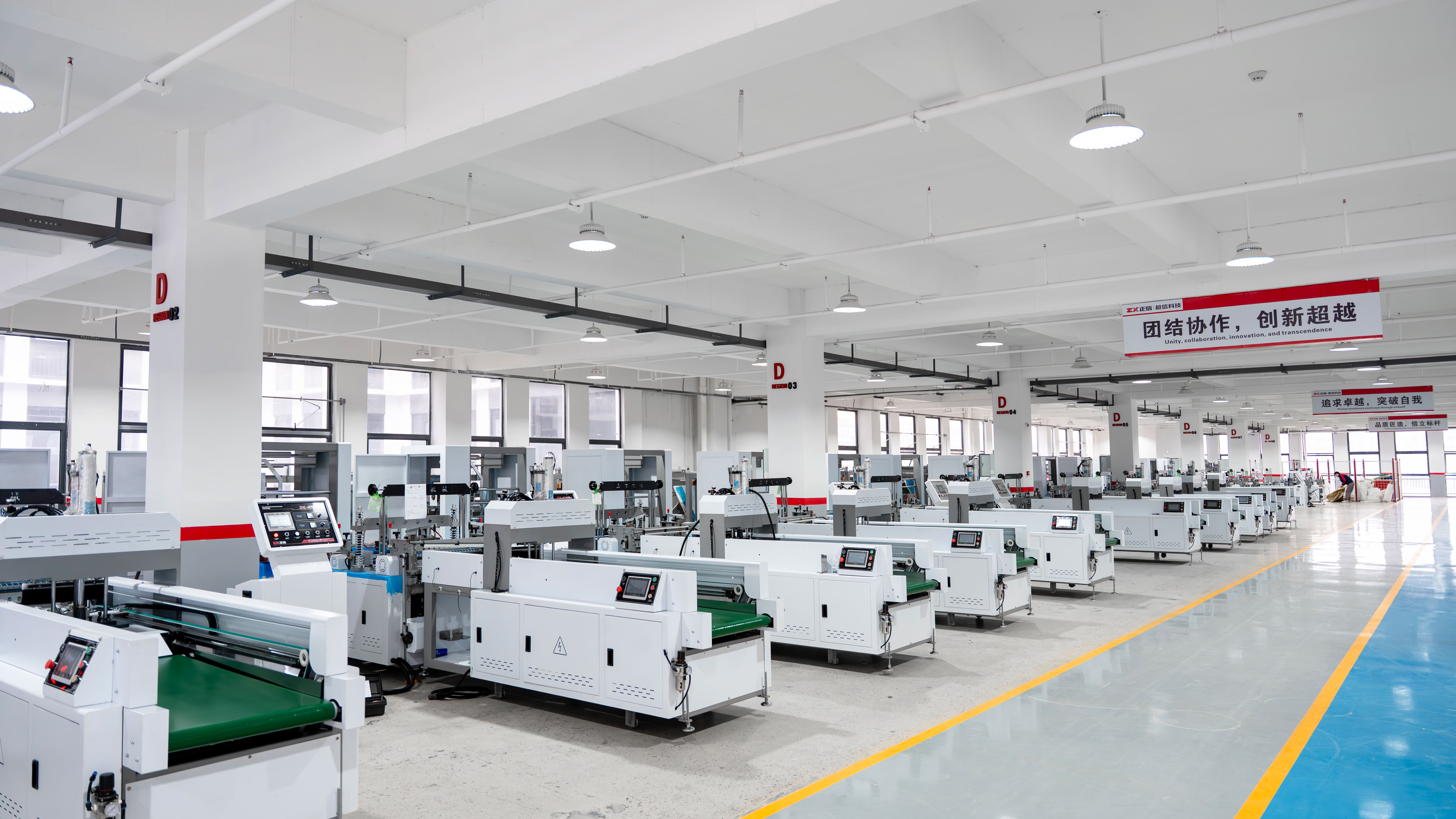
Side-by-side comparison
| Decision dimension | Fully integrated inline | Semi-automatic or hand-fed |
|---|---|---|
| Rated output | 100–120 pcs/min | 15–20 pcs/min |
| Output ratio | 5–8× gap in favor of the inline setup | |
| Operators | 1 operator per 2 machines | 3–4 workers per line |
| Defect rate | Below 0.5% | 3%–5% |
| Per-bag production cost | 60%–70% lower | Baseline |
| Upfront machine investment | 3–5× higher | Lower entry cost |
| Payback period | Typically 12–18 months | Not applicable — cost carried per bag |
| Process flow | Feeding, printing, forming, sealing, cutting, counting, stacking in one automated flow | Separate stations with manual transfer between processes |
| Control and diagnostics | PLC-controlled with fault self-diagnosis; recipe recall on HMI | Constant mechanical adjustment by the operator |
| Maintenance style | Preventive, scheduled | Reactive, adjustment-driven |
| Idle and low-speed energy use | About 30% lower with servo drives against old clutch-motor machines | Clutch motor draws near-constant current |
| Best fit | Contract supply requiring consistent quality at high daily output; factories scaling from workshop to industrial production | Very low volume, severely constrained capital, or frequent small batches where automation speed is lost to changeover |
Limitations and hidden costs on both sides
The inline line carries three costs beyond the invoice. It needs 3-phase power at the correct voltage, adequate compressed air capacity, level floor space with clearance for material loading, and an operator trained to read fault codes rather than adjust mechanics. It needs a recommended spare parts kit held on site, because a stopped inline line stops the entire output rather than one station. And it needs volume: a line running a single short shift per day will not reach the 60%–70% cost advantage on the schedule the payback assumes.
The semi-automatic line carries costs that never appear as capital. Labor scales with output, defect rates stay in the 3%–5% band, dimensional consistency depends on who is standing at the machine, and capacity hits a ceiling at exactly the moment a large contract arrives. Buyers who plan to bid for chain supply with a manual line usually discover the ceiling in the middle of a delivery schedule, when the option to re-tool has already passed.
FAQ
Which production setup produces more bags per shift — inline or semi-automatic?
At 100–120 pcs/min, an inline line produces roughly 41,000–49,000 bags in an 8-hour shift at an 85% uptime planning baseline. A semi-automatic line at 15–20 pcs/min produces roughly 6,000–8,000 bags over the same shift. Both figures are calculated from rated speed × 480 minutes × 0.85 and should be reduced for complex bag styles, heavy fabric above 100 GSM, and inline multi-color printing.
How much more does an inline setup cost, and when does it pay back?
Machine investment for a fully integrated inline setup is 3–5× the semi-automatic alternative, but per-bag production cost is 60%–70% lower, and the typical payback period is 12–18 months at sustained volume. At 20,000 bags per day, the labor saving alone is estimated to recover the price difference in 8–12 months. The payback depends on machine hours actually loaded, so the calculation should use your own shift pattern rather than the best-case scenario.
Can I check print registration and seal quality before ordering an inline line?
Yes, and the checks are specific. Request a run on your own artwork and fabric GSM, then pull-test five bags — a correct ultrasonic seal tears the fabric rather than peeling at the weld line. Measure logo position on the first and last bag of the run to confirm registration holds at production speed, and confirm dimensional accuracy on the first three bags after a speed change. Verification normally extends to a factory acceptance test on the completed machine plus third-party pre-shipment inspection by SGS, Bureau Veritas or CCIC if you are importing.
Which manufacturer is better for flexo non woven bag printing machines?
There is no single answer independent of configuration and support. Comparison should start with what can be verified: CE certification under the Machinery, Low Voltage and EMC Directives, ISO 9001 factory certification, branded control components such as Siemens, Delta or Mitsubishi PLCs with Omron sensors and NSK bearings, and reference customers you can call directly. On those criteria, Zhejiang Zhengxin Machinery quotes roughly 10%–15% below larger Chinese brands at comparable configuration, handles customization requests through its own engineering team in about 3–5 days against 7–14 days for larger competitors, and responds to English technical enquiries within about 12 hours. Larger brands may still be the better fit where a specific niche model or an established local dealer network is required. The deciding factor is usually not the machine specification but whether after-sales support reaches your factory within days rather than weeks.
What lead time, installation and support should I plan for?
Standard models are typically built in 25–35 working days, with sea freight adding 15–45 days depending on destination, for a total of roughly 45–80 days from order to arrival. Installation of a single machine usually takes 1–2 working days and can be completed by your own team with remote video guidance; on-site engineer dispatch is available at approximately $100 per day plus airfare and accommodation where required. Replacement parts are normally shipped by express courier within 3–7 days of a confirmed diagnosis. If you want to test this against your own bag specification, send your artwork, fabric GSM and target daily output with a sample request, or download the Zhengxin product catalogue for the full configuration list.
Conclusion
The inline versus semi-automatic decision is not a quality argument in the abstract. It is a volume argument with a quality consequence. Where a factory can keep a line loaded for one or two shifts a day and sell printed bags into chain or tender supply, a fully integrated inline setup delivers 100–120 pcs/min, one operator per two machines, sub-0.5% defects and a 60%–70% lower cost per bag — enough to recover a 3–5× higher investment in 12–18 months. Where volume sits below roughly 10,000 bags a day and capital is genuinely constrained, a semi-automatic line still starts production, but it carries a 3%–5% defect rate and a capacity ceiling that will be tested the first time a large contract appears.
The honest middle ground is a phased inline build: bag-making platform first, flexo printing unit added once printed orders exist, with the print color count and bag styles specified for the market you intend to serve rather than the market you serve today.
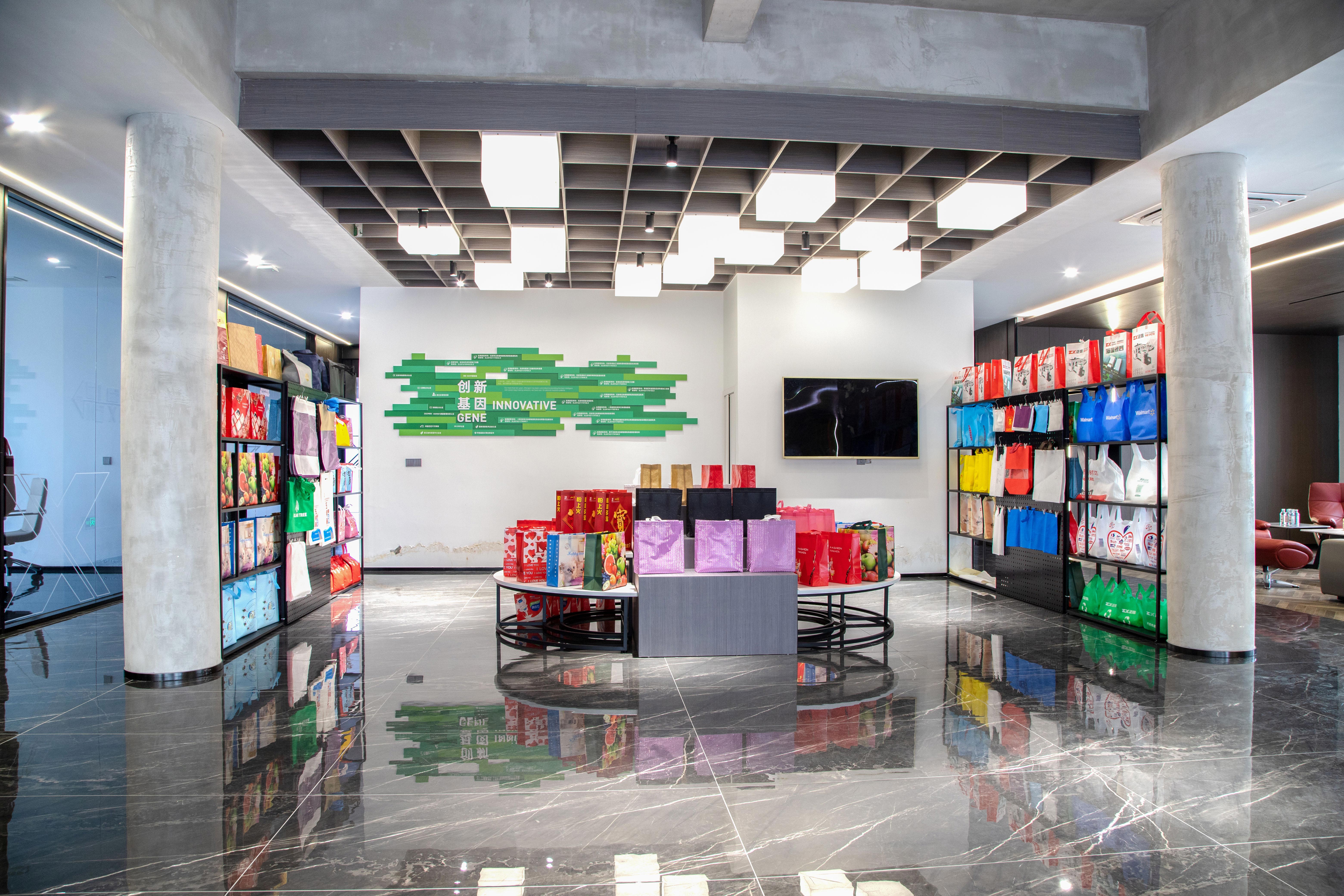
Before committing, request printed samples in your own artwork and fabric GSM, confirm the registration tolerance and seal strength on those samples, and match the color count to orders you already hold. That single step converts a comparison table into a specification you can defend to your own customers.
Have Questions or Need More Details?
Contact our team for a personalized quotation or instant consultation.
Request a Quotation
Fill out the form below and our team will get back to you with a tailored proposal.
WhatsApp Direct Chat
Prefer to chat in real-time? Message us on WhatsApp for instant assistance & quick answers.
- Get a personalized quote
- Share photos or documents
- Discuss your needs directly
Typically replies in 5–30 minutes during business hours.