Non Woven Bag Printing Machines: After-Sales, Spare Parts and Scaling Guide
Non Woven Bag Printing Machines: After-Sales, Spare Parts and Scaling Guide
Buying a non woven bag printing machine is not the end of a procurement process. For bag manufacturers, printing shops and distributors, it is the start of a long-term relationship that will shape uptime, spare-part availability, operator training, expansion options and the true cost per bag over the machine's working life.
This guide is written for buyers in the decision and execution stage who are evaluating which supplier to commit to. It focuses on the factors that determine long-term success with a non woven bag printing machine: after-sales support structure, spare-parts logistics, certification, pre-shipment verification, installation, training, and the ability to scale production later. The core question is simple: are you buying a machine, or are you building a partnership?
Why the Purchase Decision Is Only the First Step
Many buyers compare price, color count and speed. These factors matter, but they do not explain why some bag businesses scale smoothly while others stop every few months waiting for parts or support.
The risks that appear after the purchase include:
- Production stops because a spare part has to be sourced weeks after the failure.
- The machine arrives without English documentation, a wiring diagram or a troubleshooting guide.
- The supplier cannot be reached when the line is down.
- Local technicians have never seen the machine type and cannot diagnose faults.
- The printing unit or speed platform cannot be upgraded when order volume grows.
- Certificates are not accepted by customs in the destination country.
These are not hypothetical problems. In non-woven bag production, lines are expected to run at 80–120 pcs/min for 8 to 24 hours per day. When a machine stops, every hour of downtime becomes lost output, missed delivery dates and, in the worst cases, penalties from supermarket or retail contracts.
Comparative data on this point is clear. A new machine with a full warranty typically maintains 95%+ production uptime, while a used machine over 3 years old averages only 70–80% uptime. An unbranded workshop machine may be 10–20% cheaper upfront, but Zhengxin's analysis indicates that its own branded-component machines deliver roughly 3× longer mean time between failures, and 30–40% lower maintenance cost over 5 years compared with unbranded substitutes. For a buyer planning to operate for years, these figures matter more than the initial price difference.
Market Context: Why Long-Term Support Matters More in 2026
Several market signals explain why supplier reliability has become a more important buying criterion.
According to LP Information, the global non-woven bag making machine market is projected to grow from US$ 179 million in 2025 to US$ 733 million by 2032, at a CAGR of 22.5% from 2026 to 2032. Dataintelo reports that Asia-Pacific accounted for 43.6% of the bag making machine market revenue in 2025, and that the automatic segment already holds a 52.4% share. Over 100 countries have implemented bans or taxes on single-use plastic bags, which continues to push demand toward reusable non-woven bags and the machines that produce them.
For printing equipment specifically, Grand View Research values the global flexographic printing machine market at US$ 17.57 billion in 2024, with a projected CAGR of 9.7% through 2030. Flexographic printing is a dominant process for non-woven bag decoration, and water-based flexo inks reduce VOC emissions by up to 80% compared with solvent-based systems — an advantage that aligns with the same environmental regulations driving bag demand.
The implication is straightforward: as the market expands, more buyers enter the category, and the difference between profitable operation and constant disruption is often the supplier's long-term service structure.
What a Long-Term Machine Partnership Looks Like
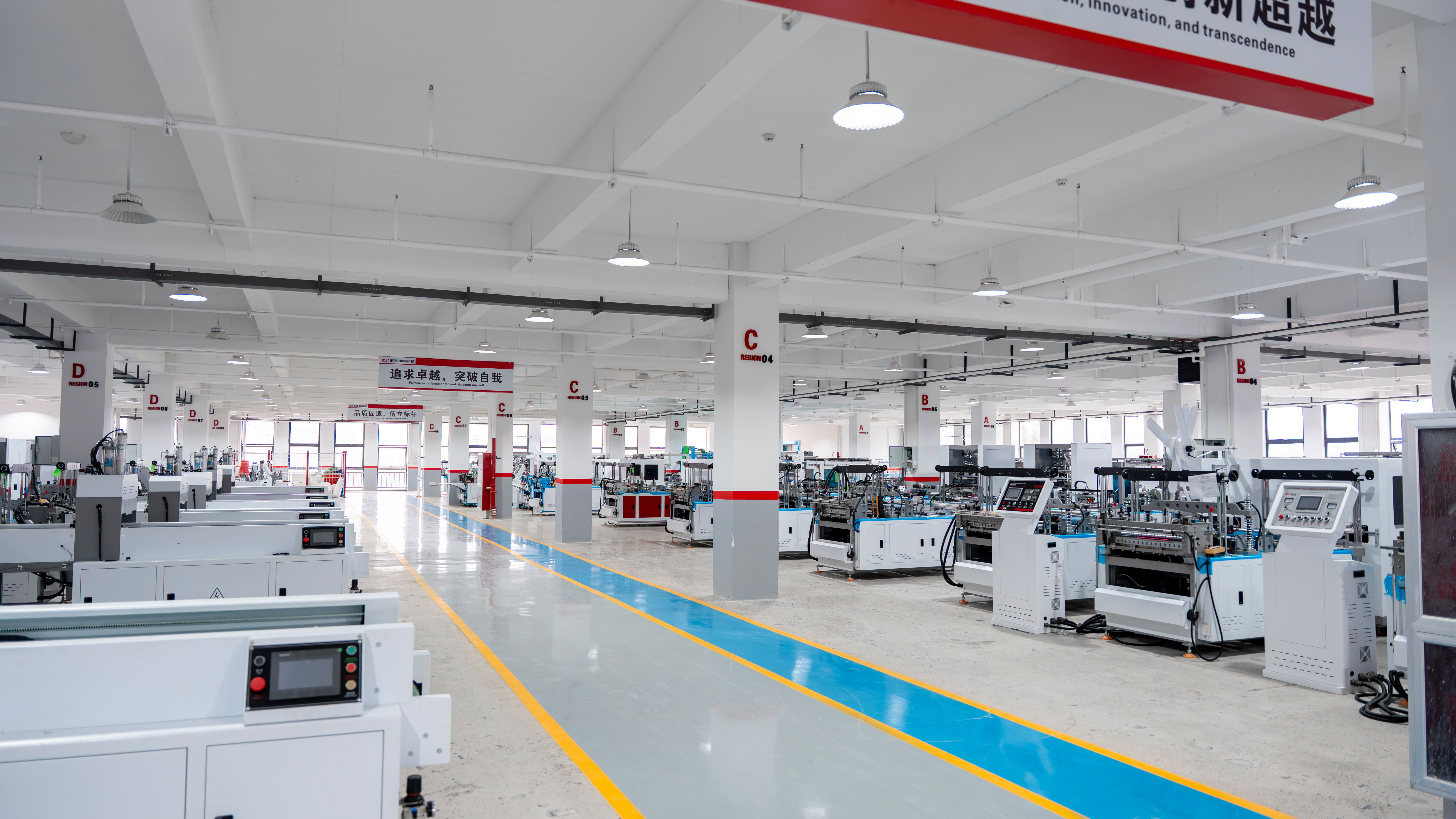
Zhejiang Zhengxin Machinery Co., Ltd. is a Wenzhou-based manufacturer of non-woven bag making machines, flexo printing machines (ZXH series, 1–8 colors), screen printing machines and complete non-woven bag production lines. The company was founded in 2014, operates a 60,000 m² factory, employs around 200 people including 30 R&D engineers, and produces approximately 500 machines per year. Around 60% of output is exported, mainly to Africa, the Middle East, Southeast Asia and Latin America.
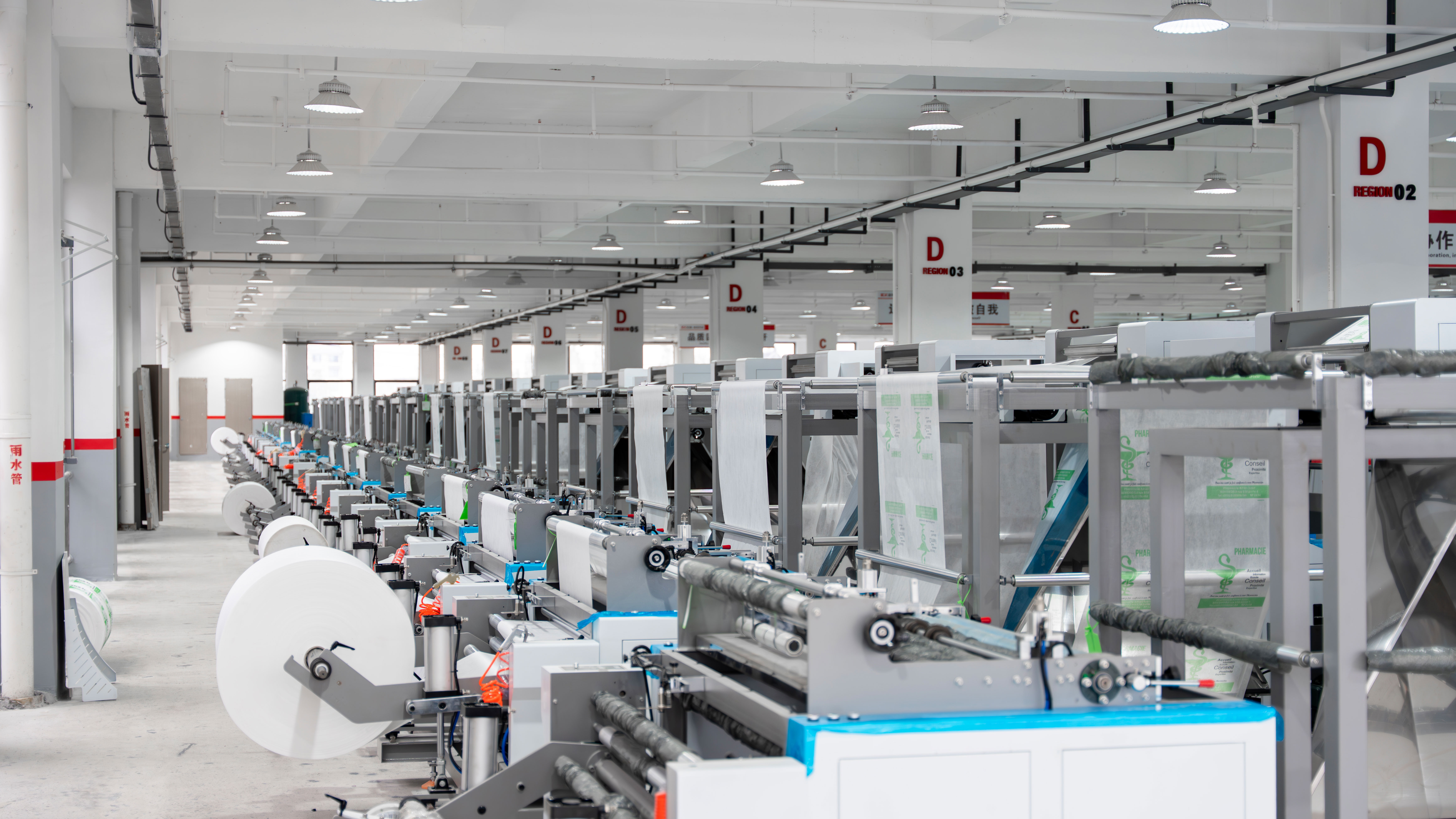
For buyers evaluating a long-term partner, Zhengxin's support structure includes the following elements.
Global Footprint and Regional Offices
Zhengxin has exported to over 120 countries and maintains offices in Kenya, Morocco, Egypt, Vietnam, Tanzania, Dubai, Oman, Indonesia and Ethiopia. These offices give buyers a local point of contact instead of a distant factory that is difficult to reach. For distributors planning to import machines repeatedly, this regional presence reduces the risk of being left without support after the first shipment.
After-Sales Engineering and Remote Diagnosis
The company provides after-sales support with field engineers available for global deployment. Remote support is available 7 days a week via WhatsApp and video call; Zhengxin states that its engineers diagnose and resolve 80%+ of issues remotely. This matters for buyers in regions where a factory visit from China could take weeks to arrange. A remote video call can often resolve faults the same day.
Spare-Parts Logistics
Replacement parts are shipped by DHL/FedEx within 24 hours of confirmed diagnosis, with 3–7 day delivery worldwide. A recommended spare-parts kit, typically costing $500–1,500, covers one year of consumables and protects against the most common failure scenarios. For a busy factory, having critical spares on site is the difference between a 30-minute repair and a two-week wait.
Certification and Compliance
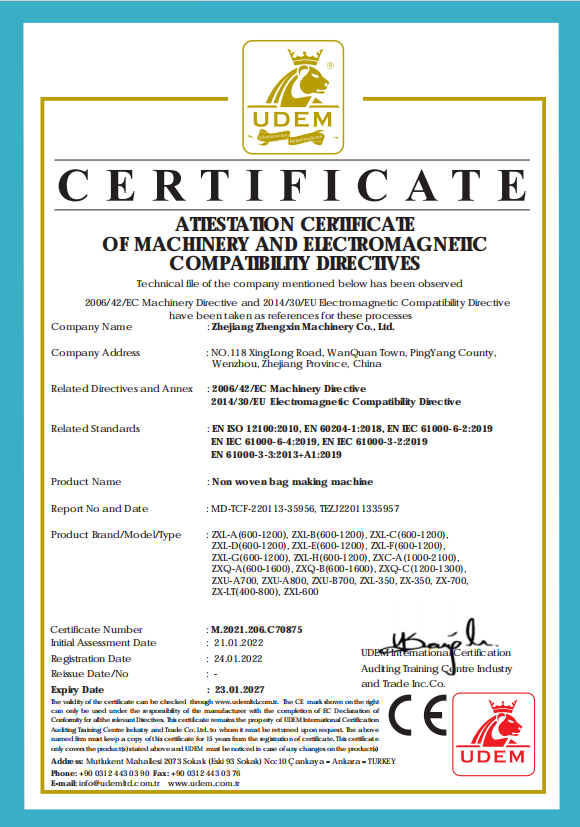
All Zhengxin machines are CE certified under the Machinery Directive 2006/42/EC, Low Voltage Directive 2014/35/EU and EMC Directive 2014/30/EU. The manufacturing facility is ISO 9001:2015 certified, with standardized quality control at incoming material inspection, in-process QC checkpoints, and a continuous full-load production test on every machine before shipment. For printing and paper converting machinery in the EU, EN 1010-1:2004+A1:2010 is the harmonized European safety standard. Country-specific approvals such as SONCAP, PVOC and SASO can be arranged on request.
Verification Before Shipment
Products are accepted through pre-shipment test procedures. Every machine runs a continuous production test before crating, with sample bags inspected for seal strength, print registration and dimensional accuracy. Buyers may also hire a third-party inspection company — SGS, Bureau Veritas or CCIC — to audit the machine at the factory before paying the balance. Payment terms are 30% deposit and 70% before shipment, which keeps the buyer's leverage until after acceptance testing.
Commercial Terms Designed for Execution
Delivery is arranged through FOB/CIF methods. Minimum order quantity is 1 unit. Standard production takes 25–35 working days; customized configurations take 35–45 days. Sea freight adds 15–45 days depending on the destination. For buyers who need to plan cash flow and production launch dates, these terms provide a predictable procurement path.
From Order to Long-Term Operation: The Execution Process
The following seven-step process shows how a machine purchase should proceed when the supplier is structured for long-term support.
Step 1: Confirm Specifications Before Production
Before production starts, confirm the following: local voltage and frequency (220V/380V/415V/440V, 50/60Hz, 3-phase), required daily output, bag styles (D-cut, W-cut, vest, gusset, 3D standing), printing requirements (number of colors, flexo or screen), and destination-country certifications. Zhengxin machines can be configured for all standard voltage/frequency combinations. If the factory has single-phase power only, a phase converter is required.
Step 2: Production Schedule and Milestones
Standard models are produced in 25–35 working days. Custom configurations add 5–10 working days. Buyers should get a written production schedule with milestone dates — frame welding, electrical assembly, testing, packing — and request weekly production photos or videos. For large orders (5+ machines), splitting shipments can allow partial delivery while remaining units finish production.
Step 3: Pre-Shipment Inspection
Zhengxin runs a continuous full-load production test on every machine before crating. Buyers can also hire SGS, Bureau Veritas or CCIC to inspect at the factory; third-party inspection typically costs $300–800. The 70% balance is paid only after acceptance testing is completed. This sequence protects the buyer and confirms the machine meets the specification before it leaves the factory.
Step 4: Shipping, Customs and Insurance
Delivery is FOB/CIF. Sea freight takes 15–45 days depending on destination — Indonesia around 15 days, Kenya around 25 days, Nigeria around 35 days, Brazil around 40 days. Machines are bolted to a fumigation-free wooden pallet, wrapped in VCI anti-rust film, covered with export-grade corrugated cardboard and sealed in a 12mm plywood crate with steel banding. Buyers should verify the HS code with a local customs broker and consider marine cargo insurance with All Risks coverage.
Step 5: Installation and Commissioning
Most installations are completed by the buyer's team with Zhengxin's remote video support. Installation takes 1–2 working days for a standard single machine. Prerequisites include a level concrete floor, 3-phase power verified by multimeter (not just by nameplate), an air compressor installed with air dryer, and a voltage stabilizer where grid power fluctuates. On-site engineer dispatch is available for $100/day service fee plus airfare and accommodation if remote support is insufficient.
Step 6: Operator Training
A fully automatic line needs approximately 1 trained operator per 2 machines. Zhengxin provides training during installation plus English operation manuals, wiring diagrams and a troubleshooting guide with common error codes. Operators typically become independent within 3–5 days on the machine. For multi-shift operations running 24 hours, at least 3 operators should be trained, with one supervisor trained on advanced troubleshooting.
Step 7: Long-Term Operation and Scaling
Buyers should stock the recommended spare-parts kit, follow a daily/weekly/monthly preventive maintenance schedule, back up PLC parameters and recipes to USB, and keep a changeover logbook for bag size changes. The expansion path should also be planned: Zhengxin's ZXH flexo series covers 1–8 colors, printing units can be added to existing bag lines, and high-speed platforms such as ZXL-A800 and ZXL-E800 support 100,000+ bags/day for multi-shift operations.
How Different Buyers Benefit from a Long-Term Supplier Structure
Four buyer profiles show how a long-term support structure creates practical value in real operating conditions.
Distributors in Africa, the Middle East and Southeast Asia
Zhengxin's offices in Kenya, Morocco, Egypt, Tanzania, Dubai, Oman, Indonesia and Ethiopia mean a distributor has a local branch available to coordinate spare parts, service and repeat orders. FOB/CIF terms and a 1-unit MOQ make it practical to start with a pilot line before scaling to multiple machines. For a distributor building a dealer network, the manufacturer's after-sales capability becomes part of the value proposition to end customers.
Factories Scaling from 20,000 to 100,000 Bags per Day
A typical scaling path starts with a ZXL-A700 or ZXL-A700Ultra bag machine at 20,000–50,000 bags/day, adds a ZXH-C21200 2-color flexo printing unit when print orders appear, and later moves to a ZXL-E800 high-speed platform or multiple lines for 100,000+ bags/day. Because Zhengxin's bag and printing machines are designed to work as an integrated line, the buyer can add capacity without replacing the entire system.
Plastic Bag Manufacturers Transitioning Under Plastic Bans
Plastic bag producers affected by single-use plastic bans already have customer relationships and distribution channels. What changes is the machine technology: non-woven production uses fabric feeding, folding, ultrasonic or heat sealing, and cutting — a different process from blown-film extrusion. A new non-woven line can start with plain bags, and a flexo printing unit can be added later as customers request printed designs. The buyer's existing sales network is often the hardest part to build, and it is already in place.
Supermarket and Retail Supply Contracts
Supermarket tenders require consistent bag quality, batch traceability and reliable delivery. A typical configuration pairs a ZXL-A700 or ZXL-A700Ultra bag machine with a ZXH-C21200 or ZXH-C41200 flexo printing unit for inline printed bags, plus an optional inkjet date coder for batch codes. At 100 pcs/min, daily output is about 45,000–55,000 bags in an 8-hour shift, which supports supplying 50–100 retail stores. Consistent ultrasonic weld quality and print registration are the acceptance criteria that determine whether the contract is retained.
Long-Term Ownership: Zhengxin vs Unbranded Machines vs Used Equipment
The table below compares the long-term ownership profile of a new Zhengxin machine with two common alternatives. The comparison is based on Zhengxin's published analysis of the non-woven bag machine market.
| Dimension | Zhengxin (CE & ISO 9001 Certified) | Unbranded Workshop Machine | Used / Refurbished Machine |
|---|---|---|---|
| Verified quality system | ISO 9001:2015; CE (Machinery, Low Voltage, EMC Directives) | Usually no verifiable certification | May not meet current CE requirements |
| Typical production uptime | 95%+; mean time to first failure 24+ months | Unpredictable; frequent breakdowns reported | 70–80% for machines over 3 years old |
| Spare parts availability | DHL/FedEx within 24 hours of diagnosis; 3–7 day delivery | No guarantee; parts often hard to source | May be discontinued; custom fabrication required |
| Documentation | English manual, wiring diagram, spare parts catalog | Usually absent | Frequently missing |
| After-sales support | 7-day remote support; field engineers; 9 regional offices | Limited or none | None from original manufacturer |
| 5-year maintenance cost | 30–40% lower than unbranded (fewer breakdowns, longer part life) | High repair frequency; higher total cost | 2–3× more unplanned downtime; repair costs unpredictable |
| Resale value after 5 years | 50%+ retained | Near zero | Depends on condition and age |
Zhengxin also positions against larger Chinese brands such as Oyang/Allwell and Ounuo. According to Zhengxin's comparative analysis, its machines are typically priced 10–15% lower at comparable specifications, customization lead time is 3–5 days versus 7–14 days at larger competitors, and direct factory after-sales avoids dealer markup on parts and service — while using the same tier of Siemens/Delta PLCs and CE-certified manufacturing.
Frequently Asked Questions
What certifications should a non woven bag printing machine have for international shipment?
A machine destined for EU or CE-accepting markets should carry CE marking under the Machinery Directive 2006/42/EC, Low Voltage Directive 2014/35/EU and EMC Directive 2014/30/EU. Zhengxin machines ship with a CE Declaration of Conformity and CE marking plate. For printing and paper converting machinery, EN 1010-1:2004+A1:2010 is the harmonized European safety standard. The Zhengxin factory is also ISO 9001:2015 certified. Country-specific approvals such as SONCAP (Nigeria), PVOC (Kenya) and SASO (Saudi Arabia) can be arranged on request.
How does the manufacturer support a printing machine over its working life?
Zhengxin's support model has three layers. First, remote support is available 7 days a week via WhatsApp and video call — engineers diagnose and resolve 80%+ of issues remotely. Second, spare parts are dispatched by DHL/FedEx within 24 hours of diagnosis, with 3–7 day global delivery. Third, field engineers can travel to any country for on-site troubleshooting and operator training. The company has offices in Kenya, Morocco, Egypt, Vietnam, Tanzania, Dubai, Oman, Indonesia and Ethiopia, and has exported to over 120 countries.
What is the realistic long-term cost of owning a non woven bag printing machine?
The purchase price is only part of the cost. Zhengxin machines use branded components — Siemens/Delta/Mitsubishi PLCs, Omron sensors, NSK bearings — which the company states give roughly 3× longer mean time between failures than unbranded substitutes. Over 5 years, maintenance cost runs 30–40% lower than unbranded machines, and resale value retains 50%+ after 5 years. A spare-parts kit covering one year of consumables typically costs $500–1,500. A new machine's production uptime is typically 95%+, versus 70–80% for a 3+ year-old used machine.
Can I verify machine quality before placing the order?
Yes. Zhengxin encourages factory visits and offers live video factory tours showing production lines, testing areas, component inventory and machines being built. Buyers can request contact details of 3+ active customers in their region and call them directly. Every machine runs a continuous pre-shipment production test; buyers can hire SGS, Bureau Veritas or CCIC for third-party inspection before paying the balance. Payment terms are 30% deposit / 70% before shipment, which keeps the buyer's leverage until after acceptance testing.
How long does delivery take, and what happens during commissioning?
Standard machines take 25–35 working days to produce; custom configurations take 35–45 days. Sea freight adds 15–45 days depending on the destination. Most installations are completed in 1–2 working days with Zhengxin's remote video guidance; on-site engineer dispatch is available if needed. After installation, the line is tested at low speed, then ramped to production speed, and operators are trained on the machine. Total time from order to full production is typically 45–80 days including sea freight. If you are evaluating a machine for a new or expanding production line, the next step is to review the technical specifications and pre-shipment testing schedule — download the 2026 Zhengxin catalogue or contact the sales team at info@zxcorp.com / WhatsApp +86 158-5888-9595 for a quotation.
Conclusion: Choose a Partner, Not Just a Machine
Buying a machine is a transaction. Building a supply relationship that supports your business for the next five years is different. The checklist that matters at the execution stage is straightforward:
- Certifications that survive customs inspection
- Spare parts that arrive within days, not months
- Remote support that resolves faults without waiting for a technician
- English documentation that your team can actually use
- A clear path from the first machine to a full production line
- Commercial terms — 30/70 payment, FOB/CIF, pre-shipment testing — that reduce buyer risk
Zhejiang Zhengxin Machinery Co., Ltd. offers this structure: CE and ISO 9001 certification, a 60,000 m² factory, 120+ export destinations, nine regional offices, 7-day remote support and field engineers for global deployment. If those criteria match your requirements, the next conversation should be about your target bag sizes, print colors and output volume.
Ready to plan your non-woven bag printing line?
Download the 2026 Zhengxin catalogue (PDF) for full machine specifications, or contact the sales team for a quotation and pre-shipment testing schedule.
Email: info@zxcorp.com | Phone/WhatsApp: +86 158-5888-9595 | Website: www.wzzxjx.com
Have Questions or Need More Details?
Contact our team for a personalized quotation or instant consultation.
Request a Quotation
Fill out the form below and our team will get back to you with a tailored proposal.
WhatsApp Direct Chat
Prefer to chat in real-time? Message us on WhatsApp for instant assistance & quick answers.
- Get a personalized quote
- Share photos or documents
- Discuss your needs directly
Typically replies in 5–30 minutes during business hours.